
Graphics Design
10.The Latest Trends in Web Design and Development

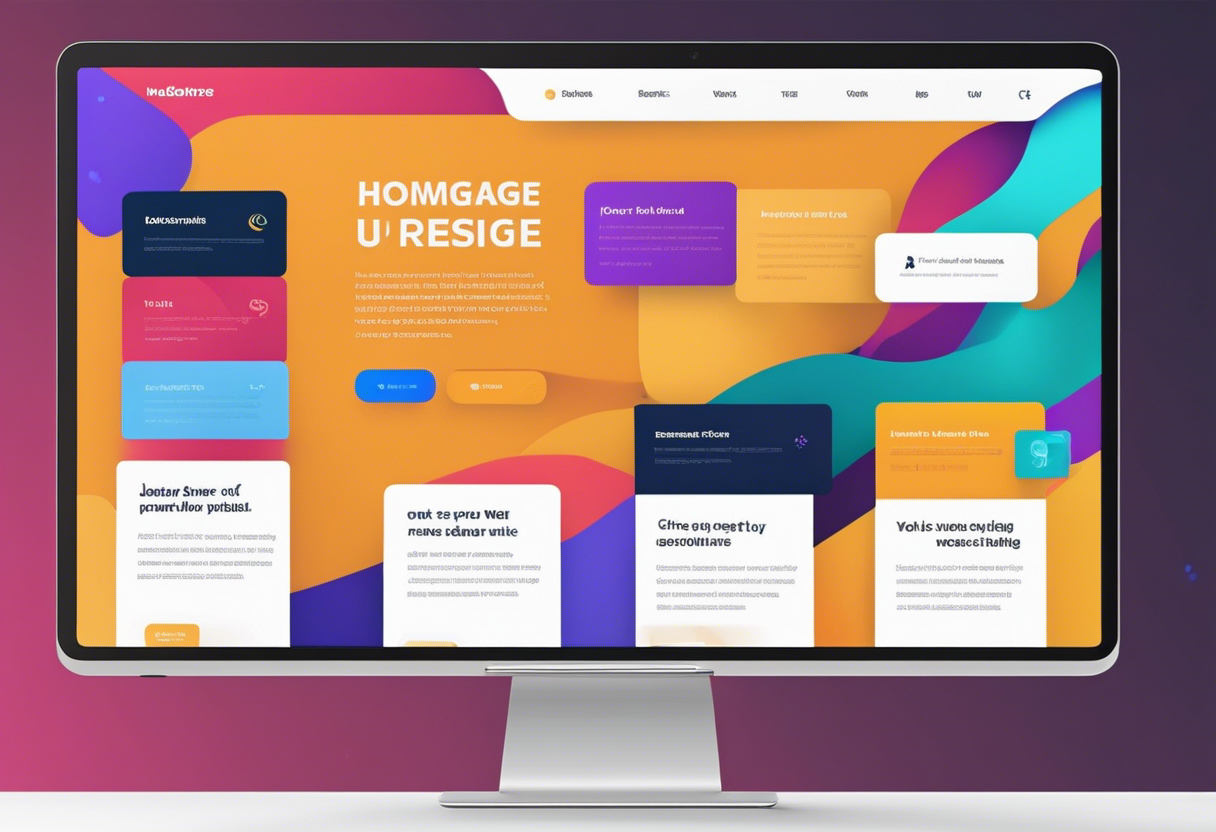
The Latest Trends in Web Design and Development
Here’s an overview:
• The Spread of Responsive Web Design
• Interactive User Interfaces using JavaScript Frameworks
• The Growing Use of Single Page Applications
• Influence of Artificial Intelligence on Web Development
• The Voice User Interfaces as the Emerging Technologies
• Chatbots as a Way of Customer Interaction
• The Implication of Website Efficiency Improvement
• Why should you optimize your website’s performance?
• How to improve website performance.
• Motion UI Integration into Web Design
• The Future of Web Development: Progressive Web Applications
• The Spread of Responsive Web Design-The latest trends in web design and development

The latest trends in web design and development I recall the time when websites were exclusively created for desktops. Surfing for a website on my phone or tablet was a big annoyance; I had to zoom in and out repeatedly to be able to read the content. Yet the advent of responsive design came, and everything was altered!
- The latest trends in web design and development With the help of responsive design, websites can now customize their layout and content depending on the screen they are displayed on. This translates to the fact that whether it is through my computer, tablet, or phone I can rest assured that there will always be great user experience and easy navigation.
- The latest trends in web design and development One of the core elements of responsive design is fluidity. Media on the web such as pics, text and navigation menus are able to automatically adjust and arrange themselves to fit various screens. This will be achieved by ensuring that the site is both aesthetically pleasing and user friendly, irrespective of the device used.
- The latest trends in web design and development Another positive attribute of responsive design is higher search engine rankings, too. Search engines such as Google give preference to mobile friendly websites, therefore you can increase your site’s visibility and traffic by using a responsive design.
- The latest trends in web design and development With more and more people surfing the Internet on mobile devices, it is imperative to have a responsive design for any website. It is not anymore a trend but a need rather in today’s digital environment.Responsive design has, without doubt, turned this process upside down completely. It has really made surfing the net a much more smooth and pleasant experience for everyone regardless of the type of device they are using.
• Interactive User Interfaces using JavaScript Frameworks

The latest trends in web design and development I am so in love with JavaScript frameworks that I could develop my own UI for years. undefined
- Enhanced User Experience: The latest trends in web design and development With JS libraries like React or Angular, my task is to develop sites that work great for users and have the best possible user experiences.
- Efficiency in Development: The latest trends in web design and development these methodologies provide ready-made parts and choreograph the process, that shorten the development process so much for me.
- Scalability: The latest trends in web design and development Implementation of frameworks assists me maintain order and architecture of code during my project growth, which otherwise would be challenging to scale up preserving performance.
- Real-time Updates: The latest trends in web design and development situation is different with the help of frameworks like Vue.js I can update page content without reloading the entire page, which, in turn, creates a more natural user interface.
- Cross-browser Compatibility: The latest trends in web design and development these JS frameworks aid me in processing the cross-browser compatibility problems efficiently and make my UI do well irrespective of the type of browser used.
The latest trends in web design and development I tend to be very enthusiastic about playing with different tools in order to keep me abreast with the latest styles and techniques in web designing. Having this approach will not only make the process of content generation interesting but also satisfying and fulfilling.
• The Growing Use of Single Page Applications

The latest trends in web design and development I am sparking interest in single page applications (SPAs) usage in web landscape from both design and development point of views. undefined
- Improved User Experience: SPAs have the edge over other types of websites as they provide the user with a smooth and uninterrupted browsing experience as there is no reloading of the entire webpage for different sections to function properly. Hence, the site becomes more responsive and user more efficient.
- Mobile Responsiveness: SPAs being mobile-ready is an additional feature that comes with the increase in mobile application use. They offer a seamless experience with fewer pesky maintenance issues such as crashes.
- Enhanced Performance: SPAs run in the background and only add information to where it is supposed making the transfer of data unnecessary. Therefore firstly, we have better performance and secondly, we minimize the load levels of the servers.
- Scalability: The single-page applications (SPAs) are good for large-scale applications that require data and update in real-time. They allow the proper way to manage complicated interactions and the dynamic content without making the performance of the site poorer or slower.
- SEO-Friendly: SPAs, in the past, had the same challenges with search engine optimization (SEO) as they relied on client-side rendering to render the whole webpage, but in the wake of technology changes, now, SEO strategy has become a viable option for SPAs.
The latest trends in web design and development Consequently, the increasing number of sites targeting the creation of engaging and dynamic experiences makes the SPEs (Single Page Applications) popular. One of the main reasons for their popularity is that they enable you to get results, in terms of page load time, navigation smoothness, and performance being superior to anything that has been available before.
• Influence of Artificial Intelligence on Web Development

The latest trends in web design and development I think Artificial Intelligence (AI) is the AI which impacts on the web development and brings outstanding results in various fields. undefined
- Enhanced User Experience: Through AI talking bots and personalization traits, sites can offer catered and engaging activities to their users.
- Improved Analytics: AI algorithms, when fed with big data, can mine for valuable information on users to smarten up web design based on data-driven decision of the developers.
- Automation of Repetitive Tasks: AI tools can remove boring tasks such as testing, debugging and updating content, increasing the attention of developers to more interesting operations in web-development.
- Responsive Design: AI gives the possibility to form the adaptable designs that fit the various sizes of the screens and support different kinds of devices providing the smooth process on different platforms for the customer.
- Content Generation: AI may be used to create content like product descriptions and blog posts which in turn, can ease the time and labor of the software developers and content creators.
- Improved SEO: AI-powered tools can read the code of search engines and make a website rank higher by the means of a good visibility and effectiveness on search engine result pages.
The latest trends in web design and development As AI progresses ahead, I think there is no doubt the part AI will play in web development will become much stronger. It will help create not only slicker websites but also newer experiences for them.
• The Voice User Interfaces as the Emerging Technologies
The latest trends in web design and development I am thrilled about the fact that voice user interfaces (VUIs) have been on the rise lately. undefined
- Growing Demand: More and more people are now used to speaking to their devices due to the fact that VUIs are quick and convenient. This in turn has led to a massive increase in the demand for voice-enabled sites and apps.
- Improved Accessibility: VUIs could be able to make technology more accessible to a broader audience, not only to people with disabilities or non-typists. This inclusivity represents a substantial advance in the area of web design and development.
- Natural Interactions: VUI allows the user to communicate with websites and applications through a natural and conversational method. Such human-to-human interaction facilitates engagement and user satisfaction, bringing more personal experience.
- Challenges and Opportunities: Along with these challenges, VUIs also have their own set of challenges, such as comprehending the natural language processing and voice recognition issues. Nevertheless, it also brings up possibilities for innovation within user interface design that adapts appropriately to voice commands.
- Integration with AI: VUIs usually cooperate with AI technologies to give responses that are more correct and personalized. This integration facilitates the development of more intelligent and adaptive user experiences.
The latest trends in web design and development integration of voice user interfaces into web design and development is no more a choice but a need in the digital arena today. As a web developer, I am confident that having these skill sets will be beneficial for creating innovative and user-friendly websites.
• Chatbots as a Way of Customer Interaction
The latest trends in web design and development, I consider chatbots as a milestone in customer dialogue.Here’s why:
- 24/7 Availability: The chatbots are like the ever-ready customer service executives, always on call. Customers can get help any time they need to, even after business hours which are considered traditional.
- Instant Responses: With help of Chatbots, people are able to get their questions answered in no time. It does away with the need for customers to stand in long queues or send emails to be replied and which would make the whole communication seamless and faster.
- Personalized Experience: Through data collection and knowledge on customer’s preferences Chatbots can offer a personalized experience. They do this by recommending goods, responding to questions using information on the client, and customising their reactions.
- Handling Repetitive Tasks: The chatbots are very good at performing monotonous and repetitive work, hence, letting the human employees deal with the complicated situations. This efficiency hence results into customer’s satisfaction and problem resolution in short time.
- Scalability: Chatbot whether you have ten or thousand customers they can seek help all simultaneously and can answer them all without compromising on the performance. They can easily grow and adapt to meet the ever-changing customer support demands.
- Analytics and Insights: Chatbots gives insights about conversations between you and your clients. With this data, you will be able to decipher customer behavior and preferences as well as their pain points and discomforts, making it easy for you to improve your services and satisfy your customers.
The latest trends in web design and development designing your site with Chatbots integrated into it will change how you connect with your customers. It has proved to be an efficient tool for customer engagement, prompt support service and operational efficiency and hence, a trend to watch out for in the digital world.
• The Implication of Website Efficiency Improvement
The latest trends in web design and development I’m the one who knows about the point of website performance optimization that plays the most significant role in the current fast-moving digital world. When they visit a web site, users would expect the web page to load fast and appear decent regardless of their internet speed. When a website takes too long to load, most users will bounce to look for answers elsewhere instead. Consequently, high bounce rates can be generated and there is a possibility of losing some of the traffic for engagement and conversion.
• Why should you optimize your website’s performance
- Improved User Experience: Through website performance tune up, users can heave as well as search in the site without difficulty, thereby improved customer experience.
- Higher Search Engine Rankings: Google (Search engine such as Google) crawls and display the fast speeding website in their search result. More speedy sites are chance to be positioned themselves higher in search result pages.
- Increased Conversions: Improved speed of the website can positively affect conversion rates because users will most likely finish actions that are considered as part of conversion funnel such as buying an item or signing up for a newsletter.
- Mobile Responsiveness: Perfecting web page performance is the key to the mobile equivalent of the experience of the website. This is where everybody expects the website to be loaded quickly on the mobile devices.
• How to improve website performance
- Optimize Images: Compress images to reduce file sizes and improve loading speed.
- Minimize HTTP Requests: Reduce the number of request per page by joining files and using CSS sprites.
- Enable Browser Caching: Enable browsers to save copies of your site so that the load times for the returning visitors will reduce.
- Use Content Delivery Networks (CDNs): CDNs are able to disperse website content through many servers worldwide, thus shortening the time taken for users located in various areas to load the site.
The latest trends in web design and development Recall, in the dynamic online environment, speed and efficiency of the website is of the essence in garnering and keeping users. Web performance optimization is an often-overlooked aspect of web design and development.
• Motion UI Integration into Web Design
The latest trends in web design and development For me the Motion UI is a great trend in web design and development. undefined
- Engagement: Motion UI can improve user engagement by adding movement and interactions to the website. It grabs the user’s attention and leads them along the website in a more interesting way.
- Visual Appeal: Motion UI gives a touch of elegance to website designing. It can make a website look more modern and sleek by adding subtle animations and transitions.
- Storytelling: Motion UI can be used to tell a story or convey information through visual creativity. With the help of the animated tool, designers can lead users through a story or emphasise important content by adding motion effects to certain elements on the page.
- User Experience: When rightly applied, Motion UI can lead to a positive user experience. It may be used for visual feedback, for instance, a change in navigation or simply one makes the website more interesting to interact with.
- Brand Identity: Motion UI can also aid to create and strengthen a brand’s identity. Websites are able to effectively differentiate themselves and leave positive impressions on visitors by applying one-of-a-kind animations and interactions.
The latest trends in web design and development use of Motion UI in web design is associated with meticulousness and good knowledge of the animation fundamentals. It has to be weighed whether visual interest is added at the cost of the website remaining functional and easy to navigate. That allows designers to make websites which are not just visually compelling but also have a good user experience.
• The Future of Web Development: Progressive Web Applications
The latest trends in web design and development I believe that the Progressive Web Apps (PWAs) will change the way we create and use websites. undefined
- Enhanced User Experience: Using PWAs, I can offer consumers the same smooth experience as a native mobile app would. This implies faster loading times and making the offline access available, thus you have a seamless and uninterrupted user experience.
- Improved Performance: As a developer, I see that PWA has the ability to run through all devices and screens regardless of size and that it retains excellent performance. This is what makes them a choice for a modern web development.
- Increased Engagement: Using PWAs, I can send push notifications and interact with users similarly as in the mobile app Such a feature is likely to contribute to the level of engagement and user retention rate on my websites.
- Cost-Effectiveness: The benefit of this is that I can save time and resources as I will have to design and maintain one application for all platforms. This can be a game-changer for real estate developers and businesses who are looking for optimize their ROI.
- SEO Benefits: In addition to making the websites accessible to search engines, they increase the visibility of my websites. Being SEO-friendly, the PWAs are thus a good amendment to any web development strategy.
The latest trends in web design and development Finally, I would personally suggest that PWA are the future of web development, combining the best features from a website and a mobile app. As a developer, I love the endless opportunities PWAs have to offer and I can hardly wait to see how they will influence the digital space in the years to come.
Graphics Design
Photoshop Brushes: 25 Powerful Brushes Every Designer Should Know to Avoid Common Mistakes (2026)
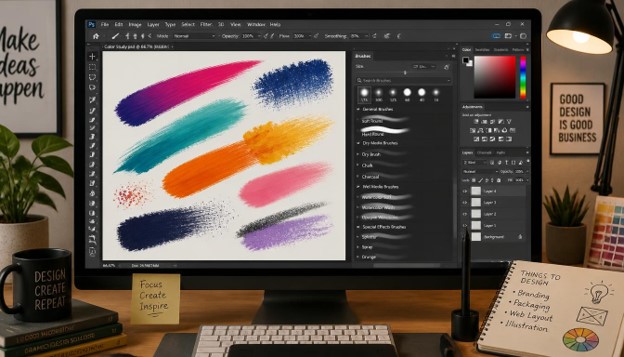
Photoshop Brushes: 25 Powerful Brushes Every Designer Should Know to Avoid Common Mistakes (2026)
If you have ever opened the Brush panel and felt overwhelmed by the sheer number of options, you are not alone. Photoshop Brushes are one of the most powerful tools inside Photoshop, yet most designers only ever use a tiny fraction of what these tools can actually do. The result is flat artwork, muddy textures, and hours wasted trying to fix mistakes that better brush choices could have avoided in the first place.
In this guide, we are going to walk through 25 of the most useful Photoshop Brushes that every designer, illustrator, and photo editor should have in their toolkit. Along the way, we will point out the common mistakes people make with Photoshop Brushes and show you how to avoid them. Whether you are retouching photos, designing concept art, building textures, or creating social media graphics, this list of Photoshop Brushes will give you a solid foundation to work from in 2026 and beyond.
Each brush type below comes with a short explanation of what it does, when to use it, and a quick tip to help you get better results. We have kept the paragraphs short and easy to scan, so you can quickly find the Photoshop Brushes that fit your current project without reading through walls of text.
What Are Photoshop Brushes and Why Do They Matter?
Photoshop Brushes are customizable tools that let you paint, draw, texture, and blend directly on your canvas. Unlike a plain round brush, a well-made brush can simulate watercolor, charcoal, fur, smoke, or even fabric stitching in a single stroke.
The difference between amateur-looking artwork and professional design often comes down to brush choice. A designer who understands Photoshop Brushes can add realism, depth, and mood to an image in seconds. Someone who ignores brush settings ends up with flat, lifeless results no matter how much time they spend.
Add short and concise paragraphs for better readability and UX. This is exactly why we have broken this article into small, scannable sections. Long blocks of text are hard to read on a screen, and readers scanning for Photoshop Brushes tips usually want quick, actionable answers rather than dense paragraphs.
Photoshop Brushes are not just for illustrators. Photographers use them for dodging and burning, retouchers use them for skin smoothing, and web designers use them to build textured backgrounds. Once you understand how brushes work, you will find new uses for them in almost every project.
Common Mistakes Designers Make With Photoshop Brushes
Before we get into the list, let’s talk about the mistakes that hold most people back when using Photoshop Brushes.
Mistake 1: Using default settings only. Many designers never touch the Brush Settings panel. They pick a brush, click it on the canvas, and move on. This ignores opacity jitter, scattering, and texture options that make Photoshop Brushes look natural instead of robotic.
Mistake 2: Ignoring pressure sensitivity. If you use a drawing tablet, failing to enable pen pressure for size and opacity is one of the biggest reasons strokes look stiff and uneven.
Mistake 3: Overusing hard round brushes. Hard edges work for some tasks, but relying on them for everything makes artwork feel flat. Mixing in textured Photoshop Brushes adds much-needed variation.
Mistake 4: Not organizing brush libraries. As you download more Photoshop Brushes, your panel can get cluttered fast. Without folders and clear naming, you waste time hunting for the right brush mid-project.
Mistake 5: Skipping brush resolution checks. Some brushes look great at low zoom but pixelate badly when scaled up for print. Always check a brush’s native resolution before committing to a large canvas.
Mistake 6: Forgetting to save custom presets. If you spend time tweaking a brush to get the perfect scatter and texture, save it as a preset. Otherwise, you will have to redo that work every single time.
Keep these mistakes in mind as you go through the list below. Each brush category comes with tips to help you sidestep these exact problems.
25 Powerful Photoshop Brushes Every Designer Should Know

1. Sketchy Pencil Brush
This is one of the most versatile Photoshop Brushes for concept artists and illustrators. It mimics the texture of graphite on paper, complete with slight grain and pressure-sensitive line weight.
Use it for quick thumbnails, rough layouts, or adding a hand-drawn feel to digital work. Pair it with a textured paper layer for an even more authentic look. Many designers keep this among their most-used brush types simply because it’s fast to sketch with and easy to erase cleanly during the planning stage of a project.

2. Watercolor Splash Brush
Watercolor brushes are among the most popular Photoshop Brushes because they add organic, unpredictable texture that is nearly impossible to fake with solid fills.
They work best when you lower the opacity and layer multiple strokes on top of each other. This builds up realistic pigment pooling, just like real watercolor paint. For book covers, invitations, and greeting cards, this style of brush has become a go-to choice because it instantly softens an otherwise digital-looking design.
3. Chalk Texture Brush
Chalk brushes give you a soft, slightly rough edge that’s perfect for vintage posters, hand-lettering, and rustic branding projects.
This brush type is great for adding texture to typography without needing a separate texture layer.
4. Charcoal Brush
Charcoal brushes produce heavy, expressive strokes with natural smudging. Among Photoshop Brushes, this one is a favorite for dramatic portrait sketches and moody concept art.
Combine it with the Smudge tool for even more realistic blending between light and shadow areas. Portrait artists often reach for this brush before switching to cleaner tools for final detailing, since the loose charcoal texture is ideal for blocking in values quickly.
5. Ink Splatter Brush
Ink splatter brushes add chaotic, organic energy to a design. They’re commonly used in grunge posters, band merchandise, and editorial illustration.
Because splatter patterns repeat if used carelessly, rotate and scale the brush between strokes to keep the pattern looking random and natural.

6. Smoke Brush
Smoke brushes are essential for anyone doing atmospheric compositing work, from movie posters to album covers. Good smoke brushes among Photoshop Brushes include soft edges and varied density.
Layer several smoke strokes at different opacities and blend modes like Screen or Lighten for the most convincing results. This makes smoke one of the more technically demanding brush types to master, but also one of the most rewarding once you get the layering right.
7. Cloud Brush
Cloud brushes save enormous time when building skies for matte paintings or landscape composites. Rather than painting every wisp by hand, a good cloud brush gives you a realistic base to build on.
Always match the light direction of your cloud brush strokes to the rest of your scene, or the composite will look off.
8. Grass and Foliage Brush
Foliage brushes let you quickly populate a landscape with grass, leaves, and shrubs. These are some of the most time-saving Photoshop Brushes for environment artists and photo editors.
Vary the size and rotation of each stroke to avoid an obvious repeating pattern. Landscape and environment artists rank foliage among the most time-saving brushes in their entire library, since manually painting individual leaves would take hours.
9. Hair Brush
Hair brushes are indispensable for portrait retouching and character illustration. They allow you to add fine, wispy strands that would take forever to paint manually with a standard round tip.
Set the brush to follow pen tilt and rotation if your tablet supports it, so each strand flows naturally with your hand movement.
10. Fur Brush
Similar to hair brushes, fur brushes simulate the texture of animal coats. These are popular Photoshop Brushes among character designers and creature artists.
Layer light and dark fur strokes to build volume, then finish with a few stray hairs along the silhouette edge for realism.

11. Splatter Paint Brush
Paint splatter brushes add bold, energetic marks that work well in sports branding, streetwear design, and music promotion graphics.
Because these brushes can look repetitive, always mix in at least two or three different splatter variations in a single design.
12. Grunge Texture Brush
Grunge brushes simulate scratches, dirt, and worn surfaces. They’re one of the most requested categories of Photoshop Brushes because they instantly age a design and add character.
Apply grunge texture on a separate layer set to Multiply so it interacts naturally with the colors beneath it. Streetwear and music merchandise designers lean on this texture constantly, since a worn, distressed look has stayed popular across multiple design trends over the years.
13. Light Leak and Lens Flare Brush
These brushes simulate the warm, hazy light leaks seen in analog photography. They’re a fast way to give digital photos a nostalgic, cinematic look.
Keep opacity low and place light leaks near a light source in the image so the effect looks believable rather than pasted on.
14. Snow and Rain Brush
Weather brushes let you add falling snow or rain streaks without manually painting thousands of individual particles. These practical Photoshop Brushes are widely used in seasonal marketing graphics.
Vary the brush size slightly between layers to create a sense of depth, with larger flakes or drops appearing closer to the viewer.
15. Fire and Flame Brush
Fire brushes are tricky to get right, but a well-made one saves huge amounts of time compared to painting flames by hand.
Use warm color layers underneath with a Screen blend mode, and always add a subtle glow layer behind the flame shapes for realism. Movie poster artists and album cover designers often build fire effects from several overlapping stroke variations rather than a single pass, since real flames rarely hold one consistent shape for long.

16. Dust and Particle Brush
Dust brushes add tiny floating specks that catch the light, which is a small detail that makes a huge difference in atmospheric compositions.
Scatter these particles more densely near light sources and sparsely elsewhere to mimic how dust behaves in real environments. A subtle motion blur applied to a duplicate particle layer can also help sell the illusion of depth, since faraway specks appear softer than ones close to the camera.
17. Concept Art Rock Brush
Rock and stone texture brushes are a staple for environment concept artists. They let you rough in cliffsides, boulders, and terrain quickly during the early stages of a piece.
Rotate and flip the brush frequently so repeated rock shapes don’t create an obviously tiled look across your terrain. These texture sets pair particularly well with a grungy overlay, which helps break up any remaining repetition and adds extra grit to cliff faces and canyon walls.
18. Cross-Hatching Brush
Cross-hatching brushes replicate the fine, overlapping line technique used in traditional pen-and-ink illustration. They’re excellent for comic book shading and editorial illustration styles.
Adjust line spacing and angle in the Brush Settings panel to control how dark or light the shaded area appears. Comic artists and editorial illustrators often keep several angle variations of this brush saved, treating it as one of the core Photoshop Brushes in their shading workflow.
19. Halftone Brush
Halftone brushes create the dotted pattern associated with vintage comics and screen printing. This style remains popular in modern streetwear and poster design.
Keep dot size consistent across a single design element, but vary spacing to create gradients of light and shadow. This effect works especially well on apparel graphics and gig posters, where a retro print aesthetic is often the whole point of the design.
20. Stitch and Fabric Brush
Stitch brushes simulate sewing lines and fabric textures, which is useful for mockups, patches, and apparel design projects.
Combine a stitch brush with a subtle drop shadow to make the thread appear slightly raised off the fabric surface. This small touch of dimension is often what separates a convincing apparel mockup from one that reads as obviously flat and digital.
21. Calligraphy Brush
Calligraphy brushes bring elegant, variable-width strokes to hand-lettering projects. These are some of the most refined Photoshop Brushes available, closely mimicking real brush pens and nibs.
Practice consistent pressure control, since uneven pressure is the most common reason digital calligraphy looks shaky compared to real ink work. Slowing down your stroke speed also helps, since rushing tends to produce thin, inconsistent lines that break the illusion of a real brush pen.

22. Abstract Geometric Brush
Geometric pattern brushes let you stamp shapes like triangles, hexagons, or dot grids quickly across a canvas. They’re useful for modern branding and background design.
Set these brushes to scatter along the path so the pattern feels dynamic rather than mechanically repeated. Try combining two contrasting shapes, like circles and triangles, on separate layers to build a more layered, modern pattern instead of relying on a single repeated motif.
23. Wood Texture Brush
Wood grain brushes add convincing texture to furniture mockups, rustic branding, and packaging design. They save the trouble of photographing or sourcing separate wood texture images.
Rotate the grain direction to follow the form of the object you’re texturing for a believable result. Adding a soft highlight layer along raised edges will also help sell the illusion of a real, physical wood surface rather than a flat digital pattern.
24. Skin Retouching Brush
Soft, low-opacity retouching brushes are essential in portrait photography workflows. They allow subtle smoothing without erasing natural skin texture entirely.
Always work on a duplicate layer with reduced opacity so retouching stays soft and doesn’t create an artificial, plastic look. Zoom out periodically while retouching, since smoothing that looks fine up close can appear excessive once you view the full image at normal size.
25. Starburst and Sparkle Brush
Sparkle brushes add small highlights and glints of light, commonly used in beauty, jewelry, and fashion photography retouching.
Use them sparingly. A handful of well-placed sparkles looks intentional, while too many scattered across an image looks cluttered. Placing sparkles along the edges of jewelry, glassware, or wet surfaces tends to look far more natural than scattering them randomly across the entire frame.

How to Choose the Right Photoshop Brushes for Your Project
With thousands of options available online, picking the right Photoshop Brushes can feel overwhelming. The key is to think about the outcome you want before you start browsing brush packs.
If you’re working on a photo-realistic composite, look for Photoshop Brushes with natural texture variation, like the smoke, cloud, or dust brushes covered earlier. These add believable atmosphere without requiring you to hand-paint every detail.
If your project leans toward branding or typography, calligraphy, grunge, and geometric brushes tend to be more useful. These Photoshop Brushes give you clean, controllable strokes that still carry personality and texture.
For illustrators working in concept art or character design, prioritize brushes with strong edge control, like the sketchy pencil, charcoal, and cross-hatching sets. These Photoshop Brushes give you the flexibility to move between loose sketching and detailed rendering in the same file.
It also helps to think about file size and performance. Extremely high-resolution Photoshop Brushes can slow down your canvas, especially when you’re stacking dozens of strokes on a single layer. If you notice lag, try flattening completed sections before continuing.
Finally, consider your own workflow speed. Some designers prefer a smaller set of versatile Photoshop Brushes they know inside and out, while others like having a huge library to pull from for every possible scenario. Neither approach is wrong, but knowing your own habits will help you build a collection that actually gets used instead of sitting untouched in a folder.
Photoshop Brushes for Different Design Niches
Different fields of design tend to gravitate toward different categories of Photoshop Brushes. Here’s a quick breakdown of what works best where.
Photography and retouching. Photographers rely heavily on soft, low-opacity Photoshop Brushes for dodging, burning, and skin smoothing. Sparkle and light leak brushes are also popular for adding a finished, editorial look to portrait work.
Illustration and concept art. Illustrators reach for sketchy pencil, charcoal, and cross-hatching brushes during the early stages of a piece, then switch to smoke, cloud, and foliage brushes when building out environments and atmosphere.
Branding and marketing. Marketing designers often use grunge, splatter, and calligraphy Photoshop Brushes to give otherwise clean, corporate layouts a more human, handcrafted feel. This is especially common in streetwear, food and beverage, and lifestyle branding.
Game and environment art. Concept artists building game worlds depend on rock, foliage, and fur brushes to quickly rough in terrain, vegetation, and creature designs before moving into detailed rendering.
Social media and content creation. Content creators frequently use snow, rain, and sparkle Photoshop Brushes to add seasonal or festive touches to thumbnails, banners, and promotional graphics without needing to source separate stock overlays.
No matter which niche you work in, the underlying principle stays the same: understanding how Photoshop Brushes behave under different settings will always produce better results than clicking a random brush and hoping for the best.
How to Install and Organize Photoshop Brushes
Once you’ve collected a solid set of Photoshop Brushes, installation is simple. Open the Brush Settings panel, click the menu icon, and choose Import Brushes. Select the .abr file you downloaded, and the new brushes will appear in your panel.
Organization matters more than most people realize. Create folders by category, such as Texture, Nature, Lettering, and Retouching. This makes it much faster to find the right brush when you’re in the middle of a project instead of scrolling through hundreds of thumbnails.
It’s also worth deleting brushes you never use. A cluttered brush panel filled with Photoshop Brushes you downloaded once and forgot about only slows you down.
Consider setting up a naming convention as well. Prefixing files with a category, like “TEX_grunge01” or “NAT_foliage03,” makes searching the panel far faster than scrolling through generic default names. If you work across multiple projects or clients, you might even keep separate brush libraries saved as individual .abr files, so you can load only the set relevant to the job at hand instead of cluttering your main panel with everything at once.
Backing up your brush library is another step people tend to skip until it’s too late. Store your .abr files in a cloud folder or external drive, especially if you’ve spent hours fine-tuning custom presets. Losing a carefully built collection to a computer crash or failed update is a frustrating, avoidable setback.
Photoshop Brush Shortcuts and Workflow Tips
Speed matters when you’re deep into a project, and a few keyboard shortcuts can save you significant time when switching between brush tools.
Pressing the bracket keys, [ and ], quickly decreases or increases brush size without needing to open any panel. Adding Shift to either bracket adjusts hardness instead, which is useful when moving between soft blending strokes and crisp detail work.
The number keys control opacity in ten percent increments, so tapping 5 instantly sets opacity to fifty percent. This is much faster than dragging a slider, especially when you’re building up layered textures like smoke or watercolor effects.
Holding Alt while clicking with a brush tool active temporarily switches to the Eyedropper, letting you sample a color from your canvas without switching tools manually. This is especially handy when working with skin tones during retouching or blending multiple texture layers together.
If you frequently reuse a specific combination of size, opacity, scatter, and texture settings, save it as a Tool Preset. This locks in your configuration so you can jump straight back into a familiar workflow instead of rebuilding settings from scratch every session.
Finally, get comfortable with the Brush Settings panel’s preview window at the bottom. It shows you exactly how your current settings will behave before you commit a single stroke to the canvas, which can save a lot of trial and error, especially with more complex texture-based tools.
Building these habits into your daily workflow pays off over time. What feels slow and deliberate at first becomes second nature after a few weeks of consistent practice, and you’ll find yourself reaching for the right tool almost automatically.
Tips for Getting the Most Out of Your Photoshop Brushes
Short paragraphs make this section easy to scan, so here are quick, practical tips you can apply right away:
- Always test a new brush on a blank layer before committing it to your main artwork.
- Adjust opacity jitter and size jitter in Brush Settings to avoid repetitive-looking strokes.
- Use a graphics tablet with pressure sensitivity whenever possible, since mouse-drawn strokes rarely look as natural.
- Save your favorite brush combinations as tool presets so you don’t have to reconfigure settings every session.
- Group similar Photoshop Brushes into folders so your panel stays organized as your collection grows.
- Check brush resolution before scaling artwork up for print to avoid pixelation.
- Rotate, flip, and resize texture brushes between strokes to prevent an obvious repeating pattern.
Following these habits will help you avoid the most common mistakes designers make and get consistently better results from any set of Photoshop Brushes you use.
It’s also worth revisiting your brush settings periodically. As you grow more comfortable, you’ll likely find new combinations of scatter, texture, and dual-brush settings that give your Photoshop Brushes an even more personalized feel. Many professional designers spend as much time refining brush behavior as they do actually painting, because a well-tuned brush can cut editing time dramatically.
Don’t be afraid to combine multiple Photoshop Brushes within the same piece of artwork. A landscape composite, for example, might use cloud brushes for the sky, foliage brushes for the ground, and dust particle brushes for atmosphere, all layered together with different blend modes. Mixing brush types is often what separates a flat digital painting from one that feels layered and dimensional.
Brush Presets vs. Custom Textures: Which Should You Use?
A common question designers run into is whether to rely on premade brush packs or build custom textures from scratch. Both approaches have a place, and understanding the trade-offs will help you decide which fits a given project.
Premade brush packs are fast. You can download a set, import it, and start painting within minutes. This is ideal for tight deadlines or exploratory work, where you need believable texture without spending hours crafting it yourself. High-quality packs from experienced artists also tend to include thoughtful scatter and jitter settings already dialed in, which saves you the trial and error of building those settings from zero.
Custom textures, on the other hand, give you full creative control. If you’re working on a signature style or branding for a client, a set of hand-built brushes can produce a look that no one else has access to. This matters most in competitive fields like editorial illustration or packaging design, where standing out visually is part of the job.
A practical middle ground many professionals land on is starting with premade brush sets and modifying them. Import a texture pack, then tweak the shape dynamics, scatter, and color dynamics settings until the strokes feel like your own. This gives you the speed of a ready-made resource with a layer of personalization that keeps your work from looking identical to everyone else using the same download.
If you do decide to build your own texture from scratch, start simple. Photograph or scan a real-world surface, like crumpled paper, tree bark, or fabric, then clean it up in Photoshop and define it as a brush preset. Natural, photographed textures often look more convincing than purely digital ones because they carry authentic imperfections that are hard to replicate by hand.
Whichever route you choose, keep testing on real projects. A texture that looks great in an isolated preview swatch doesn’t always behave the same way once it’s layered into a full composition with other elements, lighting, and color grading applied.
Final Thoughts
Photoshop Brushes are one of the most underrated tools in a designer’s kit. The difference between a flat, uninspired design and a polished, professional one often comes down to which brushes you reach for and how well you understand their settings.
The 25 brushes covered in this guide represent a well-rounded toolkit that covers illustration, photo retouching, texture work, and typography. Start by downloading a few categories that match your current projects, experiment with the settings, and build your own personal library of go-to Photoshop Brushes over time.
Avoiding the common mistakes we outlined, like relying only on default settings or skipping resolution checks, will save you time and frustration. With the right set of Photoshop Brushes and a bit of practice, you’ll notice a real difference in the depth and realism of your work.
Design trends shift constantly, but the underlying value of understanding your tools never really goes out of style. Software updates may add new panels, new AI-assisted features, and new shortcuts over the years, yet the fundamentals covered in this guide, choosing the right texture, adjusting settings thoughtfully, and organizing your library, will remain useful no matter how the interface changes around them.
If you’re just getting started, don’t feel pressured to master all 25 categories at once. Pick two or three that align with your current projects, spend a week or two really learning their settings, and expand from there. Skills built slowly and deliberately tend to stick far better than trying to absorb everything in a single afternoon.
Bookmark this guide and come back to it whenever you’re starting a new type of project. Having a quick reference for which brush category fits which situation can shave real time off your workflow, letting you spend less time hunting through menus and more time actually creating.
Frequently Asked Questions About Photoshop Brushes
- Where can I download free Photoshop Brushes? Many design communities and marketplaces offer free brush packs, including sites dedicated to digital art resources. Always check the license before using downloaded Photoshop Brushes in commercial projects.
- Are Photoshop Brushes compatible across different Photoshop versions? Most .abr brush files work across recent Photoshop versions, though very old brush sets may need reformatting. It’s a good idea to test new Photoshop Brushes after any major software update.
- Can I create my own custom Photoshop Brushes? Yes. You can turn any image or texture into a brush using the Edit menu’s “Define Brush Preset” option. This is a great way to build unique Photoshop Brushes tailored to your personal style.
- Why do my Photoshop Brushes look pixelated when I zoom in? This usually happens when a brush’s native resolution is lower than your canvas size. Always check the pixel dimensions of a brush before using it on a large or print-ready file.
- How many Photoshop Brushes should I actually keep in my library? There’s no fixed number, but quality matters more than quantity. A focused library of 50 to 100 well-organized Photoshop Brushes is usually more useful than thousands of unsorted, rarely-used ones.
- Do Photoshop Brushes work with a mouse, or do I need a tablet? Photoshop Brushes work with a mouse, but a pressure-sensitive tablet gives far more natural results, especially for texture and lettering brushes that rely on varying stroke width.
- What’s the biggest mistake beginners make with Photoshop Brushes? The most common mistake is never opening the Brush Settings panel. Default settings rarely produce the best results, and small adjustments to scatter, jitter, and texture can dramatically improve how natural your strokes look.
- Can Photoshop Brushes slow down my computer? Very large or high-resolution Photoshop Brushes can affect performance, especially on older machines. If you notice lag while painting, try flattening layers periodically or lowering the brush’s spacing setting to reduce processing load.
- Are paid Photoshop Brushes worth buying over free ones? Paid brush packs are often more polished and better organized, but plenty of free Photoshop Brushes are just as capable for everyday design work. It usually comes down to whether you need a specific, highly refined effect or a general-purpose set.
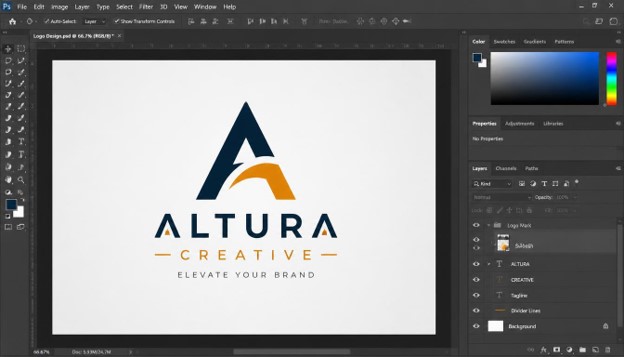
15 Tips Logo Design in Photoshop to Create Better Brand Identities
A logo is the face of a brand. It appears on websites, packaging, social media profiles, invoices, and storefronts, and people form an opinion about a business within seconds of seeing it. A weak logo can make a strong company look unprofessional, while a well-crafted one builds trust before a single word is read.
Many designers and business owners already own Adobe Photoshop, so it is natural to ask whether logo design in Photoshop is a smart choice. The answer is yes, as long as you understand its strengths and limits. Photoshop offers powerful shape tools, a precise Pen tool, flexible typography controls, and a non-destructive workflow that suits modern branding projects.
This guide shares 15 practical tips to help you get better results from logo design in Photoshop. Whether you are a beginner making your first mark or a freelancer refining your process, each tip is explained in short, clear paragraphs so you can apply it right away. By the end, you will know how to plan, build, test, and export a logo that supports a strong brand identity.
Why Logo Design in Photoshop Still Works
Photoshop is best known for photo editing, but it has grown into a capable design tool. Logo design in Photoshop gives you shape layers, vector paths, smart objects, layer styles, and advanced color management in one place. That means you can move from concept to mockup without switching software.
Another advantage is familiarity. Millions of creators already know the Photoshop interface, so the learning curve for logo design in Photoshop is gentler than starting from scratch in a new program. You can build on skills you already have.
It is worth being honest about one limit. Photoshop is primarily a raster program, which means pixel-based files can lose sharpness when scaled up. However, if you use shape layers, paths, and smart objects correctly, logo design in Photoshop can still produce clean, scalable results. The tips below show you how.
Tip 1: Start With Research and a Clear Brand Brief

Great logos begin long before you open Photoshop. Start by learning about the business: its mission, audience, values, and competitors. Ask what feeling the brand should create, whether that is trust, energy, luxury, or friendliness.
Write a short brand brief that answers these questions in plain language. Include the company name, tagline, target customers, and the words the brand wants to be associated with. This document becomes your compass throughout the project.
Next, study competitors. Note which colors, shapes, and styles dominate the industry, then decide how your design can stand apart. A logo that looks like everyone else’s will never be memorable.
Finally, gather a mood board with color samples, typography examples, and visual references. Doing this groundwork saves hours later, because your logo design in Photoshop will have a clear direction instead of random experimentation. Research turns creative guessing into confident decision making.
Tip 2: Sketch Ideas on Paper Before Opening Photoshop

It is tempting to jump straight into the software, but paper is faster for generating ideas. A pencil lets you explore ten concepts in the time it takes to build one digital layout. Sketching also frees you from technical distractions.
Draw small thumbnails, dozens of them if possible. Try wordmarks, symbols, monograms, and combinations. Do not judge them yet; the goal is quantity first, quality second.
After a round of sketching, circle the three strongest ideas. Look for concepts that are simple, distinctive, and connected to the brand brief. Weak ideas usually reveal themselves quickly when you view them side by side.
When you finally begin logo design in Photoshop, you can scan or photograph your best sketch and place it on a layer as a reference. Lower its opacity and trace over it using shape tools or the Pen tool. This hybrid method keeps the human touch of hand drawing while delivering the precision of digital work.
Tip 3: Set Up the Right Document From the Start

Your document settings shape everything that follows. For logo design in Photoshop, create a large canvas, such as 3000 by 3000 pixels, at 300 pixels per inch. A big canvas gives you room to zoom in on fine details and export high-resolution versions later.
Choose RGB color mode for logos that will mainly appear on screens, such as websites and social media. If the logo will be printed, you may need a CMYK version too, but it is usually best to design in RGB first and convert carefully at the end.
Set the background to transparent. A transparent canvas ensures your logo can be placed over any color or photo without an ugly white box around it.
Turn on rulers and guides right away. They help you keep elements aligned and centered as you work. Taking two minutes to prepare the document properly will prevent frustrating problems, especially when logo design in Photoshop becomes complex with many layers.
Tip 4: Use Shape Tools for Clean, Vector-Based Elements

Shape layers are the foundation of scalable logo design in Photoshop. Unlike painted or brushed pixels, shapes are vector-based, which means their edges stay crisp at any size. Always choose the Shape option rather than Pixels when using the Rectangle, Ellipse, Polygon, or Custom Shape tools.
Many famous logos are built from basic geometry. Circles, squares, and triangles combine into surprisingly sophisticated marks. Try overlapping shapes and using the path operations, such as Combine, Subtract, Intersect, and Exclude, to carve out new forms.
The Properties panel lets you adjust corner radius, stroke, and fill numerically. This precision matters because logos rely on consistent proportions. A corner radius that is off by a few pixels can make a design feel sloppy.
Practicing with shapes is one of the fastest ways to improve your logo design in Photoshop. Start with simple combinations, then gradually build more complex icons as your confidence grows.
Tip 5: Master the Pen Tool for Custom Shapes

When basic shapes are not enough, the Pen tool gives you complete control. It creates paths made of anchor points and curve handles, allowing you to draw any custom outline. For serious logo design in Photoshop, this tool is essential.
The secret to smooth curves is using as few anchor points as possible. Too many points create lumpy, uneven edges. Place points at the extremes of a curve, then pull the handles to shape the line.
Use the Direct Selection tool to refine your work. You can move individual points, adjust handles, and fix small errors without redrawing everything. Zooming in to 200 or 300 percent helps you spot flaws that would be invisible at normal size.
The Pen tool takes practice, so be patient. Trace over simple objects, letters, and your own sketches until the process feels natural. Once you are comfortable, your logo design in Photoshop will feel more like drawing and less like fighting the software.
Tip 6: Use Smart Objects for Non-Destructive Editing

Clients love revisions, so your workflow should make changes easy. Smart Objects protect your original artwork while letting you scale, rotate, and transform it repeatedly without losing quality. Converting logo elements into Smart Objects is one of the smartest habits in logo design in Photoshop.
Right-click a layer and choose Convert to Smart Object. You can then resize it up and down as many times as needed with no degradation. You can also double-click it to edit the contents in a separate window.
Smart Objects are especially useful for mockups. You can place your finished logo inside a Smart Object, then reuse it across business cards, signage, and packaging templates. Update it once and every mockup refreshes automatically.
Pair Smart Objects with adjustment layers and smart filters for a fully non-destructive workflow. When feedback arrives, you can change a color or effect in seconds instead of starting over. This flexibility makes logo design in Photoshop far more efficient.
Tip 7: Choose Typography That Matches the Brand Personality

Typography carries as much personality as any symbol. A bold sans-serif feels modern and confident, while a delicate serif suggests elegance and tradition. Script fonts can feel personal, but they risk poor readability at small sizes.
When working on logo design in Photoshop, limit yourself to one or two typefaces. Too many fonts create visual noise and weaken the brand. A common approach is to pair a distinctive display font for the name with a simple, readable font for the tagline.
Pay close attention to kerning, which is the space between individual letters. Default spacing is rarely perfect, especially in a wordmark. Adjust it manually so the gaps look even, and check pairs like “AV” or “TY” that often need tightening.
Also confirm the font license. Many free fonts are not cleared for commercial use, and using them in a logo can cause legal trouble later. Finally, consider converting text to shapes so the logo looks the same everywhere. Careful type choices elevate any logo design in Photoshop.
Tip 8: Build a Purposeful Color Palette

Color triggers emotion faster than shape or text. Blue often signals trust and stability, red suggests energy and urgency, green connects to nature and growth, and yellow feels optimistic. Choose colors that reflect the brand’s personality and appeal to its audience.
Keep the palette small. Most effective logos use one to three colors. This restraint makes the design easier to reproduce and easier to remember.
Use the Color Picker and Swatches panel to save your exact values. Record the hex codes, RGB numbers, and, if needed, CMYK equivalents so the brand can stay consistent across every platform. Consistency is a big part of professional logo design in Photoshop.
Do not forget accessibility. Check that your colors have enough contrast against both light and dark backgrounds. A beautiful palette that cannot be read is a failed palette. Testing color combinations early will save you from redesigning later in your logo design in Photoshop project.
Tip 9: Use Grids, Guides, and Alignment for Balance

Professional logos feel balanced because their proportions are deliberate. Grids and guides help you achieve that. In logo design in Photoshop, you can enable the grid from the View menu and drag guides from the rulers.
Use circles and squares as construction aids. Many iconic marks are built on geometric grids, where every curve and angle relates to another. Even a simple set of guides can make your design look more harmonious.
The Align and Distribute options in the toolbar are powerful allies. Select multiple layers and align their centers or edges with a single click. Manual dragging, by contrast, often leaves tiny gaps that look careless once zoomed in.
Optical balance matters too. Sometimes mathematically centered elements look off, and a small nudge fixes it. Trust your eyes as well as your tools. Combining grids with intuition gives your logo design in Photoshop a polished, deliberate look.
Tip 10: Keep the Design Simple and Memorable

Simplicity is the golden rule of branding. The most recognizable logos in the world use very few elements, and you can sketch them from memory. Complexity makes a logo harder to recognize, print, and scale.
During logo design in Photoshop, ask yourself whether every element earns its place. If removing a detail does not hurt the message, remove it. Gradients, textures, and tiny decorative lines often add clutter rather than value.
A useful test is the squint test. Step back or squint at your logo. If the basic shape and idea are still clear, the design is strong. If it turns into a blur, it is too complicated.
Memorability also comes from a unique twist, such as a clever negative space or a hidden shape. Aim for one clear idea rather than many competing ones. Simple, focused logo design in Photoshop produces marks that people remember and recognize instantly.
Tip 11: Organize and Name Your Layers

A messy layers panel slows you down. Layers named “Shape 47 copy 3” become impossible to manage when a client asks for a change. Good organization is a hallmark of professional logo design in Photoshop.
Give every layer a clear, descriptive name, such as “Icon Circle,” “Wordmark,” or “Tagline.” Group related layers into folders, and use color labels to separate sections of the design. This structure makes revisions quick and painless.
Save multiple versions of your file as the project evolves. Names like “logo-v1,” “logo-v2,” and “logo-final” protect you if you need to return to an earlier idea. Also consider keeping alternate layouts, such as horizontal and stacked versions, in separate groups.
If you collaborate with another designer or hand files to a client, organized layers show respect for their time. Clean files are easier to understand, edit, and reuse. Strong organization supports every stage of logo design in Photoshop.
Tip 12: Use Layer Styles and Effects Sparingly

Photoshop offers drop shadows, bevels, glows, and gradient overlays, and it is easy to overuse them. Heavy effects can date a logo quickly and cause problems when printing or embroidering. A strong logo should work in flat color first.
When you do use layer styles in logo design in Photoshop, keep them subtle. A gentle gradient or soft shadow can add depth for digital use, but the core design must stand on its own without them.
Consider creating two versions: a flat primary logo and an enhanced version for special uses like web banners or app icons. The flat version becomes your dependable workhorse for signage, stamps, and merchandise.
Remember that effects can hide weaknesses in the underlying design. If the logo only looks good with a glow or bevel, the concept probably needs improvement. Restraint keeps logo design in Photoshop timeless and versatile.
Tip 13: Test Your Logo in Black and White and at Small Sizes

A logo must work everywhere, not just on a large monitor. Before finalizing your logo design in Photoshop, test the design in pure black, pure white, and grayscale. If it loses its impact without color, the structure needs work.
Shrink the logo to favicon size, around 32 by 32 pixels, and to the size of a social media profile picture. Fine lines and small text often disappear at these sizes. If details vanish, simplify them or create a compact version of the logo.
Test on different backgrounds too. Place your logo on white, black, and busy photographic backgrounds to see how it behaves. You may need a reversed version for dark surfaces.
Many brands maintain a logo family: a full version, a stacked version, an icon-only mark, and a monochrome version. Planning this system during logo design in Photoshop makes the brand flexible across websites, packaging, and print.
Tip 14: Present Your Logo in Realistic Mockups

Clients find it easier to approve a logo when they can see it in real life. Mockups place your design on business cards, storefronts, shirts, mugs, and websites, showing how the identity will actually look. This is a major strength of Photoshop.
Use mockup templates with Smart Objects. Double-click the Smart Object layer, paste your logo, save, and the mockup updates instantly. It takes only a few minutes to produce a professional-looking presentation.
Show a variety of applications, but do not overwhelm the client. Three to five well-chosen mockups are usually enough. Include both light and dark contexts so they understand how the logo adapts.
Good presentation also builds your credibility as a designer. Explaining the reasoning behind your choices, tied back to the brand brief, turns opinions into informed decisions. Mockups are the final step that makes logo design in Photoshop feel real and convincing.
Tip 15: Export Your Logo in the Right Formats

Delivering the right files is just as important as designing the logo. Export a transparent PNG for web and digital use, a JPG for situations that need a solid background, and a PDF for print. Use File, Export, Export As to control size and format.
Photoshop can also export shape layers as SVG, which is useful for websites. Keep in mind that complex effects, pixel layers, and some text settings may not carry over perfectly, so always check the exported file in a browser.
For professional printing, large signage, or vehicle wraps, many designers rebuild or refine the final master in a dedicated vector program such as Adobe Illustrator. Being upfront about this with clients is a sign of professionalism, not weakness.
Finally, package everything neatly: the layered PSD, exported files in several sizes, color codes, font names, and a short usage guide. A complete delivery gives the client confidence and ensures your logo design in Photoshop project ends on a strong note.
Common Mistakes to Avoid in Logo Design in Photoshop
Even experienced designers fall into a few traps. The most frequent mistake is using raster brushes or low-resolution images, which leads to blurry edges. Always build with shapes and paths whenever possible.
Another error is copying trends without thinking. Popular styles fade quickly, and a logo tied to a fad may look outdated in two years. Focus on timeless principles instead of temporary fashion.
Some designers also skip the testing phase. A logo that has never been viewed small, in black and white, or on different backgrounds can fail in real use. Careful testing is a required step in logo design in Photoshop, not an optional one.
Finally, never use stock icons, clip art, or unlicensed fonts as the core of a logo. Originality and legal safety are essential. Avoiding these mistakes will make your logo design in Photoshop work stronger and more professional.
Frequently Asked Questions (FAQs)
- Is Photoshop good for logo design?
Yes, Photoshop can be very effective when used correctly. Its shape layers, Pen tool, and Smart Objects make logo design in Photoshop practical for many projects. For very large print applications, some designers finalize the file in a vector program.
- What canvas size should I use for logo design in Photoshop?
A canvas of 3000 by 3000 pixels at 300 PPI is a solid starting point. It provides enough resolution for high-quality exports while keeping the file manageable. Always use a transparent background.
- Can I create a vector logo in Photoshop?
You can create vector shapes and paths using the Shape and Pen tools, and you can export SVG files. However, Photoshop is mainly pixel-based, so complex projects may benefit from Illustrator. Using shape layers keeps logo design in Photoshop as scalable as possible.
- Which tools are most important for logo design in Photoshop?
The Shape tools, Pen tool, Type tool, and Smart Objects are the most important. Guides, grids, and the Align options also help you achieve precision. Mastering these tools improves the quality of your logo design in Photoshop quickly.
- What file formats should I deliver to a client?
Deliver a layered PSD, transparent PNGs, a JPG, and a PDF at minimum. Add an SVG when suitable for web use. Providing multiple versions makes your logo design in Photoshop project complete and useful.
- How many colors should a logo have?
Most strong logos use one to three colors. Fewer colors make the design easier to reproduce and more memorable. Always test a single-color version as part of your logo design in Photoshop process.
- How long does it take to design a logo in Photoshop?
A simple logo may take a few hours, while a full brand identity with research, concepts, and revisions can take days or weeks. Planning and sketching reduce the time spent in the software. Efficient logo design in Photoshop depends on preparation.
- Can beginners learn logo design in Photoshop?
Absolutely. Start with shape tools, simple typography, and basic color theory. With regular practice and the tips in this guide, beginners can produce professional-looking work through logo design in Photoshop.
Conclusion
A great brand identity begins with a thoughtful logo, and the tips above show that logo design in Photoshop is more capable than many people assume. By researching the brand, sketching first, setting up your document correctly, using shapes and paths, and staying non-destructive with Smart Objects, you build a strong foundation.
Typography, color, grids, and simplicity then shape the personality of the mark. Organized layers, restrained effects, thorough testing, convincing mockups, and proper exports make sure the logo works in the real world.
Practice these 15 tips consistently, and your logo design in Photoshop skills will grow with every project. Start with one small idea today, apply what you have learned, and watch your brand identities become clearer, stronger, and more memorable.
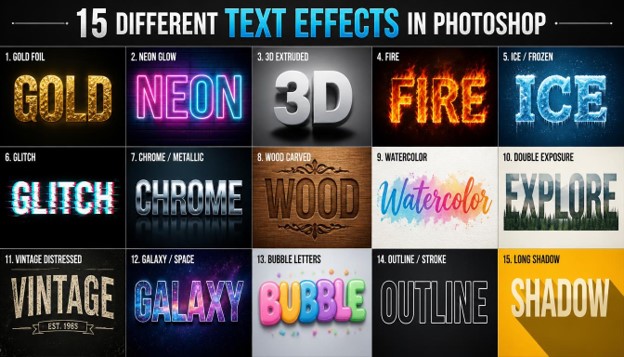
15 Best Text Effects in Photoshop: Easy Tutorials for Beginners (2026)
Typography can make or break a design. Whether you’re building a poster, a YouTube thumbnail, a social media banner, or a logo, the right lettering style pulls the eye in and sets the mood before anyone reads a single word. That’s exactly why so many designers search for Text Effects in Photoshop — they’re one of the fastest ways to turn plain type into something people stop scrolling for.
If you’re new to Photoshop, the idea of layer styles, blending modes, and smart objects can feel intimidating. The good news is that most professional-looking Text Effects in Photoshop only take a handful of steps once you know the right settings. In this guide, we’ll walk through 15 beginner-friendly tutorials, each broken into short, easy steps so you can follow along even if you’ve never opened Photoshop before.
By the end of this article, you’ll have a personal toolkit of Text Effects in Photoshop you can reuse on any project — from gold foil lettering to glitch text, neon signs, and 3D typography.
Why Learn Text Effects in Photoshop?
Before jumping into the tutorials, it helps to understand why designers rely so heavily on these techniques.
Good typography sells an idea in under two seconds. A movie poster, a game logo, or a product label often communicates its entire mood through lettering alone.
Learning Text Effects in Photoshop gives you a shortcut to that kind of visual impact without needing to draw anything from scratch. Every technique below uses layer styles, blend modes, and simple filters — no advanced illustration skills required.
Each section is short on purpose. Add short and concise paragraphs for better readability and UX, so you can skim, find the effect you want, and jump straight to it.
1. Gold Foil Text Effect

Gold foil lettering is one of the most requested Text Effects in Photoshop for wedding invitations, luxury branding, and greeting cards.
Steps:
- Type your text in a bold, thick font like Montserrat Black or Poppins Bold.
- Apply a Gradient Overlay using warm gold tones (from dark amber to bright yellow).
- Add a Bevel and Emboss layer style with a low depth and smooth technique.
- Add a subtle Drop Shadow to lift the letters off the background.
- Finish with a Pattern Overlay set to “foil texture” at low opacity for realism.
This is one of the simplest Text Effects in Photoshop because it only relies on the Layer Style panel — no external brushes needed.
Where to use it: Gold foil lettering works best on wedding invitations, luxury product packaging, and any design with a dark or cream-colored background that lets the warm tones stand out.
Common mistake to avoid: Beginners often make the gradient too flat. Add at least four color stops — dark brown, amber, bright gold, and a pale highlight — so the light appears to hit the letters unevenly, just like real foil.
2. Neon Glow Text Effect

Neon text is a favorite among beginners because it looks advanced but takes only minutes to create.
Steps:
- Choose a rounded, script-like font to mimic real neon tubing.
- Set the fill color to a bright pink, blue, or green.
- Add an Outer Glow layer style using the same color as the text.
- Duplicate the glow with a second, softer Outer Glow at a larger size.
- Place your text on a dark background so the glow pops.
This effect is beginner-friendly because Photoshop’s built-in glow settings do most of the heavy lifting.
Where to use it: Neon text suits nightlife event posters, gaming channel branding, and bar or restaurant signage graphics.
Common mistake to avoid: Skipping the second, larger glow layer is the biggest mistake beginners make. A single glow looks flat, while two stacked glows at different sizes create the soft light bloom that sells the neon illusion.
3. 3D Extruded Text Effect

3D lettering adds depth and works great for headlines, YouTube thumbnails, and game titles.
Steps:
- Type your text and convert it to a Smart Object.
- Go to the 3D menu and choose “New 3D Extrusion from Selected Layer.”
- Adjust the extrusion depth in the Properties panel.
- Rotate the object slightly for a dynamic angle.
- Add lighting from the 3D panel to create realistic shading.
This is one of the more advanced Text Effects in Photoshop, but Photoshop’s 3D tools make it approachable for beginners.
Where to use it: 3D extruded lettering is a strong choice for movie title cards, YouTube thumbnails, and app splash screens where you want the headline to feel physical and dimensional.
Common mistake to avoid: Rendering at low quality settings makes edges look jagged. Always switch the render mode to “Ray Traced Final” before exporting so the shading and reflections look smooth.
4. Fire Text Effect

Fire text is dramatic and works well for movie posters, gaming logos, and event banners.
Steps:
- Type your text in a bold font and duplicate the layer.
- Apply the Wind filter (Filter > Stylize > Wind) rotated vertically.
- Use Liquify to push the top edges upward like flames.
- Add a Gradient Map with red, orange, and yellow tones.
- Set the blend mode to Screen and layer in a fire texture overlay.
Fire is one of the more detailed Text Effects in Photoshop, but following the steps in order keeps it manageable.
Where to use it: Fire text fits horror and action movie posters, gym or fitness branding, and gaming thumbnails that need a high-energy, dramatic feel.
Common mistake to avoid: Applying the Wind filter only once often looks weak. Run it two or three times, alternating direction slightly, so the flame edges look layered instead of flat and uniform.
5. Ice / Frozen Text Effect

The frozen look pairs perfectly with winter campaigns and fantasy-style designs.
Steps:
- Type your text in a strong, geometric font.
- Apply a blue-to-white Gradient Overlay.
- Add Bevel and Emboss with a “Chisel Hard” technique for a crystalline look.
- Overlay an ice texture image and set the blend mode to Screen.
- Add small white specks using the Spatter filter to mimic frost.
Of all the Text Effects in Photoshop on this list, this one relies most on a good texture image, so choose a high-resolution ice or frost photo.
Where to use it: The frozen look works well for winter sale banners, fantasy game logos, and holiday greeting cards with a cool color palette.
Common mistake to avoid: Using a warm-toned frost texture breaks the illusion. Stick to blue-white or gray-blue textures so the temperature of the image matches the temperature of the gradient.
6. Glitch Text Effect

Glitch text is popular in gaming, tech, and streaming graphics.
Steps:
- Type your text and duplicate the layer twice.
- Change one duplicate’s channel to red-only and offset it slightly left.
- Change the second duplicate to cyan-only and offset it slightly right.
- Add random rectangular selections and shift them horizontally for a “torn” look.
- Finish with a light Noise filter for texture.
This is a fast, fun entry into Text Effects in Photoshop because there’s no painting or texture work involved — just layer offsets.
Where to use it: Glitch text is a natural fit for gaming channel intros, tech product launches, and cyberpunk-style album covers.
Common mistake to avoid: Offsetting the channels too far apart makes the text unreadable. Keep the shift between three and eight pixels so the glitch reads as intentional rather than broken.
7. Chrome / Metallic Text Effect

Chrome text works well for retro branding, car logos, and 90s-inspired designs.
Steps:
- Type your text in a rounded, bold font.
- Apply a Gradient Overlay with alternating light gray, white, and dark gray stripes.
- Add Bevel and Emboss with high depth for a reflective edge.
- Add an Inner Shadow for extra dimension.
- Finish with a subtle Drop Shadow underneath.
Metallic styles are consistently among the most searched Text Effects in Photoshop, largely because they look complex but are built entirely from gradients.
Where to use it: Chrome lettering suits automotive branding, retro band merchandise, and any design channeling a 1990s or early-2000s aesthetic.
Common mistake to avoid: Using only two gradient shades looks flat instead of reflective. Add at least five alternating light and dark stops to mimic the way real chrome bounces light unevenly.
8. Wood Carved Text Effect

This rustic style suits cafe menus, farmhouse branding, and handcrafted product labels.
Steps:
- Place a wood texture image as your background.
- Type your text and set the fill to 0% opacity.
- Add Bevel and Emboss with the “Chisel Hard” technique.
- Add an Inner Shadow to simulate a carved groove.
- Add a Pattern Overlay using the wood texture so the letters blend into the surface.
This is a great effect for practicing how layer styles interact with textures rather than flat colors.
Where to use it: Wood carved text is ideal for cafe menus, farmhouse or rustic branding, and handmade product labels where a natural, handcrafted feel matters.
Common mistake to avoid: Forgetting the Inner Shadow step leaves the text looking like a sticker instead of a carving. That shadow is what creates the illusion of a groove cut into the surface.
9. Watercolor Text Effect

Soft, painterly lettering is ideal for wedding stationery, greeting cards, and lifestyle brands.
Steps:
- Type your text in a clean, readable font.
- Place a watercolor texture image above the text layer.
- Right-click the texture and choose “Create Clipping Mask.”
- Adjust the texture’s Hue/Saturation to match your brand colors.
- Add a soft Drop Shadow for gentle depth.
This is one of the easiest Text Effects in Photoshop for beginners since it only requires a clipping mask and one texture image.
Where to use it: Watercolor lettering fits wedding stationery, floral branding, and lifestyle blog headers where a soft, handmade feel is the goal.
Common mistake to avoid: Using a watercolor texture that’s too uniform makes the effect look like a plain color fill. Choose a texture with visible brush strokes and uneven edges for a more authentic painted look.
10. Double Exposure Text Effect

Double exposure text blends a photo directly into the lettering for a cinematic look.
Steps:
- Type your text in a bold, thick font.
- Place a photo (like a landscape or portrait) above the text layer.
- Create a Clipping Mask so the photo only shows inside the letters.
- Adjust the photo’s contrast and add a black-and-white adjustment layer.
- Add a soft Gaussian Blur at the edges for a dreamy transition.
Among all Text Effects in Photoshop, this one is especially popular on Instagram and Pinterest because of its artistic, editorial feel.
Where to use it: Double exposure text works well for travel brand headers, music album art, and editorial magazine covers that want a cinematic, story-driven tone.
Common mistake to avoid: Choosing a photo with too much detail can make the letters unreadable. Pick images with clear silhouettes, like a single mountain or a tree line, so the letterforms stay legible.
11. Vintage Distressed Text Effect

Distressed lettering fits band merch, retro posters, and denim or leather branding.
Steps:
- Type your text in a serif or slab-serif font.
- Place a grunge or paper texture above the text and Clipping Mask it.
- Lower the layer’s opacity so worn spots show through the letters.
- Add a Color Overlay in a faded sepia or cream tone.
- Add slight rotation and a paper background for an aged feel.
This effect proves that Text Effects in Photoshop don’t have to look shiny or futuristic — plenty of trending styles lean vintage instead.
Where to use it: Distressed lettering suits band merchandise, denim or leather product tags, and retro travel posters with a worn, well-loved feel.
Common mistake to avoid: Over-distressing the text can make it unreadable at a glance. Keep the core letterforms mostly intact and concentrate the wear and texture around the edges instead.
12. Galaxy / Space Text Effect

Space-themed text works well for gaming channels, sci-fi posters, and music covers.
Steps:
- Type your text in a bold, wide font.
- Place a galaxy or nebula photo above the text and Clipping Mask it.
- Boost saturation and contrast on the galaxy layer.
- Add small white dots using a soft round brush for extra stars.
- Add an Outer Glow in purple or blue for a cosmic edge.
This is a favorite among the Text Effects in Photoshop community because the results look far more advanced than the actual steps required.
Where to use it: Galaxy text is a strong pick for sci-fi movie posters, astronomy content, and music covers with a dreamy, otherworldly mood.
Common mistake to avoid: Skipping the saturation boost leaves the galaxy texture looking dull inside the letters. Push the vibrance up noticeably so the nebula colors read clearly at a small size.
13. Bubble Letters Text Effect

Playful, rounded bubble text is great for kids’ brands, party invites, and casual social posts.
Steps:
- Type your text in a thick, rounded font (or use a bubble-letter font).
- Add Bevel and Emboss with a smooth, high-gloss technique.
- Add a Gradient Overlay in bright, candy-like colors.
- Add a small white highlight shape on each letter for a glossy shine.
- Finish with a soft Drop Shadow underneath.
This is one of the most beginner-friendly Text Effects in Photoshop, since the whole look comes from just two layer styles.
Where to use it: Bubble letters are perfect for children’s brands, birthday party invitations, and playful social media posts aimed at a younger audience.
Common mistake to avoid: Forgetting the small highlight shape on each letter is the most common miss. That tiny white shine is what sells the glossy, balloon-like finish.
14. Outline / Stroke Text Effect

Outlined text is minimal, modern, and extremely versatile for logos and posters.
Steps:
- Type your text and set the fill opacity to 0%.
- Add a Stroke layer style, choosing a color and width that fits your design.
- Set the stroke position to “Outside” for a cleaner edge.
- Optionally add a second, thinner inner stroke in a contrasting color.
- Place the text over a bold background image or solid color.
This is the simplest entry on the list and a great starting point if you’re brand new to Text Effects in Photoshop.
Where to use it: Outlined text works well for minimalist logos, streetwear branding, and any design that needs to sit cleanly over a busy photo background.
Common mistake to avoid: Setting the stroke width too thin at large sizes makes it disappear when scaled down. Preview the design at its smallest intended size before finalizing the stroke weight.
15. Long Shadow Text Effect

Long shadow text is a flat-design classic, popular in app icons and minimalist posters.
Steps:
- Type your text in a bold, geometric sans-serif font.
- Duplicate the text layer and fill the duplicate with a darker shade.
- Use Free Transform to stretch the duplicate diagonally behind the original.
- Lower the shadow layer’s opacity slightly for a soft flat effect.
- Keep the background simple so the shadow reads clearly.
This wraps up our list of the best Text Effects in Photoshop for beginners — from realistic textures to flat, modern design styles.
Where to use it: Long shadow text suits app icons, flat-design posters, and minimalist portfolio headers where a clean, modern aesthetic matters most.
Common mistake to avoid: Stretching the shadow at an inconsistent angle across multiple letters breaks the flat-design illusion. Use Free Transform once on the whole text layer, not letter by letter, to keep the angle uniform.
Why These Text Effects in Photoshop Work So Well Together
Looking at all fifteen techniques side by side, a pattern emerges. Every single one of these Text Effects in Photoshop relies on the same small toolkit: layer styles, clipping masks, gradients, and a handful of filters. Once you’re comfortable with those four building blocks, you can mix and match them to invent entirely new looks.
For example, combining the gold foil gradient technique with the outline effect’s stroke settings can produce a completely new “gold outline” style. Or you could take the neon glow’s Outer Glow setting and apply it to the galaxy text for a glowing cosmic effect. This is really the biggest lesson beginners take away from practicing Text Effects in Photoshop: the tools are reusable, even if the final results look completely different.
Another reason these techniques work so well is that Photoshop keeps every layer style live and editable. Unlike effects baked directly into pixels, you can revisit a Bevel and Emboss setting weeks later and tweak the depth, angle, or color without redoing the whole effect from scratch. That non-destructive workflow is part of what makes practicing Text Effects in Photoshop so much less stressful for beginners than people expect.
How to Choose the Right Text Effect in Photoshop for Your Project
With fifteen options to pick from, choosing the right Text Effects in Photoshop for a specific project can feel overwhelming at first. A simple way to narrow it down is to think about mood, audience, and background before you even open Photoshop.
Start with mood. Every effect on this list carries an emotional tone. Fire and glitch text feel aggressive and high-energy, which suits gaming or action content. Watercolor and gold foil feel soft and elegant, which suits weddings or lifestyle brands. Matching the mood of your Text Effects in Photoshop choice to the mood of your project is the single biggest factor in whether a design feels “right.”
Think about your audience next. A children’s brand will almost always benefit more from bubble letters or bright neon than from a distressed vintage look. A luxury skincare brand, on the other hand, will lean toward gold foil, chrome, or a subtle outline effect. Ask who’s going to see the final design before deciding which Text Effects in Photoshop technique to apply.
Finally, consider the background. Some effects, like neon glow and fire, need a dark background to read properly. Others, like outline and long shadow, work best on a light or photo-based background. Testing your chosen Text Effects in Photoshop style against the actual background you plan to use will save you from having to redo the effect later.
A quick decision checklist:
- Formal or luxury project → Gold Foil, Chrome, or Outline
- Playful or casual project → Bubble Letters, Neon Glow, or Long Shadow
- Nature or handmade brand → Watercolor, Wood Carved, or Vintage Distressed
- Tech, gaming, or sci-fi project → Glitch, Galaxy, or 3D Extruded
- Bold, high-impact headline → Fire, Ice, or 3D Extruded
Once you’ve narrowed your options down using this checklist, go back to the matching tutorial above and follow the steps in order. Because every technique in this guide uses short, numbered steps, you shouldn’t need more than 10–15 minutes per effect once you’re comfortable with the Layers panel.
Tools and Shortcuts That Speed Up Every Text Effect
A few Photoshop tools show up again and again across these Text Effects in Photoshop tutorials. Getting comfortable with them will make every future project faster.
The Layer Style panel (double-click any layer) is where Bevel and Emboss, Gradient Overlay, Outer Glow, Stroke, and Drop Shadow all live. Almost every effect in this guide touches this panel at least once.
Clipping Masks (Alt/Option-click between two layers) let you contain a texture or photo inside your text shape, which is the backbone of the watercolor, double exposure, galaxy, and wood carved effects.
Smart Objects (right-click a layer > Convert to Smart Object) protect your text from becoming permanently pixelated when you apply filters like Liquify, Wind, or 3D extrusion. Always convert to a Smart Object before running a filter on text.
The Gradient Tool and Gradient Editor are used in more of these Text Effects in Photoshop tutorials than any other tool, from gold foil to chrome to ice. Spend ten minutes getting familiar with adding and adjusting color stops, and every future tutorial will move faster.
Learning these four tools well is really the fastest path to mastering Text Effects in Photoshop as a whole, since nearly every advanced technique is just a creative combination of the same basic building blocks.
Before You Start: A Simple Photoshop Setup Checklist
A little preparation before opening any tutorial saves a lot of frustration later. Here’s a short checklist worth running through first.
Check your canvas size. Start with a document at least 1920 by 1080 pixels for web graphics, or larger if you’re designing for print. Working too small makes fine details like bevels and glows look chunky when you scale up later.
Set your color mode. Use RGB for anything going online, and CMYK only if the final file is headed to a printer. Switching modes after finishing a design can shift your colors unexpectedly, so it’s best to decide upfront.
Organize your layers early. Name each layer as you create it — “Text,” “Texture,” “Glow,” and so on — rather than leaving everything as “Layer 1,” “Layer 2.” This becomes especially helpful once you start combining multiple effects on one project.
Keep a folder of textures and gradients. Several tutorials in this guide call for outside images, like wood grain, grunge paper, or galaxy photos. Building a small personal library of high-resolution textures means you’ll never be stuck mid-tutorial searching for the right file.
Save incrementally. Use File > Save As with a version number (v1, v2, v3) every time you try a new variation. This makes it painless to go back a step if an effect doesn’t turn out the way you expected.
None of these steps take more than a minute or two, but together they make every tutorial in this guide noticeably smoother to follow.
Common Beginner Mistakes to Avoid
A few mistakes show up again and again when beginners are just getting started, regardless of which effect they’re trying. Watching out for these will save you time across every project.
Flattening the file too early. It’s tempting to merge all your layers once a design looks finished, but this makes it impossible to go back and adjust a color or shadow later. Keep your layers separate and only flatten a copy when you’re ready to export.
Ignoring the font choice. The steps matter, but the font you start with matters just as much. A thin, delicate font will never look convincing with a heavy 3D extrusion, and a chunky display font will look clumsy with a delicate watercolor treatment. Match the font weight to the effect before you begin.
Skipping the preview at export size. A design can look stunning zoomed in at 100%, then fall apart once shrunk down to a thumbnail or business card size. Always zoom out and check your work at the actual size it will be viewed.
Overusing filters. More isn’t always better. Stacking five different filters on one text layer often muddies the result instead of improving it. Most of the effects in this guide use two or three filters at most — resist the urge to add extra “just in case.”
Keeping these simple habits in mind will make every future design project, not just these fifteen tutorials, turn out cleaner and more professional.
Quick Tips for Better Results
- Always work on a duplicate layer so your original text stays editable.
- Convert text to a Smart Object before applying filters like Liquify or Wind.
- Use high-resolution textures (2000px or larger) so your Text Effects in Photoshop stay sharp when exported.
- Save your finished layer styles as presets so you can reuse them instantly on future projects.
- Export a PNG with a transparent background if you plan to reuse the text elsewhere.
Frequently Asked Questions
- What are Text Effects in Photoshop? Text Effects in Photoshop are styles and techniques — like glow, 3D, gold foil, or fire — applied to type using layer styles, filters, and blending modes to make lettering more visually striking.
- Are Text Effects in Photoshop hard to learn for beginners? No. Most of the effects in this guide use Photoshop’s built-in Layer Style panel, which means no drawing skills or plugins are required. A few, like fire or galaxy text, take slightly more steps but are still beginner-friendly.
- Which Photoshop version do I need for these tutorials? Any recent version of Photoshop (CC 2020 or newer) supports every technique in this article, including the 3D extrusion tools and Liquify filter.
- Can I apply these Text Effects in Photoshop to a logo? Yes, but for logos it’s best to keep the design simple and scalable. Outline, gold foil, and bevel-based effects tend to work best for branding since they stay legible at small sizes.
- Do I need special fonts for these effects? Not necessarily. Bold, thick fonts like Montserrat, Poppins, or Bebas Neue work well for most effects. Script fonts suit the neon effect, while serif fonts fit the vintage and wood-carved looks best.
- How do I save a text effect so I can reuse it later? Right-click the text layer in the Layers panel and choose “Copy Layer Style.” You can then paste it onto any new text layer, or save it as a style preset from the Styles panel.
- Why does my text effect look pixelated when exported? This usually happens when the canvas resolution is too low or a texture image was stretched beyond its original size. Always start with a canvas of at least 1920px wide and use high-resolution textures.
- What’s the easiest effect to start with? The Outline/Stroke effect and the Bubble Letters effect are the two easiest Text Effects in Photoshop for absolute beginners, since both rely on just one or two layer style settings.
- Can I combine multiple Text Effects in Photoshop on the same text layer? Yes. Layer styles stack, so you can combine a Gradient Overlay from the gold foil effect with a Stroke from the outline effect on the same layer to create a custom hybrid look.
- How long does it take to learn all 15 Text Effects in Photoshop? Most beginners can comfortably work through all 15 tutorials in this guide over a single weekend, spending roughly 15–20 minutes per effect including experimentation.
Final Thoughts
Mastering Text Effects in Photoshop doesn’t require years of design experience — it just requires following the right steps in the right order. Start with the simpler techniques like the outline or bubble letter effect, then work your way up to more advanced looks like fire, galaxy, or 3D extrusion.
With these 15 tutorials in your toolkit, you now have a full library of Text Effects in Photoshop to pull from for any project, whether it’s a poster, a thumbnail, a logo, or a social media post. Practice each one a few times, save your favorite layer styles as presets, and you’ll be creating scroll-stopping typography in no time.
-

 Graphics Design3 years ago
7.Exploring the Importance of Color Theory Charts
-

 Graphics Design1 year ago
Top 10 Best Graphic Design Tools for Beginners in 2025 (Free & Paid)
-

 Graphics Design2 years ago
10 Stunning Gradient Design Trends You Need to Know in 2024
-

 Graphics Design1 year ago
15 Freelance Graphic Design Tips to Boost Your Career in 2025
-

 Graphics Design2 years ago
29.Retro Design Is Making a Comeback in Modern Spaces
-

 Graphics Design1 year ago
Best Laptops for Graphic Designers – 2025 Buying Guide
-

 Graphics Design2 years ago
2025 Logo Design Trends: What’s In, What’s Out?
-

 Graphics Design2 years ago
15.The Importance of Effective Flyer Design in Marketing
binance koda za napotitev
September 26, 2024 at 4:12 am
Thank you for your sharing. I am worried that I lack creative ideas. It is your article that makes me full of hope. Thank you. But, I have a question, can you help me?
Muhammad Ubaid
September 26, 2024 at 5:56 am
Yes tell me your question?
binance
December 1, 2024 at 5:09 am
Your point of view caught my eye and was very interesting. Thanks. I have a question for you.
Sign Up
December 22, 2024 at 5:34 am
Thank you for your sharing. I am worried that I lack creative ideas. It is your article that makes me full of hope. Thank you. But, I have a question, can you help me?