
Graphics Design
25.Mastering Different Illustration Styles

Mastering Different Illustration Styles
Here’s an overview:
- Understanding Different Illustration Styles
- Choosing the Right Illustration Style for Your Project
- Mastering Traditional Illustration Techniques
- Exploring Digital Illustration Tools and Styles
- Tips for Developing Your Unique Illustration Style
Understanding Mastering Different Illustration Styles

Mastering different illustration styles that is why I consider it necessary to familiarize myself with the kinds of illustration to make my list of potential styles. Here are essential points to consider: Here are essential points to consider:
Realistic Illustration: This style aims at producing very real and full representational works that you get in real life. It becomes challenging to capture skin details, and it takes a lot of time, patience, keen observation, good understanding of anatomy, and light to perfect.
Minimalist Illustration: In minimalist mastering different illustration, it is extremely important to stay simple and never superfluous, and that remains true for all of the techniques used in simple illustrations. Even but simple compositions using the basic forms and applying a strict range of colors can help to deliver a powerful statement or elicit an emotional response.
Abstract Illustration: Mastering different illustration abstract images refer to such forms and shapes that are presented in a picture and are not related to objective reality. They just provide procedures and using imaginative concepts to permit creativity and interpretation.
Cartoon Illustration: Mastering different illustration cartoons are not realistic but they are entertaining and may incorporate aspects of humor in their content. It also brings the freedom of hosting creativity in the character drawing and in the storytelling process.
Watercolor Illustration: To may people, watercolor illustrations have certain features which include the fluidity of the washes and the painting in general that gives a particular feeling of dreaminess. In this style, a lot of importance must be placed on the approach used when combining colors and on layering in particular.
Digital Illustration: This versatility is possible due to new tools that allow artists to produce their works using different styles, from realistic to surreal. Is the fact that digital illustration allows for more flexibility when editing and even constructing an image.
Mastering different illustration all of them have certain peculiarities and nuances of their usage and applicability. Thus, going through and employing different styles of illustration would help me in acquiring a multitude of skills, which would cater to my discovery as well as establishing a specific style that is exclusive to me.
Choosing the Right Illustration Style for Your Project
Mastering different illustration regarding the selection of an illustration style for a specific project, you should always take into account the general mood and idea that should be promoted.
Understand the Project: Ideally, when it comes to choosing an illustration style, I should be entirely knowledgeable about the project’s goals, audience, and feel. This will assist me in indentifying the best style that will apt at supporting the project.
Research Different Styles: Mastering different illustration styles do not underestimate the importance of time invested in finding more about other types of illustrations that might suit the project better. No matter if it is basic or detailed, true to life or not, abstract or simply cartoonish, different styles have different effects on the feelings and thoughts of a person.
Match the Style to the Content: Therefore the style should match the content of particular project that is being executed. For instance, colorful and cute illustration would apply to children books, whereas, neat and professional look would be suitable for business branding.
Consider Brand Identity: Mastering different illustration styles when the project is for a specific brand, it’s always important to be sure that the chosen style of illustration fits its brand identity. Consistency of style across different brand element or items assist in presenting an integrated and easily recognizable brand image.
Consult with Clients: If it is a project based on a client for example, then I should allow them to have a say in the style to be adopted on the illustrations. It will help in understanding the needs and vision of the people on the other end in order to ensure that the final outcome being produced is satisfactory to them.
Stay Flexible: Mastering different illustration styles although, the use of illustration style that compliments the chosen concept should not be restricted I should also be willing to listen and make changes if need be. Being flexible is highly important in making sure that one can deliver on the project in a manner that shall meet the specifications that the project had been set.
Mastering different illustration styles thus, by evaluating the specifics of the project, such as the content and intended audience, it will be possible for me to select the most appropriate illustration style that will optimize the project’s impact and success rate.
Mastering Traditional Illustration Techniques

Mastering different illustration styles i consider traditional illustration methods not only very important but also for me they seem eternally relevant and must have tools for any illustrator to have. . Here are some key techniques to master:Here are some key techniques to master:
Pencil Sketching: Mastering different illustration styles drawing with pencil and producing very carefully modeled visuals from the top level is one of the fundamentals of traditional illustration. Be sure to use various shading and different line thickness to give your sketches some realism and perspective.
Ink Drawing: Try creating shapes and figures with pens and brushes to achieve thin thin steady dark lines and intricate details in your illustrations. Cross-hatch and stipple as in a technique for conveying different kinds of texture.
Watercolor Painting: Mastering different illustration styles you will discover that there are a lot of techniques that can be used in drudging watercolor and these can give a certain softness to the illustrations. Learn more about layering washes and how to change from one color wash to another without creating noticeable, Sharp Across edges Sharp Down edges between the two shades, as well as keeping white space for objects’ highlights.
Acrylic Painting: As known, acrylic paint is popular for its versatility for beginner artists because it enables them to use it in application of transparent and opaque layer. When drawing use layering, glazing, and impasto abstraction as essential techniques that will enable you to add depth and texture to your illustrations.
Oil Painting: Mastering different illustration styles however, oil paints are time-consuming because the painting dries slowly, yet it provides a facets of colors, which one can mix in equal propotions. Underpainting method when painting complex scenes, glazing method when painting translucent materials and alla prima method for fast and unique styles of painting among others.
Mixed Media: Ink, pencil, watercolor, and acrylic paintings can harmonize and lead to attractive artworks when used simultaneously. You can also try mixing and simply layering the different mediums in a way that would create aesthetic effects.
Mastering different illustration styles alongside learning the new means of achieving the artworks, adding the traditional illustration techniques allows for not only the widened range of possibilities and developments but also contributes to the understanding of the illustration history. Practice as much as you can and do not be scared to switch up the medium and composition type since you may find another that suits you.
Exploring Digital Illustration Tools and Styles
Here are probably the most used types of digital illustration tools, as well as different attitudes to it, that helped me create product illustrations in diverse ways. Here are some insights into the exploration of digital illustration tools and styles:Here are some insights into the exploration of digital illustration tools and styles:
Software Options:
Adobe Illustrator: This program is especially good for preparing polished and scalable comment graphic works.
Procreate: Mastering different illustration styles one of the most favored software tools by artists whose works are done digitally because of the brush stroke like application and the availability of numerous tools.
Clip Studio Paint: It is specifically well-recognized for repertoire covering both illustrative works and comic ones.
CorelDRAW: It is best suited for enhancing and developing precise illustrations because of its extensive vector editing feature.
Exploring Styles:
Realism: This year, I have tried drawing hyper-realism digital illustrations to point on intricate details on the model.
Minimalism: Propaganda boards are simple, they should have clear easy to follow lines and less use of colors for ease in delivering the intended messages.
Comic Book: Mastering different illustration styles going into turn to COMICS! stimuli such as striking lines, non-verbal characters, and powerful composition.
Abstract: Challenging the creative limits and restrictions to come up with artistic digital abstractions, experimenting with shapes, paints, brushes.
Techniques:
Layering: Th strategies of layering as a tool for organizing objects and creating legibility in the world of digital illustration.
Brush Customization: Customizing brushes for procreate apps and designing brushes coming up with new brush strokes and brush finishing.
Grids and Guides: Mastering different illustration styles lines and grids to keep the proportions and positioning of illustrations in a design.
Textures and Effects: Applying different layers of pigments and changing the brush strokes themselves to create different values and add density to illustrations.
Inspirations:
The audience also uses other pieces created by different famous digital artists as references and as means of improving their skills and knowledge.
Mastering different illustration styles experimenting with distinct pieces and various niches to expand my artistic views and options.
Learn from a range of sources such as nature, daily experiences and people’s lives and include realistic feelings when illustrating.
There is not only the development of technical abilities when working with various tools and disciplines of digital illustration, but also the understanding and love for the infinite range of possibilities that exist in the digital art realm.
Tips for Developing Your Unique Illustration Style
Being able to work on a special drawing concept is one way of ensuring one is distinctive in his artistry. Here are some tips that can help you cultivate your individual style:Here are some tips that can help you cultivate your individual style:
Study Different Styles: The first step towards creating illustration is to consider some of the techniques used by illustration artists. See what parts appeal to you here and adapt them into your music and lyrics.
Experiment with Techniques: Do not shy away from using techniques like shading, contrasts in the thickness of lines, and the types of colors that you plan on using. This exploration can actually assist you in defining what may be nearest and dearest to your heart.
Find Inspiration: Spray samples are useful for providing reference points from other sources such as nature, architecture, fashion, or art. Many great artists take inspiration from other sources to enhance the personality and uniqueness of their work.
Practice Consistently: It is the better way to improve your style in singing since the practice creates a positive change in the performance. Spending certain amount of time frequently, drawing and practicing to improve in the art of sketching.
Seek Feedback: Do not fear to get a feedback from a classmates, tutors, or even from strangers online. Receiving responses to your comments can be beneficial in pinpointing your strengths, weaknesses, and learning how to fine-tune the way you present your comments.
Stay True to Yourself: However, it is critical to acknowledge other artists who have influenced and shaped your work, but always retain your creativity. So the final advice, or rather a conclusion, is to follow your perception of the matter and visual insights when illustrating unique characters and stories.
Keep Evolving: Unlike the illustrations that you have on your computer screen, your illustration style is not written in the stone. Simply allow yourself to give the colors what they desire, let the art work develop and progress. Never cease experimenting to always reach and construct your own looks.
With such guidelines at hand, and commitment to developing ones skills, one can obtain a unique style of illustrations that will be needed in the arts society.
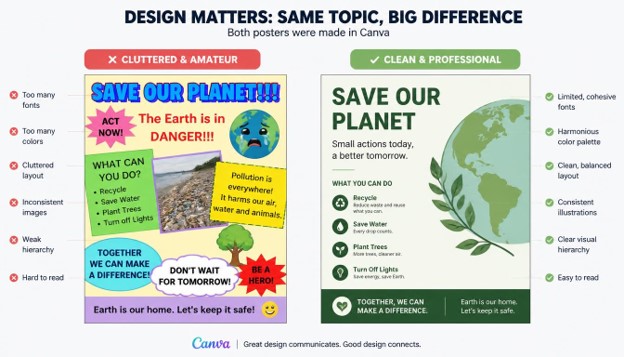
Why Your Canva Posters Look Amateur — 12 Design Mistakes to Fix
Canva has made design accessible to everyone, but accessibility does not always mean professionalism. Thousands of small business owners, students, event planners, and marketers create Canva Posters every single day, yet many of these designs still look homemade, cluttered, or confusing. If you have ever wondered why your Canva Posters do not look as polished as the ones you see from professional designers, you are not alone, and the good news is that the fixes are simpler than you think.
In this guide, we will walk through twelve common mistakes that make Canva Posters look amateur, and we will show you exactly how to fix each one. Whether you are designing a poster for a local event, a product launch, a school project, or a social media campaign, these tips will help your Canva Posters look sharp, credible, and professional. Every section below includes a short explanation, a practical fix, and a suggested visual so you can see the difference between an amateur layout and a polished one.
Let’s dive into the twelve mistakes that are quietly ruining your Canva Posters, and learn how a few small adjustments can completely transform your results.
1. Overcrowding Your Poster With Too Much Text
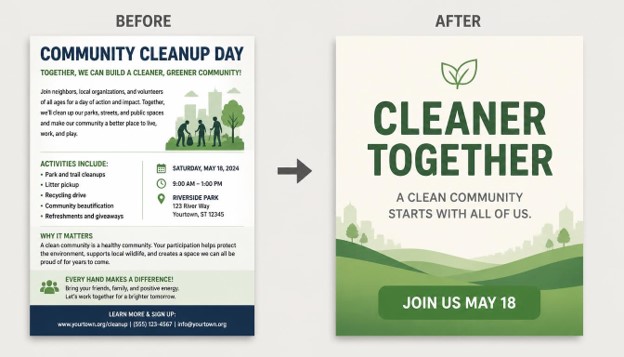
The single biggest mistake people make with Canva Posters is trying to say everything at once. When a poster is packed with paragraphs, bullet points, and multiple font sizes competing for attention, the viewer’s eye does not know where to look first. This is one of the fastest ways to make Canva Posters feel overwhelming and unprofessional.
A poster is not a brochure. It is meant to be read in three to five seconds from a distance, so every word needs to earn its place. Instead of listing every detail about your event or product, choose one headline, one supporting line, and a clear call to action. If you have more information to share, put it on a website or flyer and use a QR code on the poster instead.
Fix: Cut your text down to the essentials — a strong headline, one supporting sentence, and contact or action details. This single change instantly makes Canva Posters look cleaner and more intentional.
A useful trick is to print a draft and hold it at arm’s length, or view it as a thumbnail on your screen. If you cannot read the headline instantly from that distance, the text is either too small or there is simply too much of it competing for space. Try reading only the largest line of text out loud — if that single line does not communicate the core message on its own, your hierarchy needs work before you add anything else.
It also helps to write your poster copy in a separate document first, edit it down ruthlessly, and only then paste the final short version into your design. Designers call this “writing for the glance,” since posters are rarely read word for word the way an article or email is. Treat every extra sentence as a cost against clarity, not a bonus.
2. Ignoring Visual Hierarchy
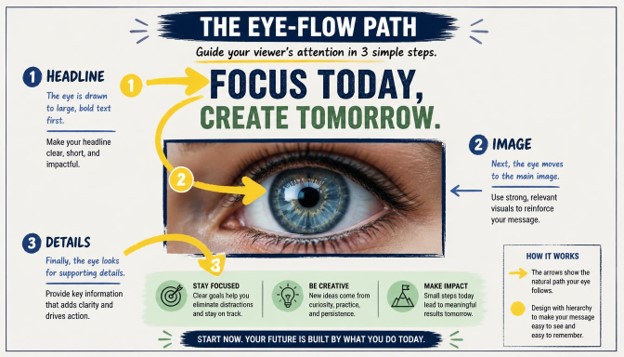
Visual hierarchy is the order in which a viewer’s eyes move across your design. Professional Canva Posters guide the eye naturally from the most important element to the least important one, usually starting with a bold headline, moving to an image or graphic, and ending with smaller supporting details.
Amateur designs often give every element the same visual weight, which forces the viewer to work harder to understand the message. If your headline, date, and location all appear in the same font size and color, nothing stands out, and the poster loses its purpose. This lack of hierarchy is one of the most common reasons Canva Posters fail to grab attention in a crowded space like a notice board or social feed.
Fix: Use size, weight, and color to create three clear levels of information — primary (headline), secondary (subheading or image), and tertiary (details like date, time, or website). This structure makes Canva Posters far easier to scan and understand instantly.
One easy way to test hierarchy is to squint at your design or blur it slightly. When you squint, only the largest and boldest shapes should remain visible — that is what your headline should be. If several elements appear equally prominent through the blur, your hierarchy is too flat and needs stronger contrast in size or weight.
Designers often use a simple ratio to build hierarchy quickly: make the headline roughly three times larger than the body text, and the body text slightly larger than any fine print. This rule of thumb removes the guesswork and gives every element a clear, deliberate role in guiding the viewer’s attention from start to finish.
3. Using Too Many Fonts
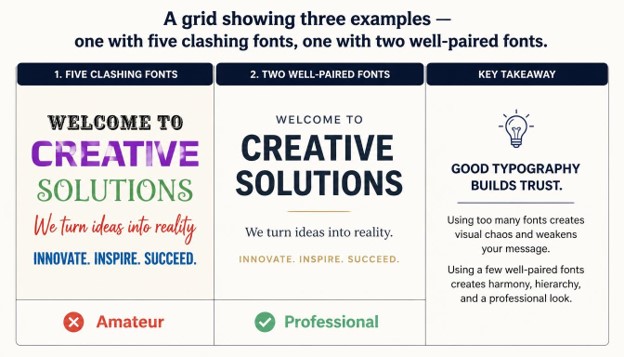
Canva offers thousands of font options, and that abundance is exactly what gets beginners into trouble. It is tempting to use a decorative script for the headline, a bold sans-serif for the subheading, and a completely different serif for the body text, but mixing too many typefaces makes a design feel chaotic and unpolished. This is a mistake that instantly signals amateur Canva Posters to anyone who sees them.
Professional designers typically stick to two, or at most three, font families per project — one for headlines and one for body text, with a third reserved for small accents if needed. Consistency in typography creates a sense of order and trust, which is exactly what you want your poster to communicate.
Fix: Limit your poster to two complementary fonts. Choose one bold, attention-grabbing font for headlines and one clean, readable font for body text. This simple rule alone can transform how professional your Canva Posters appear.
When choosing a font pairing, look for contrast rather than similarity. A bold display font works well against a simple, neutral sans-serif, because the two typefaces play different roles instead of fighting for the same visual space. Pairing two decorative or two extremely similar fonts often looks messy, since the eye cannot tell whether they are meant to be different or the same.
It also helps to check how your chosen fonts perform at small sizes, since some highly stylized typefaces become unreadable once shrunk down for details like dates or contact information. Reserve decorative fonts for large headline text only, and use a plain, highly legible font for anything smaller than the main heading.
4. Poor Color Combinations
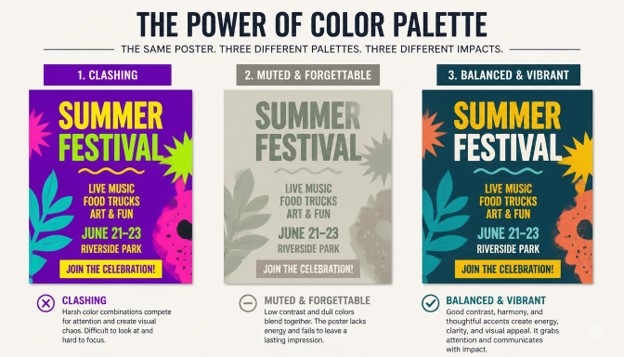
Color is one of the most powerful tools in design, but it is also one of the easiest to get wrong. Many beginners choose colors that clash, that are too similar to blend into each other, or that simply do not match the tone of the event or brand. Bright neon colors on a formal event poster, or low-contrast pastels on a poster meant to grab attention from far away, are common issues that make Canva Posters look unprofessional.
A strong color palette usually includes one dominant color, one or two supporting colors, and a neutral background or accent color like white, black, or gray. Canva’s built-in color palette generator can help you find combinations that work well together, and it is worth spending a few extra minutes here rather than guessing.
Fix: Stick to a maximum of three to four colors, and make sure they align with the mood of your event or brand. Testing your color choices against a color wheel tool will help your Canva Posters feel more cohesive and intentional.
Think about the emotion your event or product needs to convey before picking colors. Warm tones like red, orange, and yellow tend to feel energetic and urgent, which suits sales or festivals, while cooler tones like blue and green feel calm and trustworthy, which suits wellness or corporate events. Matching color psychology to your message adds a layer of professionalism that random color choices simply cannot achieve.
It is also worth testing your palette in grayscale before finalizing it. If the design still reads clearly without color, your contrast and hierarchy are solid, and the color palette is only enhancing an already strong layout rather than compensating for a weak one.
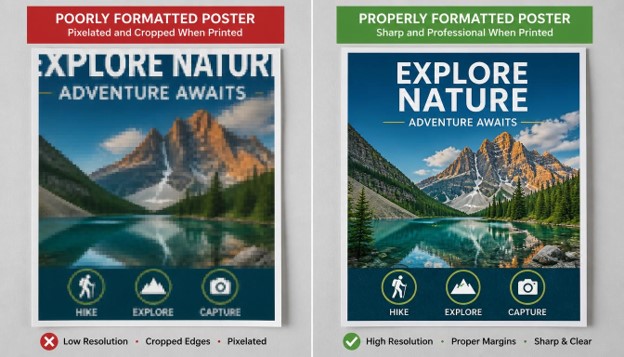
5. Using Low-Resolution or Stretched Images
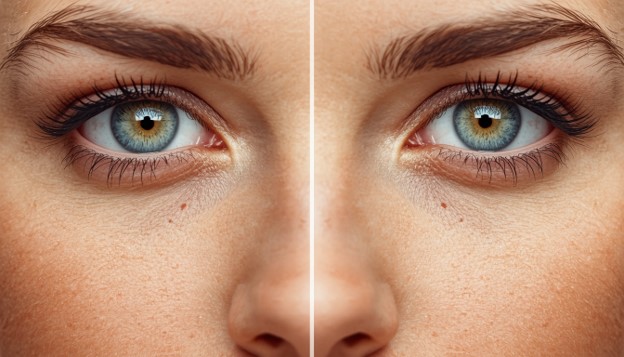
Nothing screams “amateur” faster than a blurry or pixelated photo on a poster. This usually happens when someone uploads a small image and then stretches it to fill a larger space, or downloads a low-quality image from a search engine instead of using a proper stock photo library. Blurry visuals immediately damage the credibility of Canva Posters, no matter how good the layout or typography is.
Canva has a massive built-in library of high-resolution stock photos and graphics, so there is rarely a need to use a low-quality external image. If you are uploading your own photos, make sure they are high resolution to begin with, and avoid resizing them far beyond their original dimensions.
Fix: Always use high-resolution images, either from Canva’s library or your own camera at full resolution. Before exporting, zoom into your poster at 100 percent to check for blurriness. This one habit alone can save your Canva Posters from looking cheap.
As a general guideline, never stretch an image beyond its original size, since enlarging a photo forces the software to guess at missing pixels, which creates the blurry or blocky look viewers notice immediately. If an image feels too small for the space you need to fill, it is almost always better to choose a different, larger photo than to stretch the one you already have.
It is also worth paying attention to the subject matter of your images, not just their sharpness. A high-resolution photo that is poorly cropped, oddly lit, or unrelated to your message can still weaken a design. Choose visuals that reinforce your headline and support the overall story you are trying to tell.
6. Ignoring White Space
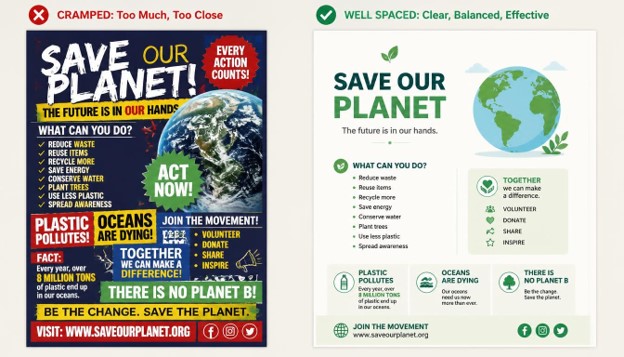
White space, also called negative space, is the empty area around your design elements. Beginners often feel the need to fill every inch of a poster with text, images, or decorative elements, but this instinct actually works against them. Without breathing room, a design feels cramped and difficult to read, and viewers tend to skip over posters that feel too busy. Proper use of white space is one of the clearest signs of professionally designed Canva Posters.
Think of white space as a frame that draws attention to your most important elements. Professional designers intentionally leave margins around the edges and space between text blocks, because this space helps the eye rest and focus on what matters. Removing a few unnecessary graphics or shrinking oversized borders can make a huge difference.
Fix: Add consistent margins around your poster and leave breathing room between text and images. Resist the urge to fill every empty space, since a little emptiness in Canva Posters often makes them look far more premium.
Many luxury and premium brands rely almost entirely on generous white space to communicate sophistication, since a design that does not need to shout for attention feels more confident and established. If your poster is advertising something high-end or professional, consider using even more space than feels comfortable at first — it usually reads as intentional rather than empty.
A simple rule to apply is the “one breath” test: leave enough space around your key elements that your eye can rest for a moment before moving to the next piece of information. If elements feel like they are touching or crowding each other, add margin until each section has its own clearly defined area.
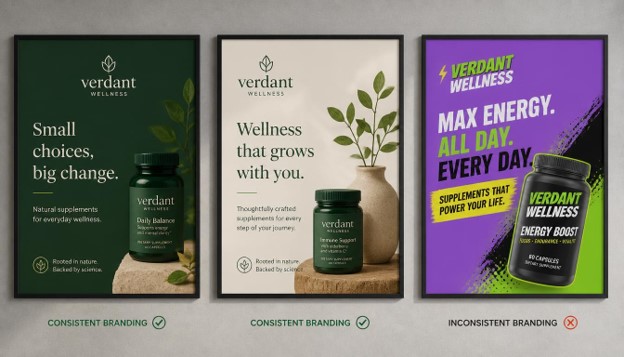
7. Inconsistent Branding
If you are designing a poster for a business, event series, or organization, inconsistency in logos, colors, and fonts across different materials can confuse your audience and weaken brand recognition. Amateur Canva Posters often use a different color scheme or font style than the rest of a brand’s marketing materials, which makes the poster feel disconnected from the business it represents.
Consistency builds trust. When your poster, social media graphics, and website all use the same color palette, logo placement, and typography, your audience recognizes your brand instantly, even at a glance. Canva‘s Brand Kit feature (available on paid plans) allows you to save your brand colors, fonts, and logos so every new design stays consistent automatically.
Fix: Set up a Brand Kit in Canva with your official colors, fonts, and logo files, and apply it to every poster you create. Consistent branding makes Canva Posters look like they came from a professional design team, not a last-minute DIY project.
Beyond colors and fonts, consistency also applies to logo placement, tone of voice, and the overall style of imagery you use, whether that is photography, illustration, or icons. Repeating the same visual patterns across every piece of marketing material, from social posts to printed signage, builds familiarity, and familiarity builds trust over time.
If you work with a small team or multiple people creating designs, sharing a Brand Kit ensures everyone stays aligned without needing to double-check every file manually. This is especially useful for organizations that produce frequent event or promotional materials, since it removes guesswork and keeps every new design on-brand from the very first draft.
8. Misaligned Elements
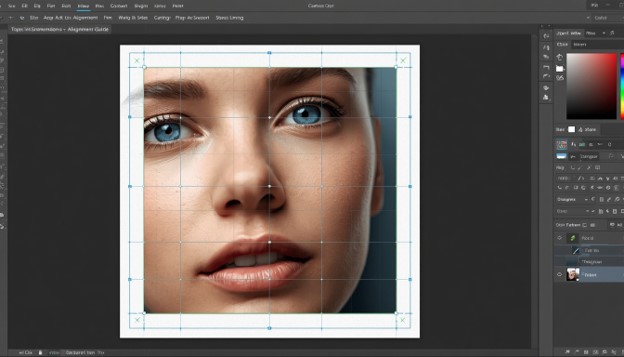
Alignment might seem like a small detail, but misaligned text, images, and shapes are one of the fastest ways to make a design feel sloppy. When headlines are not centered properly, when text boxes sit slightly off from images, or when margins are uneven on different sides of the poster, the overall design feels unfinished. This is a subtle mistake, but it is one that trained eyes notice immediately in Canva Posters.
Canva actually has built-in alignment guides that appear automatically when you drag elements close to the center or edges of your poster. Using these guides, along with the “Align” tool in the toolbar, ensures that every element lines up precisely with the others.
Fix: Use Canva’s snap-to-grid and alignment tools to make sure every text box, image, and shape lines up cleanly. Select multiple elements and use the “Align center” or “Distribute” options to keep spacing even. This small habit dramatically improves the polish of Canva Posters.
Consistent alignment also applies to the invisible grid your entire layout sits on. Choosing a single axis — either centered or left-aligned — for most of your text and sticking to it throughout the design creates a sense of order that random, mixed alignment cannot achieve. Switching between centered and left-aligned text within the same poster is a subtle but common giveaway of an inexperienced layout.
It helps to zoom in periodically while designing rather than only checking alignment at the very end. Small misalignments are much easier to fix as you go than to hunt down once dozens of elements have already been placed on the canvas.
9. Using Default Templates Without Customization
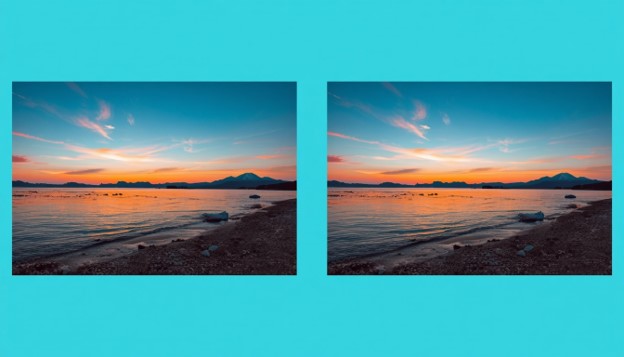
Canva’s template library is a huge time-saver, but it is also used by millions of other people. If you drop your text into a popular template without changing the fonts, colors, layout, or graphics, there is a good chance your poster will look identical to hundreds of others online. This lack of originality is a quiet but common reason Canva Posters fail to stand out or feel professional.
Templates should be a starting point, not a final product. Swap out the default color palette for your own brand colors, replace stock graphics with images relevant to your event, and adjust the layout slightly to make it your own. Even small changes, like moving an image or changing a font pairing, can make a templated design feel custom-built.
Fix: Never publish a poster straight from a template without customizing at least the colors, fonts, and imagery. A few thoughtful edits can turn a generic template into unique, professional-looking Canva Posters that reflect your own brand identity.
A good starting point is to change the template’s structure slightly, not just its colors. Try swapping the position of the image and text block, adjusting the proportions of each section, or replacing a default shape with a custom graphic that relates to your specific event or product. These structural tweaks go a long way toward making a design feel original.
It also helps to browse a handful of different templates before committing to one, rather than using the very first result that appears. Combining ideas from two or three templates, and then adding your own touches, produces a far more distinctive result than relying on a single template exactly as it was designed.
10. Poor Contrast Between Text and Background
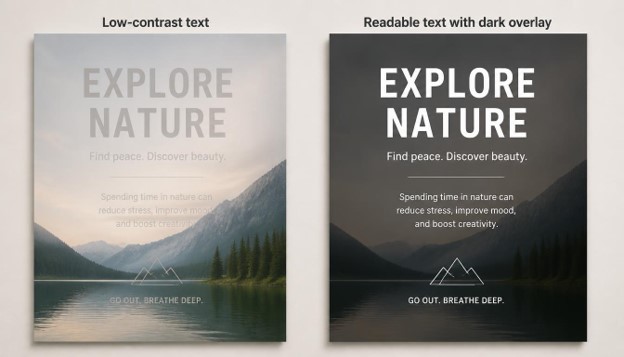
Text that is hard to read because it blends into the background is one of the most functional design failures a poster can have. Light gray text on a white background, yellow text on a light background, or busy photo backgrounds behind small text all make it difficult for viewers to actually read the message. No matter how creative the layout is, if people cannot read the text, the poster has failed at its core job. Poor contrast is a surprisingly common issue in amateur Canva Posters.
A simple contrast checker tool can tell you whether your text and background combination is readable enough, especially for posters that will be viewed from a distance or printed physically. As a general rule, dark text on a light background, or light text on a dark, solid-colored background, tends to be the safest and most readable choice.
Fix: Test your text and background combination for contrast before finalizing your design, and consider adding a subtle overlay behind text placed on busy photos. Strong contrast keeps Canva Posters legible in any lighting or viewing distance.
Contrast issues become even more noticeable outdoors or under bright lighting, where subtle color differences that looked fine on a laptop screen can disappear entirely. If your design will be displayed outside, printed on glossy paper, or viewed under harsh light, err on the side of stronger, higher-contrast combinations rather than subtle ones.
It is also worth checking your design in both light and dark viewing environments, since screens and printed materials render colors differently depending on lighting conditions. A quick test print, or viewing your design on a different device, can reveal contrast problems that are easy to miss while working on a single bright screen.
11. Cluttered Layout With Too Many Design Elements
Icons, shapes, borders, stickers, and decorative graphics can add personality to a poster, but too many of them competing for attention creates visual noise. Beginners often add multiple stickers, several different shapes, and decorative flourishes in an attempt to make a poster look “designed,” when in reality this often has the opposite effect. A cluttered layout is one of the clearest visual signals of amateur Canva Posters.
Professional design tends to follow a “less is more” philosophy. Every graphic element on your poster should serve a purpose, whether that is guiding the eye, reinforcing the theme, or supporting the brand. If an element does not add value, it is usually better to remove it entirely.
Fix: Review your poster and remove any decorative element that does not serve a clear purpose. Aim for one or two supporting graphics rather than five or six. A cleaner layout will instantly make your Canva Posters feel more intentional and professional.
A helpful exercise is to list every element on your poster and ask what job each one is doing. If an icon, border, or sticker cannot answer that question clearly, it is likely just filling space rather than adding value, and removing it will usually strengthen the design rather than weaken it.
Simplicity also makes a design more flexible for reuse. A clean layout with fewer decorative elements is easier to adapt for different sizes, platforms, or future events, while an overly cluttered design often needs to be rebuilt from scratch each time requirements change.
12. Ignoring Print and Display Specifications
A poster that looks perfect on a laptop screen can look completely different once it is printed or displayed at a larger size. Common technical mistakes include designing at the wrong resolution, forgetting to add bleed for printed posters, using RGB colors for a print job that requires CMYK, or not checking the final aspect ratio for the display medium. These technical oversights can quietly undermine even a well-designed poster, and they are often overlooked when creating Canva Posters.
Before exporting, always check what the final poster will be used for. If it is being printed, download it in high resolution (300 DPI) and check whether your printer requires bleed margins. If it will be displayed digitally on social media or a screen, make sure the dimensions match the platform’s recommended size.
Fix: Match your Canva file settings to the final output method — high resolution and CMYK-friendly colors for print, correct aspect ratio for digital display. Getting these technical details right ensures your Canva Posters look as sharp in real life as they do on screen.
If you are unsure about a printer’s exact requirements, it is worth asking directly about bleed size, color profile, and preferred file format before finalizing your design, since these details vary between print shops. Sending a file that does not match specifications can result in unexpected cropping, shifted colors, or delays while the file is corrected and resent.
For digital display, always double-check the exact pixel dimensions required by the platform you are using, whether that is a social media post, a digital signage screen, or a website banner. A design that looks perfect at one size can appear stretched, cropped, or blurry when placed into a differently proportioned frame.
Bonus Tip: Add Short and Concise Paragraphs for Better Readability and UX
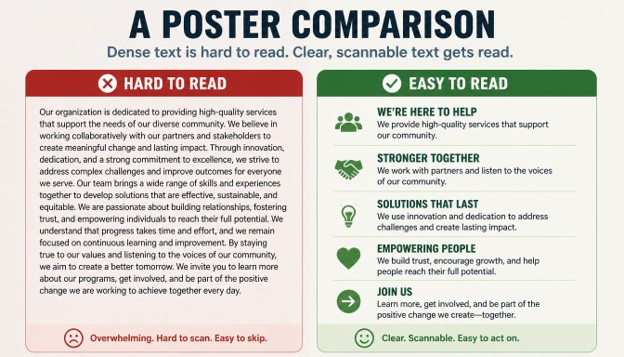
If your poster includes any body text beyond the headline, such as event details, a short description, or a call to action, keep every paragraph short and to the point. Long blocks of text are hard to scan, especially on a poster that people view quickly while walking by or scrolling past on a phone. Breaking information into short, digestible chunks improves both readability and overall user experience, and it applies just as much to Canva Posters as it does to websites and blog articles.
Short paragraphs, bullet points, and generous line spacing make information easier to absorb at a glance. Instead of writing a full sentence explaining every detail, break your message into small, scannable pieces: a bold headline, one short line of context, and clear action details like date, time, and location. This approach keeps your Canva Posters easy to read from a distance and friendly to skim for busy viewers.
Fix: Whenever you add body text to a poster, write in short, concise lines rather than long paragraphs. This habit, borrowed from good web design practices, makes your Canva Posters more user-friendly and easier to understand in seconds.
Putting It All Together
Fixing these twelve mistakes will not happen overnight, but even addressing two or three of them on your next project will noticeably improve how professional your poster looks. Start by simplifying your text, choosing a limited color and font palette, and double-checking alignment and contrast before you export. Over time, these small habits become second nature, and your Canva Posters will consistently look polished instead of amateur.
Remember that great design is rarely about adding more — it is almost always about removing what does not serve the message. The best Canva Posters communicate one clear idea quickly, guide the eye naturally, and leave a strong, professional impression. With the fixes outlined in this guide, you now have a practical checklist to review every poster before you hit publish or send it to print.
Whether you are a small business owner, a student, an event organizer, or a hobbyist designer, applying these principles consistently will help your Canva Posters stand out for all the right reasons.
Quick Recap Checklist
Before you export your next design, run through this short checklist to catch the most common issues in one pass. Keep it nearby as a habit, and review it every single time before you hit download or send a file to print.
- Text: Is the headline the only thing you would remember if you glanced away after two seconds?
- Hierarchy: Do your eyes move naturally from headline to image to details, without confusion?
- Fonts: Are you using no more than two typefaces across the entire layout?
- Color: Does your palette stick to three or four colors that match the mood of the event?
- Images: Is every photo sharp, high resolution, and free of stretching or pixelation?
- Space: Is there enough breathing room around your text and graphics, or does it feel cramped?
- Branding: Do your colors, fonts, and logo match your other marketing materials?
- Alignment: Are all elements snapped to a clean, consistent grid?
- Originality: Have you customized the template enough that it no longer looks like a default?
- Contrast: Can you read every line of text instantly, even from a distance?
- Clutter: Does every graphic element serve a clear purpose, or is it just filling space?
- Specifications: Does the file match the correct resolution, color mode, and size for its final use?
Running through this short list takes less than two minutes, but it catches the vast majority of issues before they make it into a finished, published design. Over time, these checks become automatic, and you will start avoiding these mistakes instinctively rather than needing a checklist at all.
Frequently Asked Questions
- Why do my Canva Posters look unprofessional even when I use templates? Using a template without customizing colors, fonts, and images often results in a generic look, since thousands of other people use the same templates. Personalizing at least three elements — color palette, typography, and imagery — helps your Canva Posters feel original rather than copied.
- How many fonts should I use in a poster design? Most designers recommend using no more than two fonts in a single poster: one for headlines and one for body text. Sticking to this rule keeps Canva Posters looking clean, consistent, and easy to read.
- What resolution should I use for printed Canva Posters? For printed materials, export your design at 300 DPI (dots per inch) to avoid blurriness. Digital-only posters can typically use a lower resolution, but 300 DPI is the safest standard for high-quality Canva Posters in print.
- How do I fix low-contrast text on my poster? Choose a text color that stands clearly apart from the background, such as dark text on a light background or light text on a dark background. Adding a subtle color overlay behind text on photo backgrounds also improves readability significantly.
- Is it okay to use Canva’s free stock photos for posters? Yes, Canva’s built-in photo library includes thousands of high-resolution, royalty-free images that are safe to use in most personal and commercial Canva Posters, though it is worth double-checking licensing terms for specific commercial projects.
- How much text should a poster include? A poster should include only the essential information: a headline, one supporting line, and key details like date, time, and location. Keeping paragraphs short and concise improves readability and keeps your Canva Posters focused and effective.
- What is the biggest design mistake beginners make in Canva? Overcrowding the design with too much text, too many fonts, and too many decorative elements is the most common mistake. Simplifying the layout is usually the fastest way to make Canva Posters look more professional.
20 Best Canva Business Card Ideas for a Professional Look in 2026
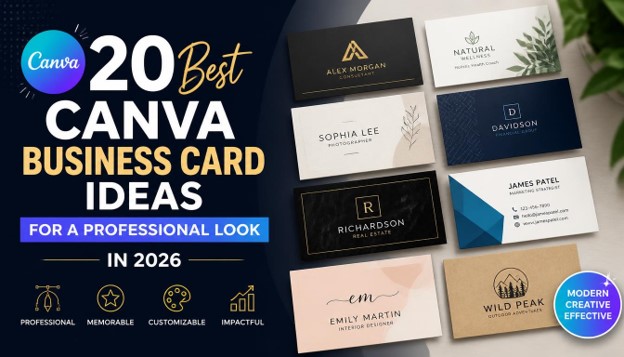
First impressions in business rarely happen over a long meeting or a polished pitch deck anymore — more often than not, they happen in the three seconds it takes someone to glance at a small rectangle of paper you hand them at a conference, a coffee shop, or a networking event. That small rectangle is your business card, and in 2026, more entrepreneurs, freelancers, and corporate professionals are turning to a single design tool to create it: Canva. A well-designed Canva Business Card can say more about your brand than an entire website, because it combines your logo, your color palette, your typography, and your personality into one compact, tangible object that people physically carry away with them. In this guide, we’re going to walk through twenty of the best card ideas you can use right now to build a design that looks professional, feels modern, and actually gets remembered instead of thrown away.
Whether you’re a solo consultant trying to look more established, a real estate agent trying to stand out in a saturated market, or a startup founder who wants a card that reflects a forward-thinking brand, there is a template style on this list built for you. We’ll also cover practical tips on choosing the right paper stock, finishing, and layout, plus answer some of the most common questions people ask about designing this card before sending it off to print.
Why Canva Is the Best Tool for Designing a Business Card in 2026
Before diving into the design ideas themselves, it’s worth understanding why so many professionals default to Canva when they need a new set of cards. Traditional design software like Adobe Illustrator or InDesign requires a steep learning curve, expensive subscriptions, and often a working knowledge of print-ready file formats such as bleed lines and CMYK color profiles. A Canva Business Card, on the other hand, can be built by literally anyone with an internet connection and a few free minutes, because the platform is built around drag-and-drop simplicity rather than professional design jargon.
Canva also maintains a massive, constantly updated library of Canva Business Card templates that are already sized correctly for standard print dimensions, which removes one of the most common mistakes people make when self-designing a card: getting the size or bleed wrong and having text cut off at the printer. Every template in the library has been created by professional designers, meaning even a total design beginner can produce something that looks like it came from an agency. Add in the ability to instantly generate QR codes, drop in stock photography, access thousands of icons, and export print-ready PDF files, and it becomes clear why Canva Business Card has become the default choice for small business owners who need professional results without a professional design budget.
Finally, Canva’s collaboration features mean that if you’re designing on behalf of a team or a client, you can share your project link, gather feedback in real time, and make revisions without ever leaving the browser. This democratization of design is exactly why the ideas below are so achievable — you don’t need any special skill to execute them, just a bit of inspiration and an eye for what fits your brand.
1. Minimalist Canva Business Card
Minimalism has dominated design trends for the better part of a decade, and it remains one of the strongest choices for a Canva Business Card in 2026 because it signals confidence. A minimalist card typically uses a plain white or off-white background, a single accent color, generous white space, and no more than two font families. The idea is to let the negative space do the talking, so your name, title, and contact details breathe instead of competing with busy graphics.
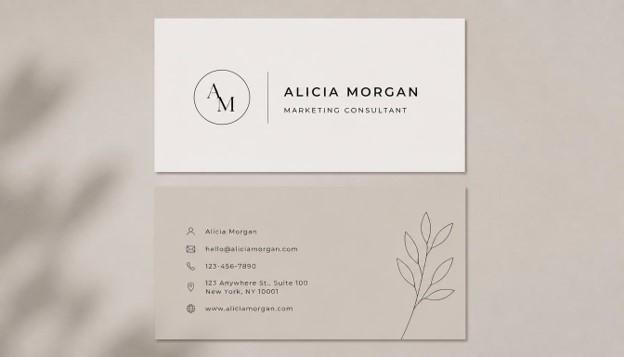
To build this look in Canva, search the template library for “minimalist Canva Business Card,” then strip back any unnecessary icons or shapes the template comes with. Keep your logo small and centered or aligned to one corner, and choose a clean sans-serif font like Montserrat or Poppins for a contemporary feel. A minimalist card built this way works particularly well for consultants, lawyers, architects, and anyone in a field where restraint reads as expertise rather than a lack of creativity.
2. Modern Gradient Canva Business Card
Gradients have made a strong comeback in digital and print design, and a gradient-based design is an easy way to look current without much effort. Instead of a flat single-color background, a gradient card transitions smoothly between two or three complementary colors — think deep purple fading into hot pink, or navy blending into teal. This effect instantly makes a card feel more dynamic and tech-forward.
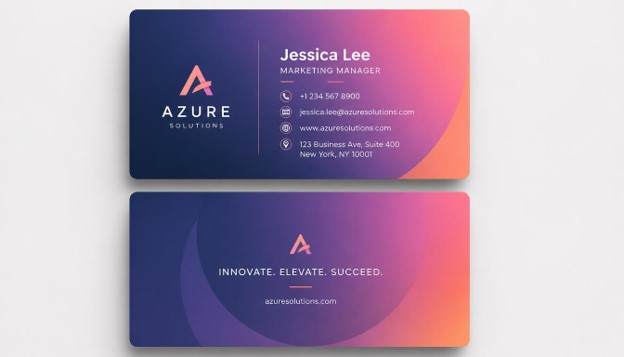
Canva has a dedicated gradient tool built into its background and shape options, so applying this effect takes only a couple of clicks. Pair a bold gradient background with white or light-colored text for contrast, and keep your layout simple so the gradient itself becomes the visual focal point. This style suits tech startups, digital marketers, app developers, and creative agencies that want their card to feel like a natural extension of their online brand identity.
3. Elegant Black and Gold Canva Business Card
Few color combinations communicate luxury as effectively as black and gold, which is why this remains one of the most requested Canva Business Card styles among professionals in finance, real estate, jewelry, and high-end hospitality. The deep contrast between a matte black background and metallic gold text or accents creates an immediate sense of exclusivity and premium quality.
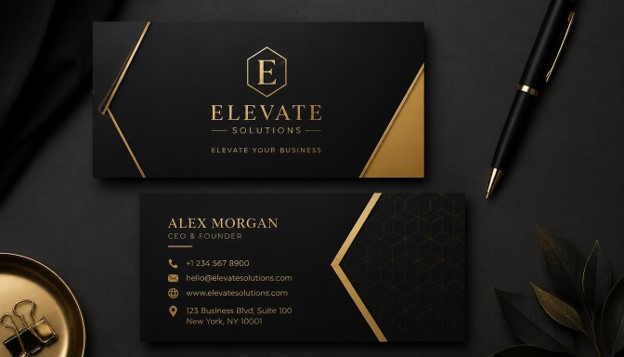
When designing this card in Canva, use the platform’s gold gradient text effect or a solid gold hex color like #D4AF37 for your name and title, while keeping the supporting contact information in a lighter gray so it doesn’t compete for attention. If your printer offers foil stamping, this design translates beautifully into a physical foil finish, which we’ll cover later in this list. A black and gold card designed this way tends to leave a lasting impression precisely because it feels intentional rather than generic.
4. Creative Photography Canva Business Card
For photographers, videographers, and visual artists, a card built entirely around imagery makes far more sense than one filled with text. A photography-focused design like this uses a striking full-bleed photo — often a sample of your own work — as the entire background, with your name and contact details layered on top in a clean, legible font.
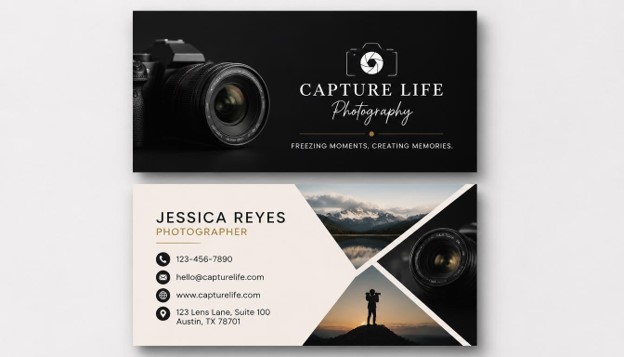
Canva makes this simple through its full-bleed image templates, which allow you to upload your own high-resolution photo and adjust its opacity or add a subtle dark overlay so your text remains readable. Choosing one standout image rather than a busy collage keeps the card looking curated instead of cluttered. This approach turns your business card into a miniature portfolio piece, giving potential clients an instant sense of your visual style before they even visit your website.
5. Bold Typography Canva Business Card
Sometimes the strongest design choice is to let your name or your brand name do all the visual work. A bold typography card design ditches images and icons entirely in favor of oversized, expressive lettering that fills most of the card’s surface. This works especially well for personal brands, copywriters, public speakers, and creative freelancers who want their card to feel unmistakably their own.
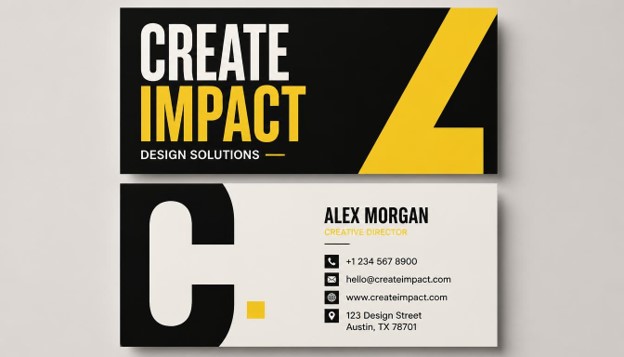
In Canva, experiment with condensed, heavyweight fonts like Anton or Bebas Neue for your name, scaled up so it nearly touches the edges of the card, then place your title and contact information in a much smaller font underneath for contrast. The key to making a typography-driven card work is restraint elsewhere — no busy backgrounds, no extra icons, just confident type doing the heavy lifting.
6. Vintage Retro Canva Business Card
Retro-inspired design has found a strong audience among boutique brands, barbershops, coffee roasters, and artisanal businesses that want to communicate craftsmanship and heritage rather than cutting-edge technology. A vintage design like this one typically borrows visual cues from mid-century print design — muted earth tones, serif or script lettering, decorative borders, and textures that mimic aged paper.
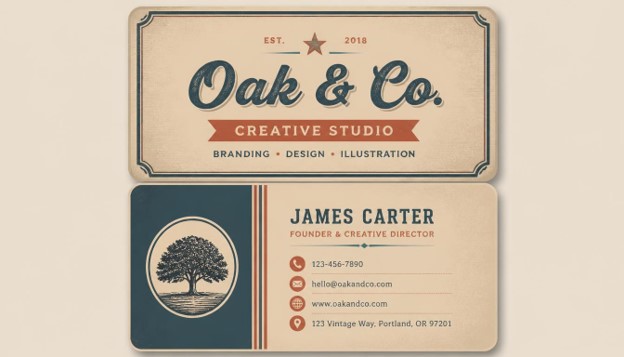
Canva’s template search makes it easy to find retro-styled business card layouts, many of which already include ornate borders and vintage color palettes like mustard yellow, burnt orange, and deep forest green. Adding a subtle paper-grain texture overlay, available in Canva’s elements library, enhances the aged feel even further. A well-executed vintage design like this feels warm and personal, making it a great fit for businesses built around tradition and hands-on craft.
7. Eco-Friendly Kraft Paper Canva Business Card
Sustainability has become a genuine selling point for many businesses, and a kraft paper-styled Canva Business Card is a subtle but effective way to communicate environmental consciousness. This design mimics the natural brown tone of recycled kraft paper, often paired with simple black or white text and minimal, earthy line-art illustrations of leaves or plants.
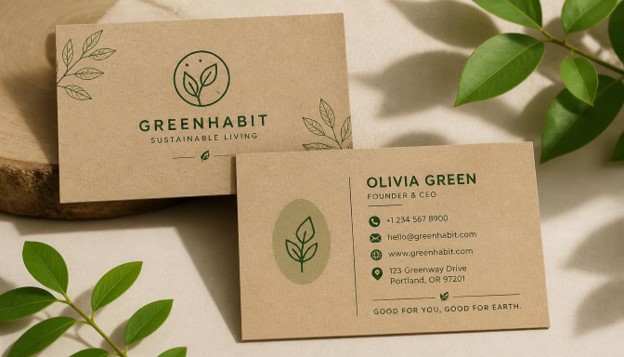
To recreate this in Canva, set your background to a warm tan or brown hex tone, then choose an organic, slightly rough-edged font to reinforce the natural, handmade aesthetic. If you actually print on genuine recycled kraft cardstock, this card design becomes even more authentic, since the digital mockup will match the physical material perfectly. This style suits eco-conscious brands, organic food businesses, wellness coaches, and sustainable fashion labels.
8. QR Code Canva Business Card
A QR code has quietly become one of the most useful additions to a modern business card, bridging the gap between a physical object and your digital presence. A QR code design like this includes a scannable code that instantly links to your website, portfolio, LinkedIn profile, or even a “save contact” vCard file, making it effortless for the recipient to connect with you further.
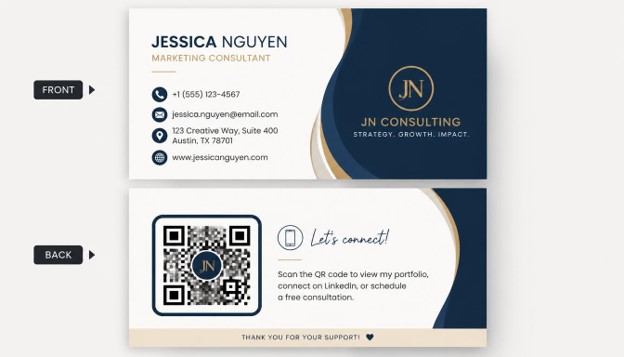
Canva has a built-in QR code generator accessible directly from the Elements panel, so you can create and place a working code without needing any third-party tool. Position the QR code in a corner where it doesn’t overwhelm the rest of your layout, and consider adding a small line of text like “Scan to connect” so recipients understand what it does. This addition makes your card feel genuinely useful rather than purely decorative.
9. Geometric Pattern Canva Business Card
Geometric design has remained popular because it feels structured, modern, and endlessly customizable. A geometric design like this uses shapes like triangles, hexagons, or overlapping lines to create a distinctive background pattern, often in two or three coordinated colors that reflect your brand palette.
Canva’s shape tools and pre-built geometric templates make this style especially approachable, since you can duplicate and rotate shapes to build a custom pattern in minutes without any advanced design skill. Keep your text on a clean, uncluttered portion of the card — often a solid color block layered over the pattern — so legibility isn’t sacrificed for style. This look is a favorite among architecture firms, design studios, and technology companies that want a card that feels precise and intentional.
10. Watercolor Canva Business Card
For brands in the beauty, wellness, floral, or creative arts space, a soft watercolor aesthetic can convey warmth and artistry far better than sharp geometric lines ever could. A watercolor card design typically features gentle, blended color washes in the background, sometimes combined with hand-painted floral or botanical illustrations.
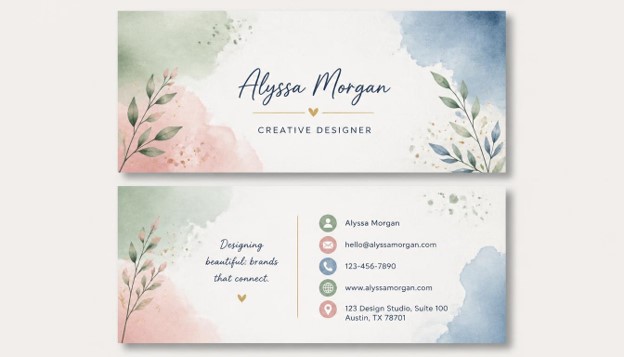
Canva’s element library includes a wide selection of pre-made watercolor textures and floral graphics that can be layered directly onto a business card template, so you don’t need to paint anything yourself. Pair these soft backgrounds with a graceful script font for your name and a simple sans-serif for your contact details to keep the card from feeling too busy. This approach feels personal and artistic, ideal for makeup artists, florists, therapists, and boutique wellness brands.
11. Corporate Professional Canva Business Card
Not every business needs a flashy, trend-driven design — sometimes the goal is simply to look trustworthy, established, and serious. A corporate Canva Business Card leans into classic design conventions: a white or navy background, a structured grid layout, a conservative serif or clean sans-serif font, and a restrained color palette limited to your brand’s primary olors
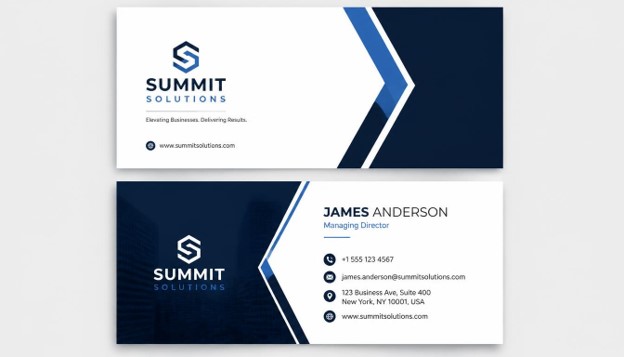
In Canva, corporate-style templates are usually organized under categories like “professional” or “business,” and they typically include clearly defined sections for your name, title, company, and contact information, often separated by thin dividing lines. This layout style is ideal for law firms, financial advisors, insurance agents, and corporate executives who want their card to reflect stability and reliability above all else.
12. Real Estate Canva Business Card
Real estate is one of the most competitive industries for personal branding, since agents are essentially selling themselves as much as any property. A real estate-focused card design usually includes a professional headshot, since buyers and sellers want to put a face to the name they’ll be trusting with a major financial decision, along with a clean layout that highlights the agent’s brokerage logo and a tagline.
Canva has an entire category of real estate business card templates that already account for this need, often including subtle house or key iconography alongside space for a photo. When building your own version, choose colors that align with your brokerage’s branding guidelines, and make sure your phone number is the most visually prominent piece of contact information, since most real estate leads still come through a direct phone call rather than email.
13. Photographer Canva Business Card
While we touched on photography-driven visuals earlier, a card specifically designed for professional photographers deserves its own approach, since photographers often want their card to double as a mini portfolio and a reflection of their editing style. A photographer’s card design frequently uses a double-sided layout — a striking image on the front, and clean contact information along with a QR code linking to an online gallery on the back.
Canva allows you to design both sides of a card within the same project file, switching between front and back pages easily. For photographers, choosing a signature color grade or filter consistent with your actual photography work helps the card feel like an authentic extension of your portfolio rather than a generic template with a random stock photo swapped in.
14. Beauty and Salon Canva Business Card
Beauty professionals — from hairstylists to estheticians to nail technicians — benefit from a card design that feels soft, glamorous, and on-trend, since clients are essentially trusting the designer’s taste before they even book an appointment. This style often uses blush pinks, rose gold accents, elegant script fonts, and subtle floral or line-art beauty icons like a pair of scissors or a lipstick tube.
Canva’s beauty and salon business card category includes dozens of templates built specifically around this aesthetic, many of which already incorporate appointment booking details or Instagram handles, since social proof matters enormously in this industry. Adding a small “Book Now” call to action alongside a QR code linking directly to your booking page turns this card into an active marketing tool rather than a passive keepsake.
15. Fashion Designer Canva Business Card
Fashion is an industry where the business card itself needs to demonstrate taste and design sensibility, since it’s often the first tangible product a potential client or buyer will judge you by. A fashion-focused Canva Business Card tends to favor high-contrast black and white palettes, editorial-style typography, and an almost magazine-like layout with generous margins.
Canva’s fashion and lifestyle template category offers several layouts inspired by high-end print editorials, which can be customized with your logo and a signature typeface that matches your brand’s runway or lookbook aesthetic. Because fashion clients often keep cards as physical mementos, investing slightly more in premium cardstock for this particular design tends to pay off in how the brand is remembered.
16. Tech Startup Canva Business Card
Startups need their branding to feel innovative from the very first touchpoint, and a business card is no exception. A tech startup card design usually leans into dark backgrounds, neon or electric accent colors like cyan or violet, and clean geometric or futuristic fonts that echo the visual language of app interfaces and SaaS dashboards.
Canva’s tech and startup template collection often incorporates subtle grid lines, circuit-inspired graphics, or abstract 3D shapes that feel at home in a digital-first brand. Including a QR code that links to your app’s download page or your company’s LinkedIn is a natural fit here, since a tech-savvy audience expects that kind of digital integration.
17. Consultant and Coach Canva Business Card
Consultants, coaches, and speakers sell trust and expertise, which means their business card needs to feel credible without being cold. A consultant-style card design often centers around a confident headshot, a clear one-line value proposition instead of just a job title, and a calm, professional color palette like deep blue, charcoal, or forest green.
Canva’s business and consulting templates frequently include a small tagline field beneath the name, which is worth using deliberately — instead of writing “Business Consultant,” consider something like “Helping Founders Scale Past Six Figures.” This small copywriting choice, combined with a clean layout, makes your Canva Business Card do double duty as a tiny pitch for your services.
18. Restaurant and Cafe Canva Business Card
Food and beverage businesses often use their business cards as a secondary form of marketing, sometimes doubling them as loyalty punch cards or small menus. A restaurant-focused card design tends to use warm, appetizing colors like deep red, mustard, or cream, paired with playful hand-lettered or rustic serif fonts that suggest a welcoming atmosphere.
Canva’s food and restaurant template category includes options that incorporate illustrated coffee cups, cutlery icons, or subtle food photography backgrounds. Adding your operating hours, a QR code linking to your online ordering page, or a small loyalty stamp grid on the back of the card can make this particular card far more functional than a purely decorative one.
19. Double-Sided Canva Business Card
Rather than a specific visual style, this idea is about layout strategy: using both sides of the card to your advantage instead of leaving the back blank. A double-sided design like this might put your logo and name on the front with a clean background, then use the back for a bulleted list of services, a map to your location, a QR code, or even a small testimonial quote.
Canva makes designing both sides simple, since every business card project automatically includes a front and back page you can toggle between in the editor. This approach maximizes the value of a printed card without needing to cram everything onto one crowded surface, and it’s a smart choice for service-based businesses that want their card to communicate more than just contact details.
20. Foil and Metallic Finish Canva Business Card
The final idea on this list isn’t just about the digital design — it’s about how that design translates into a premium physical finish. A foil or metallic Canva Business Card uses Canva’s design tools to plan out where a gold, silver, rose gold, or holographic foil element will sit, which many print partners can then produce as an actual raised, reflective foil stamp on the finished card.
While Canva itself outputs a flat digital file, many print-on-demand services integrated with or compatible with Canva exports allow you to specify foil areas separately during the ordering process. Designing this particular card with a simple, high-contrast logo or initials specifically intended for foil treatment — rather than a busy, multi-colored graphic — will produce the cleanest, most striking result once it comes off the press.
How to Choose the Right Canva Business Card Style for Your Brand
With twenty different directions to choose from, picking the right one comes down to a few practical questions rather than personal taste alone. First, consider your industry norms — a criminal defense attorney and a wedding photographer are both trying to look trustworthy, but “trustworthy” means something completely different in each context, so study what respected competitors in your field are already doing before you commit to a direction for your own design. Second, think about where and how the card will actually be used; a card that will live in someone’s wallet for months needs to remain legible and recognizable even after some wear, while a card handed out at a single trade show can afford to be bolder and more experimental.
Third, always design with your existing brand assets in mind rather than in isolation — your card should feel like a natural extension of your website, social media profiles, and any other printed materials you use, since visual consistency is what actually builds brand recognition over time. Finally, don’t underestimate the value of simply testing a few directions; Canva makes it inexpensive and fast to create two or three variations of your card, print a small batch of each, and see which one actually gets better reactions in real-world networking situations before committing to a large print run.
Understanding Color Psychology Before You Design
Color is doing more persuasive work on a business card than most people realize, since the human brain forms an emotional impression of a color palette before it even processes the text sitting on top of it. Blue tones tend to signal trust, stability, and competence, which is exactly why so many financial services firms, healthcare providers, and corporate consultancies default to navy or royal blue as their primary color. Green, by contrast, is closely associated with growth, health, and sustainability, making it a natural fit for wellness brands, landscaping companies, and eco-conscious startups that want their palette to reinforce their mission without saying a word about it.
Warmer tones carry a different kind of emotional weight. Red creates urgency and energy, which explains why it shows up so often in food and entertainment branding, while orange and yellow tend to feel approachable and optimistic, useful for brands that want to seem friendly rather than intimidating. Black and deep charcoal, on the other hand, are the go-to choices whenever a brand wants to communicate luxury, sophistication, or exclusivity, which is part of why the black and gold combination covered earlier on this list remains such a popular request among premium service providers. When you’re choosing a palette, try to limit yourself to two or three colors total, since a card with too many competing tones can end up looking chaotic rather than intentional, no matter how well each individual color performs on its own.
Common Mistakes to Avoid When Designing Your Card
Even with access to professionally built templates, it’s still surprisingly easy to make a few avoidable mistakes that undercut an otherwise strong design. One of the most frequent errors is cramming too much information onto a single small surface — a name, title, company, phone number, email, website, and three social media handles all competing for space will almost always look cluttered no matter how the layout is arranged, so it’s worth asking whether every single detail truly needs to be there or whether some information is better saved for a follow-up email or a linked landing page. Another common issue is choosing a font that looks stylish on a screen but becomes illegible once printed at actual size, particularly with thin, decorative, or heavily italicized typefaces; always zoom your design to 100 percent and, ideally, print a test copy before finalizing anything.
Low-resolution logos are another frequent culprit behind disappointing final results, since a logo that looks crisp on a website can turn blurry or pixelated once it’s scaled up and printed on physical cardstock, so always use the highest-resolution version of your logo file available. Finally, many people forget to proofread their final card carefully, and a typo in a phone number or a misspelled email address can render an otherwise beautiful design completely useless; ask at least one other person to review the final file before you send it to print, since a fresh set of eyes will often catch small errors that you’ve become blind to after staring at the same design for hours.
Practical Tips Before You Print Your Canva Business Card
Once you’ve settled on a design direction, a handful of technical details can make the difference between a Canva Business Card that looks great on screen and one that disappoints once it’s physically printed. Always design at the standard 3.5 x 2 inch size with Canva’s built-in bleed settings turned on, since this prevents important text or graphics from accidentally being trimmed off during the cutting process. Double-check that your color mode is appropriate for print rather than screen display, because colors that look vibrant on a monitor can sometimes shift slightly when translated to physical ink.
It’s also worth downloading your finished file as a high-resolution PDF print file directly from Canva rather than a standard image format, since this preserves sharper edges on text and fine details in your logo. Before sending your finished card off to a print shop, order a single physical proof if the printer offers one, so you can check the actual paper weight, finish, and color accuracy in person before committing to hundreds of copies. These small steps ensure that the polished design you built in Canva translates just as well into the physical object someone will actually hold in their hand.
Final Thoughts on Designing Your Canva Business Card
A Canva Business Card might be small, but it carries an outsized amount of responsibility for shaping how people perceive your professionalism within just a few seconds of meeting you. The twenty ideas covered in this guide — from minimalist and corporate styles to bold gradients, vintage textures, and industry-specific layouts — all prove that a single design tool like Canva is more than capable of producing a genuinely professional, memorable business card without requiring a background in graphic design or an expensive agency contract.
The real work now is choosing the direction that authentically fits your brand, customizing it with your own colors, fonts, and messaging, and taking the time to get a physical proof before ordering in bulk. Do that, and your finished Canva Business Card will do exactly what a good business card should: make people remember you long after the meeting ends.
Beyond the individual style you choose, it also helps to think about how the card fits into your broader networking habits, since even the most beautifully designed piece of print material only works if it actually reaches the right hands at the right moment. Keep a small stack in your bag, wallet, or car so you’re never caught without one, and consider ordering a modest first batch rather than committing to thousands of copies right away, since your branding, contact details, or even your job title may shift sooner than expected. Treat your first print run as a working draft you can refine once you see how people actually respond to it in real conversations.
Frequently Asked Questions About Canva Business Cards
Is Canva actually good enough to design a professional business card, or should I hire a designer? For the vast majority of small businesses, freelancers, and startups, a Canva Business Card built from one of the platform’s professionally designed templates is more than sufficient to look polished and credible. Canva Business Card templates are created by trained designers and follow proper print standards, so unless you need a highly custom illustration or an extremely unique brand identity, there’s rarely a strong need to pay for a separate designer.
Is Canva free to use for designing a business card, or do I need Canva Pro? Canva’s free plan includes a wide selection of business card templates, fonts, and basic elements, which is enough to design a fully professional business card at no cost. Canva Pro unlocks additional premium templates, more advanced brand kit features, and some exclusive design elements, but it is not a requirement to produce a great-looking card.
What size should I use when designing a Canva Business Card? The standard Canva Business Card size in most countries, including the United States, is 3.5 x 2 inches, and Canva’s default business card templates are already set to this dimension with bleed included. If you’re printing internationally, double-check your local standard size, since some regions like parts of Europe use a slightly different dimension.
Can I add a QR code to my Canva Business Card without using another app? Yes, Canva Business Card has a built-in QR code generator located directly in the Elements panel of the editor, allowing you to create a scannable code linking to a website, social profile, or contact file without leaving the platform. This makes adding a functional digital link to the card extremely straightforward.
How do I make sure my Canva Business Card prints correctly with no cut-off text? Always use a template with Canva’s bleed guides enabled, and keep all important text and logos safely inside the inner margin lines rather than near the very edge of the card. Downloading your finished card as a print-ready PDF, rather than a standard JPEG or PNG, also helps preserve sharp edges and accurate colors once it reaches the printer.
Should I design one side or both sides of my business card in Canva? While a single-sided design is perfectly acceptable and often used for minimalist styles, designing both sides of this card lets you include extra information such as a list of services, a QR code, or a small map without crowding the front layout. Canva automatically provides a front and back page for every Canva Business Card project, so using both sides costs nothing extra in terms of time or design effort.
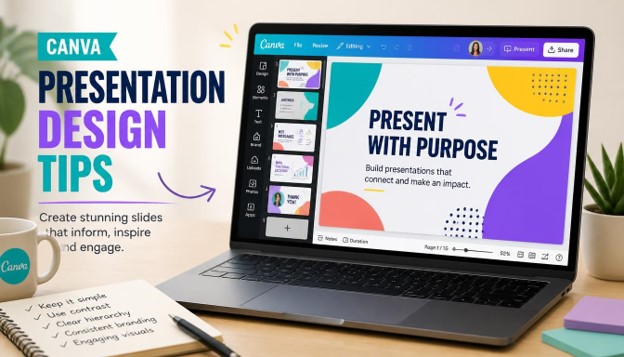
Canva Presentation: 15 Design Tips to Create Stunning Slides
Creating a Canva Presentation that actually holds an audience’s attention takes more than dragging a few text boxes onto a slide and hoping for the best. Whether you are building a pitch deck for investors, a classroom lecture, a marketing report, or a portfolio walkthrough, the way your slides look often decides whether people lean in or tune out before you have said a single word. Canva has become one of the most popular tools for building presentations because it removes the technical barrier that used to stand between a good idea and a good-looking slide, but the tool alone will not make your deck memorable. The real difference between an amateur-looking deck and a polished one comes down to design choices: color, typography, spacing, imagery, and structure all working together. In this guide, we are going to walk through fifteen practical, easy-to-apply design tips that will help you build a Canva Presentation that looks like it was made by a professional studio, even if this is the very first deck you have ever designed. Each tip below is something you can apply today, inside your existing Canva account, without needing any design degree or expensive software.
Why a Well-Designed Canva Presentation Matters
Before jumping into the tips, it helps to understand why design quality matters so much for a Canva Presentation in the first place. Research on attention spans consistently shows that audiences form an opinion about the credibility of a presentation within the first few seconds of seeing a slide, long before they have processed the actual content written on it. A cluttered, mismatched, or poorly organized slide deck signals to viewers that the presenter has not put in the effort, which subconsciously lowers their trust in the information being shared. On the other hand, a clean, consistent, and visually engaging presentation builds credibility instantly and makes your message easier to absorb, remember, and act on. Good design is not decoration; it is communication. Every color choice, every font pairing, and every bit of whitespace in your slide deck either helps your audience understand your point faster or gets in the way of it. That is exactly why the fifteen tips below focus on practical, high-impact changes rather than superficial tricks, so you can turn any ordinary deck into a Canva Presentation that people actually remember after the meeting ends.
1. Choose the Right Template as Your Starting Point
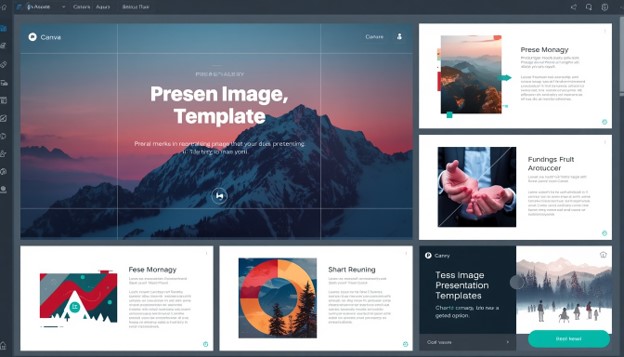
The single fastest way to improve the look of your Canva Presentation is to start with a template that already matches the tone of your content instead of building every slide from a blank canvas. Canva’s template library is organized by category, so a startup pitch deck template will already have investor-friendly layouts for market size, financial projections, and team introductions, while a creative portfolio template will lean into large imagery and minimal text. When picking a template, resist the temptation to choose one just because it looks flashy; instead, choose one whose structure matches the story you need to tell, because a template with too many decorative elements can distract from a data-heavy business report, while an overly plain template can undersell a creative campaign. Once you settle on a template, treat it as a flexible starting point rather than a fixed rulebook. You are allowed to delete slides you do not need, duplicate ones you want to expand on, and rearrange the order until the flow matches your narrative. Spending an extra ten minutes browsing templates before you start typing content will save you hours of restructuring later, and it is the single habit that separates a rushed deck from one that looks intentionally designed from the very first slide.
2. Stick to a Consistent Color Palette
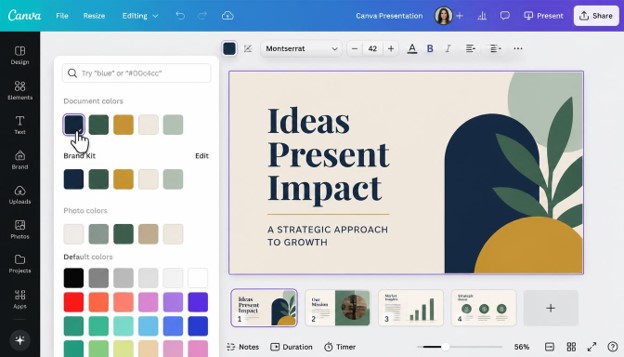
Color consistency is one of the fastest ways to make any Canva Presentation look professional, and it is also one of the easiest mistakes to fix. A common beginner error is using a different color combination on every slide because it seems more “creative,” but in practice this makes a deck feel chaotic and amateurish. Instead, pick two to four core colors before you start designing: typically one dominant color, one or two accent colors, and a neutral background or text color. Canva makes this simple through its built-in color palette generator, where you can upload your brand logo and Canva will automatically suggest a matching palette, or you can browse curated palettes directly inside the design panel. Once you have chosen your palette, apply it consistently across every slide in your deck — use the same accent color for all your call-to-action buttons, the same background tone across similar slide types, and the same highlight color whenever you want to draw attention to a key statistic or headline. This repetition is not boring; it is what makes a deck feel like a single, cohesive story rather than a random collection of slides stitched together. If your presentation represents a brand, always pull your palette directly from brand guidelines so that your Canva Presentation reinforces brand recognition every time it is shown.
3. Use High-Quality, Relevant Images
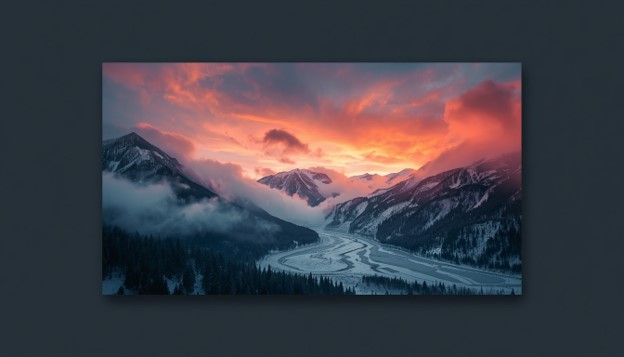
Nothing undermines a polished Canva Presentation faster than a blurry, pixelated, or oddly stretched image sitting awkwardly on an otherwise clean slide. Canva gives you access to a massive built-in library of stock photography, much of which is free, so there is rarely a good excuse to use a low-resolution image pulled from a random Google search. When choosing visuals, prioritize photos and illustrations that are directly relevant to the point you are making rather than generic stock imagery that only loosely relates to your topic, because audiences can immediately sense when an image feels like filler. Pay attention to aspect ratio and resolution too; stretching a small image to fill a large slide will make it look grainy on a projector or a shared screen, so always use Canva’s built-in cropping and resizing tools to fit images cleanly into your frames without distortion. If your slide deck covers a specific product, team, or location, original photography will always outperform generic stock images because it adds authenticity that a stock photo simply cannot replicate. A well-chosen image can communicate an idea faster than a paragraph of text, so treat your visual choices with the same care you give to your written content.
4. Pick Fonts That Are Easy to Read
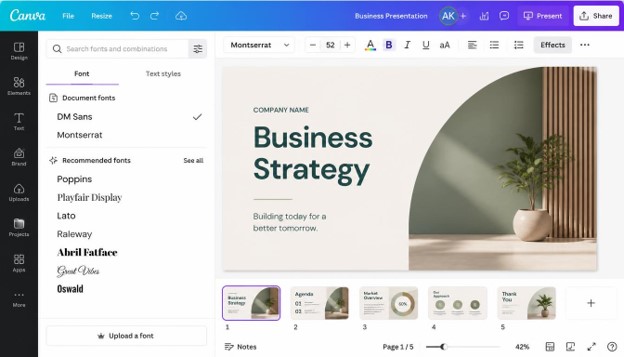
Typography might seem like a small detail, but font choice has an outsized impact on how professional a Canva Presentation feels and how easily your audience can absorb your message. A common mistake is mixing too many different fonts across a single deck, which creates visual noise and makes the presentation feel disorganized. As a general rule, limit yourself to two fonts per presentation: one for headings and one for body text, and make sure both are easy to read at a distance, since many presentations are viewed on a projector or shared screen rather than up close. Avoid overly decorative script fonts for anything beyond a title slide, because while they might look elegant in a mockup, they quickly become difficult to read once your slide deck is projected onto a large screen or viewed on a small mobile device. Canva’s font pairing suggestions, available directly inside the text panel, are a reliable shortcut if you are not confident about matching fonts yourself. Also pay attention to font size hierarchy: headings should be noticeably larger than body text, and body text should never drop below a size that is comfortable to read from the back of a room. Consistent typography across every slide of your Canva Presentation reinforces structure and makes your content feel intentional rather than thrown together.
5. Keep Text Minimal and Let Slides Breathe
One of the most important lessons in presentation design is that slides are meant to support what you are saying out loud, not replace it, which means a strong Canva Presentation should never be crammed with dense paragraphs of text. If your slide looks like a page torn out of a report, your audience will start reading instead of listening, and you will lose their attention to your own content. Aim to keep each slide focused on a single idea, expressed through a short headline, a few bullet points, or a single powerful statistic, rather than trying to fit an entire explanation onto one screen. Use your spoken narration to fill in the details and context, while the slide itself acts as a visual anchor for your audience’s attention. This approach also makes your Canva Presentation far easier to update later, since shorter, modular text blocks are simpler to edit than long paragraphs baked into a slide’s layout. If you find yourself writing more than a few lines on a slide, that is usually a sign the content should be split across two slides instead of squeezed onto one, which keeps your pacing steady and prevents any single moment of your presentation from feeling overwhelming.
6. Use Whitespace to Improve Focus
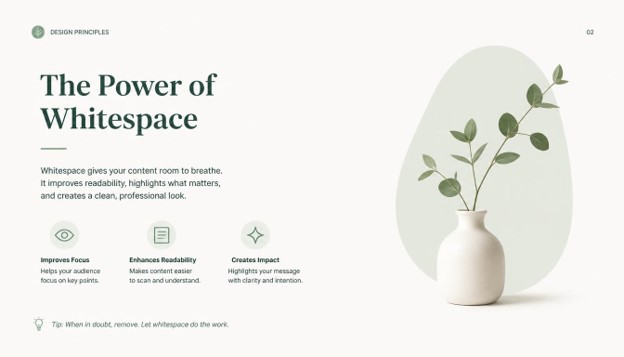
Whitespace, sometimes called negative space, refers to the empty area around your text, images, and design elements, and it is one of the most underrated tools for making a Canva Presentation look expensive and well-organized. Beginners often feel the need to fill every inch of a slide with content out of fear that empty space looks unfinished, but the opposite is usually true: generous whitespace draws the eye directly to what matters and gives your design room to breathe. When every element on a slide is packed tightly together, your audience’s eyes do not know where to look first, which slows down comprehension and creates visual fatigue over a long presentation. Instead, build margins around your text and images, add spacing between bullet points, and resist the urge to fill every corner of the canvas. Canva’s grid and alignment guides make it easy to maintain consistent spacing across every slide, so your deck feels balanced rather than cramped. Think of whitespace the same way a photographer thinks about framing: what you leave out of the shot is just as important as what you include, and mastering this balance is often what separates a cluttered deck from a genuinely elegant one.
7. Add Icons and Illustrations for Visual Clarity
Icons and illustrations are a powerful way to communicate ideas visually without relying entirely on text, and Canva’s built-in library includes thousands of icons that can be dropped directly into any Canva Presentation with a single click. Replacing a bullet list of features with small icons paired next to short labels, for example, can make information far more scannable than plain text alone, because the human brain processes images faster than words. When using icons, stick to a single visual style throughout your deck — mixing flat icons with 3D icons or outline icons with filled icons in the same presentation creates a disjointed look that undercuts your otherwise clean design. Illustrations work particularly well for abstract concepts that are hard to photograph, such as growth, collaboration, or innovation, and Canva offers a wide range of illustration styles that can be recolored to match your palette. Used sparingly and consistently, icons and illustrations add personality and clarity to a Canva Presentation without adding visual clutter, helping your audience grasp complex ideas at a glance rather than having to read through dense explanations.
8. Establish a Clear Visual Hierarchy
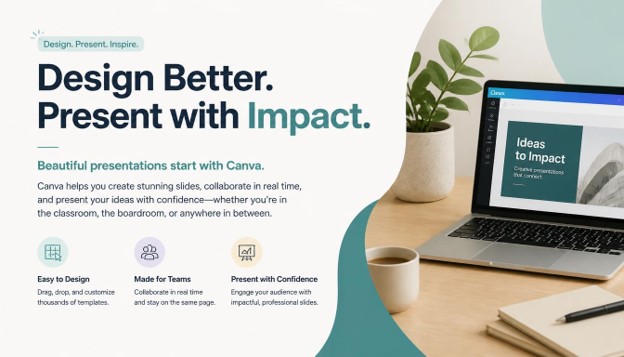
Visual hierarchy refers to the order in which your audience’s eyes naturally move across a slide, and getting this right is essential for a Canva Presentation that communicates clearly under time pressure. The most important information — usually your headline or key statistic — should be the largest, boldest, or most colorful element on the slide, while supporting details should be visually smaller and quieter so they do not compete for attention. You can establish hierarchy through size, color contrast, positioning, and spacing; for instance, placing your main takeaway at the top in a bold, large font while supporting evidence sits below in a smaller, neutral-toned font naturally guides the eye in the right order. Without a clear hierarchy, every element on the slide competes equally for attention, and your audience is left guessing what actually matters. This is especially important for data-heavy slides in a business-focused Canva Presentation, where a single key number often deserves far more visual weight than the surrounding context. Before finalizing any slide, ask yourself what you want the audience to notice first, second, and third, and adjust your sizing and placement accordingly until the design naturally leads the eye through that exact sequence.
9. Use Animations and Transitions Sparingly
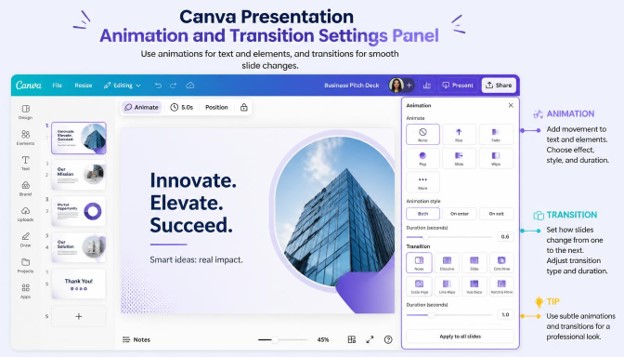
Canva offers a range of built-in animations and slide transitions, and while these features can add polish when used thoughtfully, overusing them is one of the fastest ways to make a Canva Presentation feel unprofessional. A subtle fade or a gentle rise animation on text can help guide attention and add a sense of rhythm to your delivery, but flashy spinning transitions or bouncing text effects on every single slide quickly become distracting and can even come across as gimmicky in a professional setting. As a general rule, choose one consistent transition style for moving between slides and reserve animated entrances for moments that genuinely benefit from emphasis, such as revealing a surprising statistic or building up a complex diagram piece by piece. Test your animations at the actual speed you plan to present, since animations that look fine when clicked through quickly during editing can feel painfully slow in front of a live audience. A restrained, purposeful use of motion will make your Canva Presentation feel modern and dynamic, while excessive animation almost always undermines the credibility you have worked hard to build through your color, typography, and layout choices.
10. Incorporate Brand Elements Consistently
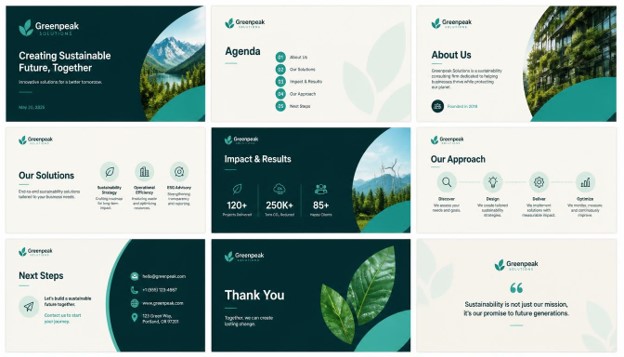
If your Canva Presentation represents a company, product, or personal brand, weaving brand elements consistently throughout the deck reinforces recognition and trust every time your slides appear in front of an audience. This goes beyond simply placing a logo in the corner of every slide; it means using your brand’s specific color palette, typography, and even photography style consistently across the entire presentation. Canva’s Brand Kit feature allows you to upload your logo, brand colors, and custom fonts once, after which they become instantly accessible across every new design you create, saving significant time on future decks. Consistent branding matters most in external-facing presentations like sales pitches, client proposals, or investor decks, where every visual touchpoint contributes to how the audience perceives your organization’s professionalism. Even for internal presentations, maintaining a consistent visual identity across your Canva Presentation library makes your team’s communications feel more polished and unified over time. Small details, like using your brand’s specific shade of blue rather than a generic blue, or your brand’s actual font rather than a similar substitute, add up to a presentation that feels distinctly and recognizably yours.
11. Align Everything to a Grid
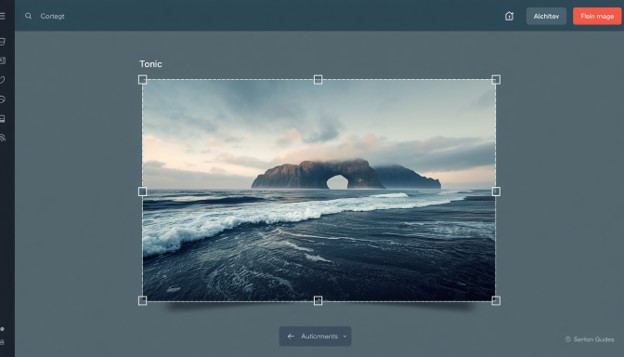
Alignment is one of those design fundamentals that audiences rarely notice consciously when it is done well, but they immediately sense when it is done poorly, which makes it a critical detail for any polished Canva Presentation. Elements that are slightly misaligned — a title that is not quite centered, an image that sits a few pixels off from the text beside it, bullet points with inconsistent indentation — create a subtle sense of sloppiness even if the viewer cannot pinpoint exactly why the slide feels off. Canva includes built-in alignment guides and snapping tools that automatically help you center, distribute, and align elements precisely as you drag them around the canvas, so there is little excuse for misaligned layouts once you know these tools exist. Using a consistent grid system across your entire Canva Presentation also speeds up your design process considerably, since you can establish fixed positions for titles, body text, and images on one slide and then replicate that same structure across similar slide types throughout the deck. This kind of structural consistency is what makes a presentation feel like a cohesive, professionally designed product rather than a loose collection of individually styled slides, and it is entirely achievable using tools that are already built into Canva’s editor.
12. Turn Data Into Charts and Infographics
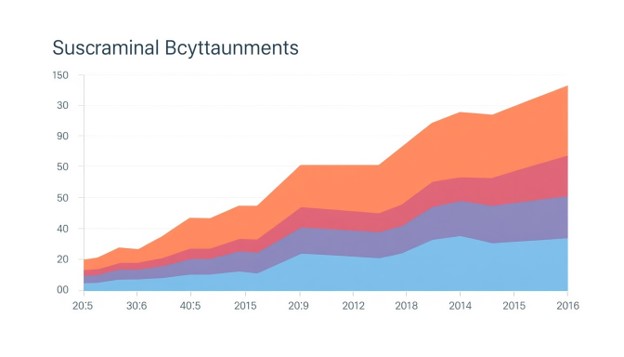
Raw numbers on a slide are hard for an audience to process quickly, which is why converting data into charts, graphs, or infographics is one of the most valuable upgrades you can make to a data-heavy Canva Presentation. Canva includes a built-in chart tool that lets you input your data directly and choose from bar charts, pie charts, line graphs, and more, all of which automatically adopt your chosen color palette for visual consistency. When designing a chart, resist the urge to display every data point you have collected; instead, simplify your visualization down to the two or three numbers that actually support your argument, since an overloaded chart is just as hard to parse as a dense paragraph of text. Infographics work particularly well for summarizing processes, timelines, or comparisons, turning what would otherwise be several sentences of explanation into a single glanceable visual. A well-designed chart inside your Canva Presentation does more than decorate your data; it actively helps your audience understand trends, comparisons, and conclusions faster than a spoken explanation alone ever could, making your key points far more memorable once the meeting has ended.
13. Keep Slide Layouts Consistent Throughout
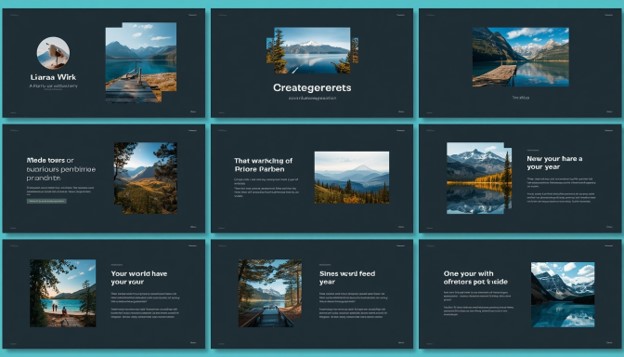
Jumping between wildly different layouts from one slide to the next can make even well-designed individual slides feel disconnected when viewed together as a full Canva Presentation. Instead, establish a small set of layout templates for recurring content types — for example, one layout for section headers, one for text-and-image slides, one for data slides, and one for quote or testimonial slides — and reuse these consistently throughout your deck. This does not mean every slide has to look identical; rather, it means slides serving the same purpose should share a recognizable structure, so your audience can quickly understand what type of content they are looking at based on familiar visual cues. Canva makes this easy through its ability to duplicate slides and swap out content while preserving layout, position, and formatting, which speeds up production while guaranteeing consistency. A Canva Presentation built on a handful of well-designed, reusable layouts will almost always look more professional than one where every slide was designed from scratch with no structural relationship to the slides around it, because repetition of structure is what makes a long presentation feel organized rather than exhausting to follow.
14. Optimize Your Presentation for Different Devices and Formats
Modern presentations are rarely viewed in just one format; your Canva Presentation might be projected on a large screen in a conference room, shared as a PDF over email, presented over a video call, or scrolled through on a mobile phone, and each of these contexts places different demands on your design. Text that looks perfectly readable on your laptop screen while editing can become uncomfortably small when compressed into a video call’s shared-screen window, so it is worth previewing your deck at a reduced size to confirm your font choices still hold up. Canva allows you to export your presentation in multiple formats, including PDF, PowerPoint, and MP4 video, and it is worth testing your export in whichever format your audience will actually use before the day of your presentation. If you know your Canva Presentation will primarily be viewed on mobile devices, consider simplifying layouts further and increasing contrast, since smaller screens are less forgiving of subtle color differences and fine details. Taking the time to check your design across formats prevents the frustrating experience of discovering formatting issues in front of a live audience rather than during your own preparation.
15. Proofread, Get Feedback, and Refine
The final and most overlooked step in building a polished Canva Presentation is stepping back to proofread and gather feedback before your actual presentation day. Typos, inconsistent capitalization, and small formatting slips are easy to miss when you have been staring at the same slides for hours, but they stand out immediately to a fresh set of eyes and can quietly undermine the credibility you have built through careful design choices elsewhere in the deck. Share your draft with a colleague, friend, or mentor and specifically ask them to flag anything that feels confusing, cluttered, or inconsistent, since people close to the content often overlook issues that a first-time viewer will notice immediately. Canva’s commenting and collaboration features make this process simple, allowing reviewers to leave notes directly on specific slides without needing to install any additional software. Beyond spelling and grammar, use this review stage to check that your visual hierarchy, color consistency, and pacing all hold up when someone unfamiliar with your topic clicks through the deck for the first time. A Canva Presentation that has been reviewed and refined by even one additional person will almost always outperform a deck that went straight from first draft to final delivery.
Handy Canva Features Worth Learning
Beyond the fifteen design principles above, a handful of specific Canva features are worth learning well because they directly support almost every tip on this list. The Brand Kit, mentioned earlier, is one of the highest-leverage tools available, since setting it up once saves you from manually re-selecting colors and fonts on every future project. The “Styles” panel, which suggests coordinated color and font combinations based on a single element you have already placed, is a fast way to explore new looks without starting a palette from scratch. Canva’s built-in stock photo and video library, searchable by keyword, mood, or color, removes the need to hunt across multiple external websites for usable imagery. The alignment and position tools, accessible through the toolbar or by simply dragging an element near another one, automatically show snapping guides that keep your layout tidy without any manual measuring. For anyone working with a team, the comment and real-time co-editing features turn feedback into a quick, in-context conversation rather than a series of scattered emails. Spending an afternoon exploring these tools, even outside of an active project, pays off significantly the next time you sit down to build something under a deadline, because you will already know exactly where to find the feature you need instead of hunting through menus while the clock is ticking.
A Quick Pre-Presentation Checklist
Before you close your laptop and walk into the room, run through a short checklist to catch any remaining issues. Confirm that every slide uses the same two fonts and that no stray font has slipped in from a copy-pasted block of text. Check that your color palette is consistent from the first slide to the last, including any charts or icons that may have defaulted to Canva’s standard colors instead of your chosen palette. Read every headline out loud to make sure it is instantly understandable without needing the surrounding slide for context. Click through your transitions and animations at a normal presenting pace rather than rapidly clicking through them during a rushed review. Finally, export a copy in the format you will actually use on presentation day and open it on a different device than the one you designed it on, since fonts, spacing, and image quality can sometimes shift slightly between devices. This five-minute habit catches the kind of small, avoidable errors that are easy to miss after hours of staring at the same slides, and it ensures the version you present is exactly the version you intended to build.
Common Mistakes to Avoid in Your Canva Presentation
Even with all fifteen tips above in mind, there are a few recurring mistakes worth calling out directly because they show up so often in a poorly executed Canva Presentation. Overcrowded slides, inconsistent fonts, low-resolution images, and excessive animation are the four most common culprits, and each one is fully avoidable with a little extra attention during the design process. Another frequent issue is ignoring contrast between text and background colors, which can make slides difficult to read, especially for audience members viewing your presentation from farther back in a room or on a lower-quality projector. Finally, many presenters forget to leave enough time for a final review pass, rushing straight from writing content to presenting live without ever stepping back to look at the deck as a whole. Avoiding these pitfalls is often just as important as applying the positive design tips themselves, since a single glaring mistake can distract from an otherwise well-designed Canva Presentation and pull your audience’s focus away from your message.
Final Thoughts on Designing a Standout Canva Presentation
Building a genuinely impressive Canva Presentation is less about mastering complicated design software and more about applying a handful of consistent principles across every slide you create: intentional color choices, readable typography, minimal text, clear hierarchy, and careful attention to alignment and spacing. Canva’s tools make all of these principles accessible even to people with no formal design background, but the tool itself will not make these decisions for you, which is exactly why the fifteen tips in this guide focus on judgment and habits rather than button clicks alone. The next time you sit down to build a Canva Presentation, try picking just three or four of these tips to focus on first, whether that is tightening your color palette, reducing text density, or fixing alignment issues, and you will likely notice an immediate improvement in how polished your deck feels. Over time, applying these principles consistently across every deck you build will become second nature, and your presentations will start to stand out for exactly the reasons that make design so powerful: clarity, consistency, and a visual story that supports the message you are there to deliver.
Frequently Asked Questions About Canva Presentations
Is Canva good for making professional presentations? Yes, Canva is widely used for professional presentations because it combines an easy-to-use drag-and-drop editor with thousands of customizable templates, stock photography, icons, and brand tools. With thoughtful design choices like the ones covered in this guide, a Canva Presentation can look just as polished as one built in more traditional design software.
How many slides should a typical presentation have? There is no fixed rule, but most effective presentations run between ten and twenty slides for a fifteen- to twenty-minute talk, keeping each slide focused on a single idea rather than cramming multiple points onto one screen.
Can I use Canva for free to design a presentation? Yes, Canva offers a generous free plan that includes access to templates, basic stock images, and core design tools, which is more than enough to build a professional-looking presentation. Canva Pro unlocks additional premium templates, images, and brand kit features for users who present frequently.
What file formats can I export my Canva Presentation in? Canva allows you to export your presentation as a PDF, a PowerPoint file, a set of images, or an MP4 video, giving you flexibility depending on how and where you plan to share or present your deck.
How do I make my Canva Presentation look less generic? Avoid using a template exactly as-is; instead, adjust the color palette, swap generic stock photos for more relevant or original imagery, and customize fonts to match your brand or personal style so your deck does not look identical to countless other decks built from the same starting template.
Can I collaborate with a team on a Canva Presentation? Yes, Canva supports real-time collaboration, allowing multiple people to edit the same presentation simultaneously, leave comments on specific slides, and track changes, which makes it a popular choice for teams working together on shared decks.
How long does it take to design a good slide deck in Canva? This depends heavily on the length and complexity of the content, but a simple ten- to fifteen-slide deck built from a well-matched template can realistically be designed in one to two focused hours once you already have your text, images, and data prepared. Building a longer, highly customized deck from scratch, or one that requires original charts, infographics, and a fully developed brand kit, can take considerably longer, sometimes spread across several working sessions. The good news is that most of that time investment is front-loaded: once you have built your color palette, chosen your fonts, and established a consistent layout system for the first few slides, every additional slide after that becomes noticeably faster to design because you are simply reapplying decisions you have already made rather than starting from zero each time.
Do I need design experience to build a good slide deck in Canva? No prior design experience is required, which is part of why the platform has become so popular among students, small business owners, and corporate teams alike. The drag-and-drop editor, pre-built templates, and automatic alignment guides handle much of the technical heavy lifting that would otherwise require dedicated design training. That said, understanding a handful of core principles, like the ones covered throughout this guide, makes a noticeable difference in the final result, since the software provides the tools but the underlying decisions about color, spacing, hierarchy, and consistency still rest with the person designing the deck.
-

 Graphics Design2 years ago
7.Exploring the Importance of Color Theory Charts
-
 Graphics Design1 year ago
Top 10 Best Graphic Design Tools for Beginners in 2025 (Free & Paid)
-

 Graphics Design2 years ago
10 Stunning Gradient Design Trends You Need to Know in 2024
-
 Graphics Design1 year ago
15 Freelance Graphic Design Tips to Boost Your Career in 2025
-

 Graphics Design2 years ago
29.Retro Design Is Making a Comeback in Modern Spaces
-

 Graphics Design1 year ago
Best Laptops for Graphic Designers – 2025 Buying Guide
-

 Graphics Design2 years ago
2025 Logo Design Trends: What’s In, What’s Out?
-

 Graphics Design2 years ago
15.The Importance of Effective Flyer Design in Marketing
دستگاه لیوان کاغذی
July 29, 2024 at 1:23 pm
Hi there, I enjoy reading all of your post. I like to write a little comment to support you.
Рестраця
September 23, 2024 at 8:51 pm
Your point of view caught my eye and was very interesting. Thanks. I have a question for you.
Muhammad Ubaid
September 24, 2024 at 9:31 am
What’s your question?
binance account creation
October 1, 2024 at 3:38 am
Your article helped me a lot, is there any more related content? Thanks!
Domenic Daigle
October 26, 2024 at 7:49 am
I admire your work, regards for all the interesting content.
12K PAN fiber
November 4, 2024 at 8:52 am
I would like to thank you for the efforts you have put in writing this web site. I am hoping the same high-grade site post from you in the upcoming also. In fact your creative writing abilities has encouraged me to get my own blog now. Really the blogging is spreading its wings rapidly. Your write up is a great example of it.
centro de juegos y entretenimiento
November 15, 2024 at 12:04 pm
I want meeting useful information , this post has got me even more info! .
binance
December 7, 2024 at 4:57 am
I don’t think the title of your article matches the content lol. Just kidding, mainly because I had some doubts after reading the article.