
Graphics Design
How to Create a Fiverr Gig That Attracts More Graphic Design Clients

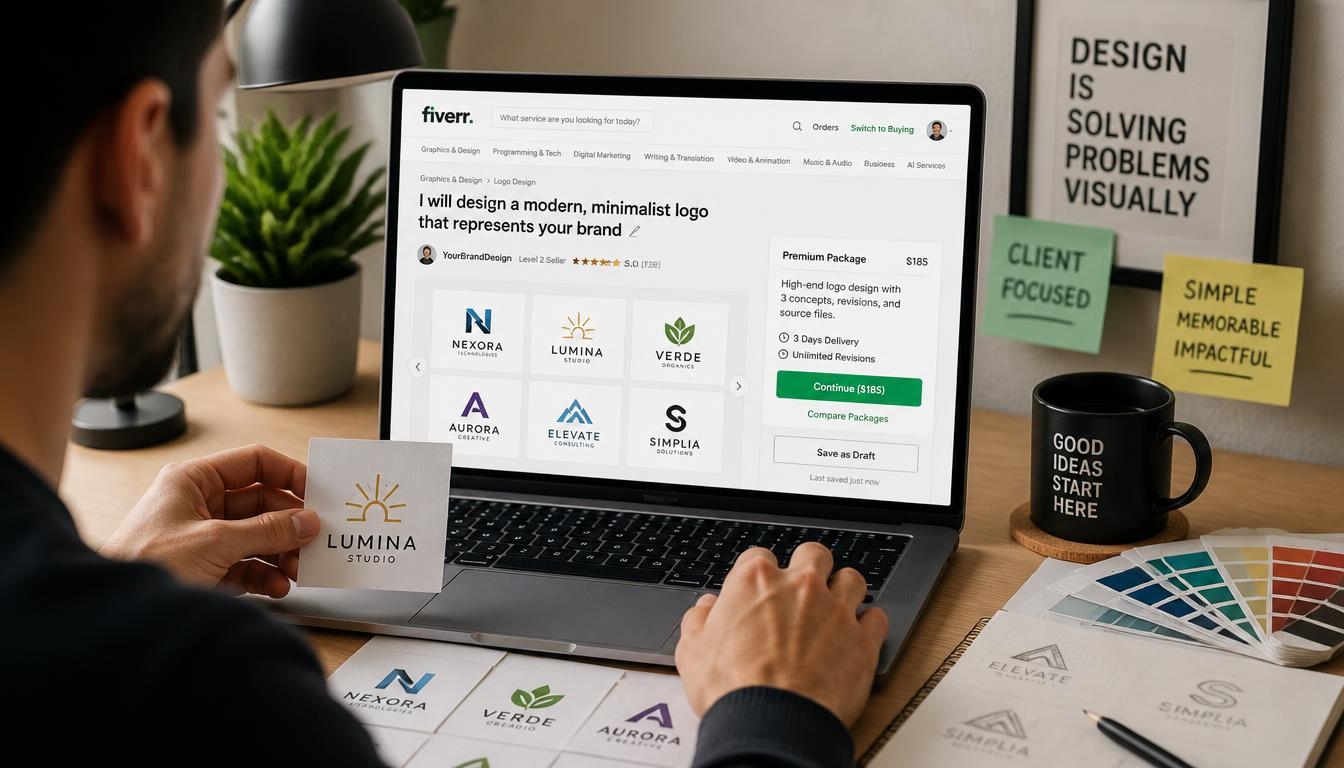
How to Create a Fiverr Gig That Attracts More Graphic Design Clients
Introduction
Thousands of designers join Fiverr every month. Most of them wait for orders that never come.
The problem is rarely talent. The problem is presentation. A well-built Fiverr gig turns a casual browser into a paying client in seconds.
In this guide, you will learn how to create a Fiverr gig that attracts more graphic design clients. We will cover research, titles, pricing, images, descriptions, and ongoing optimization.
Whether you design logos, social media posts, or full brand kits, the same principles apply. A strong Fiverr gig is clear, specific, and built around what buyers actually search for.
Let us start with the foundation.
Why a Well-Built Fiverr Gig Matters for Graphic Designers
Fiverr works like a search engine. Buyers type a request, and the platform ranks listings that match.
Your Fiverr gig is your storefront, your portfolio, and your sales pitch on a single page. If it fails to impress quickly, buyers move on.
A polished Fiverr gig does three jobs. It ranks in search, earns clicks, and converts visitors into orders.
Designers with optimized listings often enjoy steady orders while others struggle with zero impressions. The difference is strategy, not luck.
Treat every Fiverr gig as a small business page. Invest time in it, and it can work for you around the clock.

Step 1: Research the Market Before You Build Your Fiverr Gig
Do not start with design samples. Start with research.
Open Fiverr and search for your service. Try phrases such as “logo design,” “brand identity,” or “social media graphics.”
Study the top ten results. Note their titles, prices, thumbnails, and review counts. This shows what buyers already respond to.
Look for patterns. Do top sellers offer fast delivery? Do they use before-and-after images? Do their packages show clear differences?
Then look for gaps. If most sellers offer generic logos, perhaps nobody serves a specific niche like fitness brands or tech startups.
Your goal is not to copy. Your goal is to build a Fiverr gig that fills an unmet need or delivers something better.
Analyze Competitor Reviews
Read the reviews on top listings. Buyers often reveal what they loved or disliked.
Praise for fast replies tells you what to match. Complaints about unclear communication show where you can shine.
Reviews are free market research. Use them.
Find Your Niche
A clear niche makes your Fiverr gig easier to rank and easier to sell.
Instead of “I do graphic design,” try “I design minimalist logos for coffee shops.” Specific offers feel safer to buyers.
Pick a niche using three factors: your skills, buyer demand, and competition. The sweet spot is where all three meet.
Strong niche examples include:
- Minimalist logo design for startups
- Social media templates for small businesses
- Packaging design for food brands
- Brand style guides for freelancers
- YouTube thumbnails for content creators
Popular Graphic Design Ideas to Consider
If you are unsure what to sell, start with proven categories. Each can become its own Fiverr gig.
Logo design remains the biggest category. Businesses always need a visual identity, and many buyers want quick, affordable options.
Social media design is another strong choice. Brands need consistent posts, stories, and banners every week.
Brand style guides appeal to higher-budget clients. They pay for structure and long-term consistency.
Packaging, book covers, and infographics are smaller markets with less competition. They can reward specialists.
Choose the idea that fits your strengths, then shape one Fiverr gig around it before you add more.
Understand Buyer Intent
Buyers search with a goal in mind. Someone typing “modern logo for bakery” wants a finished logo, fast.
Match your Fiverr gig to that intent. Use the words buyers use, not industry jargon.

Step 2: Choose the Right Keywords for Your Fiverr Gig
Keywords connect your offer to buyer searches. Without them, even a beautiful listing stays invisible.
Start with Fiverr’s search bar. Type a service phrase and watch the autocomplete suggestions. These come from real buyer searches.
Collect five to ten phrases with clear buyer intent, such as “professional logo design” or “business card design.”
Choose one main keyword for each Fiverr gig. Then add supporting keywords naturally in the title, description, and tags.
Where to Place Keywords
Fiverr reads several parts of your listing. Place keywords where they matter most:
- The title
- The first lines of the description
- Your search tags
- Package names
- FAQ answers
Never stuff keywords. Awkward text hurts both ranking and trust. Write for humans first.
Use Long-Tail Phrases
Long-tail keywords are longer, more specific phrases. They face less competition and convert better.
For example, “vintage badge logo design” is easier to win than “logo design.” A focused Fiverr gig can capture these smaller searches quickly.
Once you gain reviews, expand toward broader terms.

Step 3: Write a Title That Makes Your Fiverr Gig Stand Out
Your title is the first thing buyers read. It must be clear and keyword-rich.
Fiverr titles start with “I will.” Keep that format, then describe the result you deliver.
Weak: “I will do graphic design.” Strong: “I will design a modern minimalist logo for your business.”
See the difference? The second title names the deliverable, the style, and the audience.
Title Writing Tips
- Put the main keyword near the start
- Be specific about the result
- Avoid all caps and odd symbols
- Stay within Fiverr’s character limit
- Speak to the buyer’s goal
Test different wording over time. Compare impressions and clicks to learn what works.
A sharp title makes your Fiverr gig easier to find and more tempting to click.

Step 4: Pick the Best Category and Tags for Your Fiverr Gig
Categories tell Fiverr where your listing belongs. The wrong placement means the wrong audience.
For most designers, the main category is Graphics & Design. Then choose a subcategory such as Logo Design, Social Media Design, or Brand Style Guides.
Select the subcategory closest to your main service. Do not choose a popular one just because it is crowded.
Use All Five Tags
Fiverr allows up to five search tags. Use every one of them.
Mix broad and specific tags. For example: logo design, minimalist logo, business logo, brand identity, modern logo.
Tags work like extra keywords. They help your Fiverr gig appear in related searches.
Complete Service Attributes
Fiverr also asks for details like file formats, style, and industry. Fill in every field.
Buyers use these filters to narrow results. If you skip them, your Fiverr gig may be filtered out.

Step 5: Build Smart Pricing Packages
Fiverr offers three tiers: Basic, Standard, and Premium. Use all three.
Packages guide buyers toward a decision. They also raise your average order value.
Basic Package
Keep Basic affordable. It should deliver a simple result, such as one logo concept with one revision.
This is your entry point. It lets new clients try your work with low risk.
Standard Package
Standard is where most buyers land. Add more concepts, extra revisions, and a source file.
Price it so the jump in value feels obvious.
Premium Package
Premium is for serious clients. Include brand guidelines, social media kits, or unlimited revisions.
Even if few buyers choose it, Premium makes Standard look like a better deal.
Pricing Strategy for New Sellers
New sellers should price competitively. Without reviews, trust is low.
Start slightly below the market average. After five to ten reviews, raise prices gradually.
Avoid pricing too low. Very cheap offers attract difficult clients and signal low quality.
Your Fiverr gig should communicate value, not desperation.
Set Realistic Delivery Times
Delivery time affects both ranking and buyer confidence. Fast delivery attracts urgent clients, but rushed work hurts quality.
Add a small buffer to every estimate. If you deliver early, buyers feel pleasantly surprised. If you often deliver late, your rating suffers.
Offer faster delivery as a paid extra for clients on tight deadlines.
Add Gig Extras
Extras let you earn more per order. Offer fast delivery, extra revisions, source files, or additional concepts.
Many clients add extras without hesitation. A well-planned Fiverr gig can double its order value this way.

Step 6: Design Images That Make Your Fiverr Gig Irresistible
Images decide whether buyers click. You are a designer, so your visuals must impress.
Fiverr lets you upload up to three images, one video, and PDF documents. Use every slot.
Create a Strong Thumbnail
The first image is your thumbnail. It appears in search results beside dozens of competitors.
Use a clean layout, bold text, and your best work. Show the result, not the process.
Add a short headline such as “Modern Logo Design” directly on the image. Keep the text large enough to read on a phone.
Choose colors that stand out in the search grid. Avoid clutter.
Apply Basic Design Principles
Use hierarchy, contrast, and white space. Limit yourself to two fonts. Align elements carefully and let one focal point lead the eye.
These basics help thumbnails read clearly at a very small size.
Test your images by shrinking them. If the message still reads, you are on track.
Show Variety in Your Gallery
Your second and third images should prove range. Show different styles, industries, or deliverables.
Consider a before-and-after image, a package overview, or a mockup of your work on real products.
Mockups matter. A logo on a shirt or storefront feels real and helps buyers imagine their own brand.
Follow Fiverr Image Rules
Use the recommended dimensions and avoid watermarks from other platforms. Do not include contact details.
Only upload original work. Plagiarized samples can get your account removed.
Great visuals can lift the click rate of any Fiverr gig.

Step 7: Write a Description That Turns Visitors into Buyers
Your description is where you close the sale. Write it clearly and keep it skimmable.
Open with a strong hook that speaks to the client’s problem. For example: “Need a logo that makes your business look professional from day one?”
Then explain what you offer and how it helps. Use simple words and short sentences.
Use a Proven Structure
A reliable structure keeps your description organized:
- A hook that names the problem
- A short intro about you and your skills
- What the buyer receives in each package
- Your process, step by step
- Why clients should choose you
- A clear call to action
Focus on Benefits, Not Just Features
Features describe what you do. Benefits explain why it matters.
Instead of “I provide three revisions,” say “You get three revisions so the final design feels exactly right.”
Benefits speak to emotion. Buyers purchase outcomes, not task lists.
Add Your Keyword Naturally
Mention your main keyword in the first two sentences. Then repeat related phrases a few times.
Do not force it. A natural, readable Fiverr gig description performs better than a stuffed one.
Use a Simple Description Template
Here is a template you can adapt:
Need a standout logo that makes your brand look professional? You are in the right place. I create clean, modern designs for startups and small businesses. With this Fiverr gig, you receive original concepts, quick communication, and files ready for print and web. Choose a package, send your brand details, and I will start right away. Message me first if you have questions.
Notice the structure: hook, offer, benefit, and call to action. Customize it so your Fiverr gig sounds like you.
End with a Clear Call to Action
Tell buyers what to do next. For example: “Message me before ordering and let’s discuss your project.”
An invitation lowers the barrier and starts a conversation.

Step 8: Add a Short Video to Strengthen Your Fiverr Gig
A video can build more trust than any text. It lets buyers see your work and hear your voice.
Keep it between 30 and 75 seconds. Introduce yourself, show samples, and explain how you work.
You do not need expensive gear. A phone, good light, and a quiet room are enough.
Screen recordings also work. Show how a logo comes together in Illustrator or Photoshop.
Use a Simple Video Outline
Open with your name and specialty. Show two or three samples. Explain your process in three steps. Finish by inviting buyers to message you.
Add captions so people can watch without sound. Many buyers browse on mobile in public places.
A good video makes your Fiverr gig feel more personal and professional.

Step 9: Use Your Portfolio to Back Up Your Fiverr Gig
Buyers want proof. Your portfolio is that proof.
Select five to ten of your best pieces. Quality beats quantity.
Show projects that match your niche. A logo designer should not fill the gallery with unrelated flyers.
If you have no client work yet, create practice projects. Design logos for fictional brands and present them professionally.
Present Work with Context
Add short captions explaining the problem, your approach, and the result.
Case-style presentation shows thinking, not just pixels. It reassures serious buyers.
Keep Your Portfolio Fresh
Update samples regularly. Old styles can make a Fiverr gig look outdated.
Remove weaker pieces as better ones arrive.

Step 10: Add FAQs and Requirements to Your Fiverr Gig
FAQs answer questions before buyers ask them. They also add keyword-rich content.
Include questions about revisions, file formats, delivery time, and commercial rights.
Example: “What files will I receive?” Answer: “You will receive PNG, JPG, and vector files, depending on your package.”
Set Clear Requirements
Requirements help you collect information after the order. Ask for the brand name, color preferences, style references, and target audience.
Clear requirements save time and reduce revisions. They also help your Fiverr gig look organized.
Avoid long questionnaires. Five to seven questions are enough.

Step 11: Communicate Like a Professional
Fast replies matter. Fiverr tracks your response rate and response time, and buyers notice them.
Reply within a few hours when possible. Use a friendly, confident tone.
Handle Pre-Order Messages
Many buyers send questions before ordering. Treat each one as a sales opportunity.
Answer clearly, ask about their project, and suggest the best package. Personal attention converts browsers into buyers.
Prepare saved replies for common questions. Fiverr offers a quick-response feature for this.
Manage Expectations
Be honest about timelines and limits. Never promise what you cannot deliver.
If a request goes beyond your package, explain it politely and offer a custom offer. Boundaries protect your time and your ratings.
Build Long-Term Relationships
Repeat clients are the most profitable. Save their brand details, deliver consistently, and check in after projects finish.
Offer discounted bundles for ongoing work such as monthly social media graphics. Loyal clients also refer friends, which brings free, high-quality leads.
Great communication turns one order into long-term work, and that growth starts with a trustworthy Fiverr gig.

Step 12: Deliver Great Work and Earn Reviews for Your Fiverr Gig
Reviews are the strongest trust signal on the platform.
Deliver on time, or earlier when you can. Late delivery harms your level and ratings.
Exceed expectations in small ways. Include an extra file format, a quick mockup, or a thank-you note.
Ask for Feedback Politely
After delivery, thank the client and invite an honest review. Do not beg or pressure.
A short, kind message is enough. Satisfied clients usually respond.
Handle Negative Feedback Gracefully
Not every order goes perfectly. If a buyer is unhappy, listen first.
Offer reasonable revisions and stay calm. Public responses to reviews should be professional and brief.
One difficult review will not ruin a strong Fiverr gig if the rest of your record is solid.

Understand Seller Levels and Grow Your Fiverr Gig Faster
Fiverr rewards consistent sellers with levels. Each level can bring perks such as higher visibility and more room to grow.
Requirements usually involve completed orders, earnings, ratings, response rate, and delivery rate. Because criteria can change, check Fiverr’s official page for current details.
Focus on the habits behind the levels. Reply fast, deliver on time, and keep clients happy.
Progress feels slow at first. Yet every completed order strengthens your Fiverr gig and your seller profile.

Step 13: Promote Your Fiverr Gig Beyond the Platform
Fiverr search brings traffic, but outside promotion can accelerate growth.
More views and orders can improve your ranking signals. Share your listing where your audience spends time.
Use Social Media
Post your designs on Instagram, Behance, Pinterest, and LinkedIn. Add a link to your Fiverr gig in your bio.
Share process videos and short tips. Educational posts build trust and attract followers who become clients.
Start a Blog or Website
A simple website or blog can bring search traffic from Google. Write guides about design topics your clients care about.
Link back to your Fiverr gig from relevant articles.
Join Communities
Participate in design groups and forums. Offer advice without spamming.
Follow each platform’s rules. Helpful members earn attention naturally.

Step 14: Track Performance and Optimize Your Fiverr Gig
Optimization never ends. Check your analytics regularly.
Review impressions, clicks, orders, and conversion rate. Each number tells a story.
Read the Numbers
Low impressions suggest keyword or category problems. Many impressions but few clicks point to weak titles or thumbnails.
Many clicks but few orders mean the description, pricing, or portfolio needs work.
Make One Change at a Time
Change a single element, then wait a couple of weeks. This shows what caused any shift.
Keep a simple log of edits and results. Over time, you will learn what your audience prefers.
Revisit Pricing and Packages
Raise prices after you gain ratings and a steady order flow. Add extras that clients request often. Retire options nobody picks.
Create Multiple Listings
Once your first listing succeeds, open more. Each additional Fiverr gig can target a different keyword, niche, or service.
Examples include logo design, business cards, social media kits, and brand guidelines. Several focused listings capture more searches than one general offer.
Do not clone listings. Fiverr discourages duplicate content, so write each Fiverr gig from scratch.

Fiverr Gig Ranking Factors: What the Algorithm Rewards
Fiverr does not publish its exact formula, but the patterns are clear.
Relevance comes first. Titles, tags, and descriptions must match what buyers search for.
Performance follows. Click-through rate, conversion rate, and order completion all matter.
Seller quality counts too. Response time, delivery rate, and reviews influence visibility.
Recent activity helps as well. Active sellers who update listings and complete orders tend to stay visible.
A new Fiverr gig starts with limited data, so be patient. Consistent effort builds momentum over the first few months.

Common Mistakes to Avoid When Creating a Fiverr Gig
Many designers repeat the same errors. Avoid these traps:
- Choosing a vague service that targets everyone
- Using low-quality or stolen samples
- Stuffing keywords into the title and description
- Ignoring messages for hours or days
- Underpricing so heavily that quality suffers
- Copying another seller’s text word for word
- Never updating the listing after launch
Vague services are the biggest trap. “I do everything” sounds like “I specialize in nothing.” Pick a lane and own it.
Low-quality samples come next. Buyers judge in seconds, and weak visuals end the conversation.
Slow replies cost orders. Many buyers message several sellers at once and hire whoever answers first.
Each mistake can quietly hold back a promising Fiverr gig.
Fix them early and your growth will feel much smoother.

A Simple 30-Day Launch Plan for a New Gig
Launching with a plan keeps you consistent. Here is a simple roadmap for a new Fiverr gig.
Week 1: Research and Build
Study competitors, choose your niche, and write your listing. Prepare your images and video.
Week 2: Publish and Promote
Go live and share your Fiverr gig on social media and with your network. Reply to every message quickly.
Week 3: Review and Adjust
Check impressions and clicks. Adjust the thumbnail or title if needed. Keep delivering great work.
Week 4: Collect and Expand
Request reviews, update your portfolio, and plan your next Fiverr gig.
Repeat this cycle every month. Small, steady improvements beat big, rare overhauls.

Quick Checklist Before You Publish Your Fiverr Gig
Run through this list before you hit publish:
- Your niche is clear and specific
- The title includes your main keyword
- All five tags are filled
- Three packages are set with clear differences
- Thumbnail and gallery images look sharp on mobile
- The description is skimmable and benefit-focused
- FAQs and requirements are complete
- Portfolio samples are original
If every box is checked, your Fiverr gig is ready to meet its first buyers.

Final Thoughts on Building a Fiverr Gig That Wins Clients
Creating a successful listing is a mix of research, design, and persistence.
Start with a clear niche. Choose keywords wisely, write a strong title, and build tiered packages. Support everything with great visuals and a trustworthy description.
Then keep improving. Communicate well, deliver quality, and gather reviews.
A great Fiverr gig does not appear overnight, but every improvement compounds.
Take action today. Open your dashboard, apply these steps, and launch your next Fiverr gig with confidence.

Frequently Asked Questions About Creating a Fiverr Gig
How many Fiverr gigs can I create at once?
Most sellers can run up to seven active listings, though limits may change with your seller level and platform updates. Check Fiverr’s current rules. Each Fiverr gig should target a different service or keyword.
How long does it take for a new Fiverr gig to get orders?
It varies widely. Some designers land an order within weeks, while others need a couple of months. Strong keywords, sharp visuals, and active promotion speed things up. Patience and steady optimization matter for every new Fiverr gig.
What is the best price for a graphic design Fiverr gig?
There is no single best price. Research competitors in your niche and start slightly below the average if you have no reviews. Raise prices as your ratings grow.
Do I need a video for my Fiverr gig?
Video is optional, but it often builds trust. A short, clear introduction can set your listing apart from similar offers.
How can I rank my Fiverr gig higher in search?
Use relevant keywords, a strong thumbnail, clear packages, fast replies, and on-time delivery. Collect reviews and promote your listing to increase views and orders.
Should I copy top sellers’ Fiverr gigs?
No. Study them for ideas, but write original text and use original samples. Copying risks penalties and weakens your brand.
How do I get my first client on Fiverr?
Offer competitive pricing, answer messages quickly, and share your Fiverr gig on social media. You can also invite friends or past contacts to try your service.
What file formats should I deliver?
Common formats include PNG, JPG, PDF, SVG, AI, and EPS. Offer source and vector files in higher packages.
How many revisions should I offer?
One or two in the Basic package and more in Standard and Premium is a common approach. Define revisions clearly so clients know what to expect.
Is Fiverr worth it for graphic designers?
For many designers, yes. It is a practical way to find clients without cold outreach. Success depends on your niche, quality, and consistency. A focused Fiverr gig can become a reliable income source.
Is a Graphic Design Career Still Worth It? 7 Opportunities and Challenges
Introduction
Every year, thousands of students and career changers ask the same question: is a graphic design career still worth it? With AI tools creating images in seconds and freelance platforms full of cheap offers, the doubt is understandable.
Yet the demand for visual communication has never been higher. Brands, startups, schools, hospitals, and governments all need clear visuals to reach people. The real question is not whether design work exists. It is whether a graphic design career can still offer steady income, creative satisfaction, and room to grow.
This guide gives you an honest answer. You will see seven real opportunities, seven real challenges, earning potential, the skills that matter most, and a practical plan to get started.
By the end, you will know whether a graphic design career fits your goals, your personality, and your budget.
What Is a Graphic Design Career Today?
A graphic design career means turning ideas into visual messages. Designers create logos, social media posts, packaging, websites, posters, presentations, and motion graphics. They solve communication problems using color, type, layout, and imagery.
Ten years ago, the job was mostly print and basic digital work. Today it stretches across branding, user interface design, video, animation, and AI-assisted production. A modern graphic design career is wider and more technical than it used to be.
Most designers follow one of three paths. Some work in-house for one company. Others join an agency and serve many clients. Many choose freelance or self-employed work. Each path has its own pay, pace, and level of stability.
The field also includes many specialties. Brand identity designers build logo systems. Packaging designers shape products on store shelves. Motion designers bring ideas to life through animation. Every specialty offers a different version of the same graphic design career.

Why People Doubt a Graphic Design Career in 2026
Three worries come up again and again. First, AI image generators can produce decent visuals in seconds. Second, easy tools like Canva let anyone make simple designs. Third, global freelance marketplaces push prices down.
These worries are real, but they are only part of the story. Tools change how designers work, not why businesses need them. Calculators did not end accounting, and templates did not end professional design.
Clients still need someone who understands strategy, audience, and brand consistency. That human judgment is the core value of any graphic design career.
Let’s look at where the field is growing first, then at where it is getting harder.

7 Opportunities in a Graphic Design Career
1. Demand for Visual Content Keeps Growing
Every business now competes online. Social posts, ads, websites, email campaigns, and product pages all need strong visuals. More platforms mean more content, and more content means more design work.
Small businesses are a major source of demand. Many cannot afford a full agency, but they will pay a skilled designer for logos, menus, flyers, and social media kits.
This steady need is one reason a graphic design career remains practical for beginners and experts alike.

2. Freelancing Gives You Control of Your Income
Freelance work lets you choose clients, set prices, and work on your own schedule. You can start part-time while keeping a job, then move to full-time once your client list is stable.
Good freelancers grow by specializing. A designer who focuses on restaurant branding or real estate marketing can charge more than a generalist.
For people who value independence, a freelance graphic design career offers freedom that few other professions match.

3. AI Tools Can Make You Faster, Not Obsolete
AI is a challenge, but it is also an opportunity. Designers can use it to brainstorm, remove backgrounds, expand images, and test color ideas in minutes.
The designer who learns these tools can deliver more work in less time. Clients still need a person to choose the best idea, refine it, and make it fit the brand.
Think of AI as a fast assistant. It supports a graphic design career when you stay in charge of taste and strategy.

4. Many Specializations to Choose From
You do not have to stay a general designer forever. Branding, packaging, editorial layout, illustration, UI design, motion graphics, and presentation design are all strong paths.
Specializing helps you stand out and raises your rates. It also keeps the work interesting, because you can shift direction as your interests change.
This flexibility makes a graphic design career easier to adapt over decades.

5. Remote and Global Work Is Normal
Design is one of the most remote-friendly professions. Files travel instantly, feedback happens on shared boards, and meetings happen on video calls.
A designer in one country can serve clients in another. Your portfolio and communication matter more than your postcode.
That reach makes a global graphic design career possible without relocating.

6. Creative Work With Visible Impact
Few jobs let you see your work out in the world so clearly. A logo on a shop sign, a poster on a wall, or an app screen used by thousands of people is proof of your effort.
This visible impact keeps many designers motivated. It is also great for your portfolio, because finished work speaks louder than any resume.
Creative satisfaction is a big reason people stay in a graphic design career even when deadlines get tight.

7. Clear Paths to Senior and Leadership Roles
Designers can grow into art directors, creative directors, brand strategists, UX designers, or product designers. Others launch their own studios.
Skills in layout, communication, and visual thinking transfer well to these roles. Each step usually brings higher pay and more influence over projects.
A graphic design career can become a launchpad for leadership, product design, or entrepreneurship.

7 Challenges in a Graphic Design Career
Opportunities are only half the picture. Here are the difficulties you should plan for.
1. Heavy Competition and Price Pressure
Design has a low barrier to entry. Anyone can download software and call themselves a designer, so the market is crowded.
Freelance platforms make this worse by pushing prices down. New designers often compete with offers that look impossibly cheap.
Low pay is the biggest frustration for many people starting a graphic design career.

2. AI Is Changing Entry-Level Work
Simple tasks like quick social graphics, basic mockups, and stock-style images are now easier to automate. Some clients expect speed at lower prices.
This can shrink the number of beginner jobs. Juniors must show more than software skills to get hired.
Strategy, taste, and communication are the best defense. Learn them early.

3. Unstable Income, Especially at the Start
Freelance income can swing from month to month. A busy season may be followed by weeks without projects.
Even salaried roles can be affected by layoffs when companies cut budgets, since marketing is often trimmed first.
Smart planning, an emergency fund, and several income sources make a graphic design career much safer.

4. Difficult Clients and Endless Revisions
Not every client knows what they want. Some give vague feedback, change direction late, or ask for one more small change many times.
Clear contracts, defined revision limits, and written approvals protect your time. Good communication prevents most conflicts.
Learning to manage people is as important as learning software.

5. Constant Learning and Changing Tools
Software, trends, and platforms change quickly. A skill that is hot today may be basic tomorrow.
This means regular learning is part of the job. Courses, tutorials, and practice projects must fit into your routine.
For curious people this is exciting. For others, a graphic design career may feel tiring.

6. Burnout and Tight Deadlines
Creative work is mentally demanding. Deadlines, late-night edits, and constant approval cycles can lead to burnout.
Set working hours, take real breaks, and say no to unrealistic timelines. Sustainable habits keep creativity alive.

7. Proving Your Value to Clients
Many clients see design as a cost, not an investment. They compare your price with a template or an AI tool.
You must explain how design supports sales, trust, and recognition. Case studies and measurable results help.
The designers who connect visuals to business goals build the strongest graphic design career.

Graphic Design Career Reality Check: Opportunities vs. Challenges at a Glance
Here is a quick comparison of the main pros and cons of a graphic design career.
| Factor | Opportunity | Challenge |
| Demand | Constant need for visual content | Many designers compete for the same jobs |
| Income | Specialist and freelance rates can be high | Early income may be low or unstable |
| Technology | AI speeds up routine work | AI reduces simple entry-level tasks |
| Lifestyle | Remote and flexible work | Deadlines and burnout risk |
| Growth | Paths to art director and beyond | Constant learning is required |
The table shows a clear pattern. A graphic design career rewards people who specialize, learn continuously, and treat design as a business skill. It is harder for those who rely only on basic software skills.
How Much Can You Earn in a Graphic Design Career?
Pay varies widely by country, city, experience, and specialization. Instead of chasing one fixed number, think in stages.
Entry level: Beginners in a graphic design career usually earn modest pay while building speed and a portfolio. Internships and junior roles are common starting points.
Mid level: With a few years of experience, designers gain access to higher salaries or better freelance rates. Specializing in branding, packaging, or interface design often increases pay.
Senior level: Art directors, creative directors, and product designers usually earn the most. Successful studio owners can also build high-income businesses.
Check local salary reports on job boards before you plan your finances. Real numbers in your market matter more than global averages.
Your earning curve in a graphic design career depends mostly on three things: your portfolio, your niche, and your ability to communicate value.

Skills You Need to Succeed in a Graphic Design Career
Software is only one piece of the puzzle. These skills separate average designers from sought-after ones.
Core Design Skills
- Typography and visual hierarchy
- Color theory and contrast
- Layout and composition
- Branding and visual identity
- Basic photo editing and retouching
Tools Worth Learning
- Adobe Photoshop, Illustrator, and InDesign
- Figma for interface and collaborative design
- Canva for fast, template-based work
- After Effects or similar tools for motion
- AI assistants for ideation and production support
Business and Soft Skills
- Client communication and active listening
- Time management and project planning
- Pricing, contracts, and invoicing
- Presenting and explaining design decisions
Tools can be learned in months. Taste and judgment take longer, but they matter most. Build both side by side to grow a lasting graphic design career.

Graphic Design Career vs. Other Creative Paths
If you love creativity but doubt design, compare it with similar fields.
UI/UX design: Focuses on apps and websites. It often pays well and requires research and testing skills. Many graphic designers move into it.
Video editing and motion: Great if you love movement and storytelling. The software is more technical, and projects take longer.
Illustration: Ideal for strong drawers. Income can be less predictable, but a unique style can build loyal fans.
Digital marketing: Combines creative thinking with analytics. Design skills give you a big advantage here.
The good news is that these paths overlap. Starting a graphic design career gives you a base you can reshape later without starting from zero.
Who Should Choose a Graphic Design Career?
A graphic design career suits you if you enjoy visual problem solving, can accept feedback calmly, and like learning new tools. It also helps to be organized and patient.
You may want to think twice if you hate revisions, need guaranteed income right away, or expect quick fame. Design rewards steady effort rather than shortcuts.
Still unsure? Try a short project. Design a logo for a friend’s small business and notice how you feel. Real experience is the best test of whether a graphic design career fits you.
Common Myths About Design Work
Myth 1: Anyone with Canva can replace a designer. Templates help with simple tasks, but they cannot build a brand strategy, solve a unique problem, or keep a visual identity consistent for years. Growing businesses usually outgrow templates quickly.
Myth 2: Design is only about making things look pretty. Good design guides attention, builds trust, and drives action. A clear layout can increase sales, while a confusing one can lose customers.
Myth 3: You must be a great artist to become a designer. Drawing helps, but design is mostly about problem solving, communication, and structure. Many strong designers cannot draw realistically at all.
Myth 4: Freelancers earn less than employees. Early on, this can be true. Over time, specialized freelancers with strong client relationships often earn more than salaried peers.
How to Start a Graphic Design Career: 6 Practical Steps
Step 1: Learn the Fundamentals
Every strong graphic design career starts with principles, not software. Study typography, color, spacing, and hierarchy. Free tutorials, library books, and beginner courses all work well.
Step 2: Pick Two or Three Core Tools
Do not try to learn everything at once. Photoshop, Illustrator, and Figma cover most beginner jobs. Deep skill in a few tools beats shallow skill in many.
Step 3: Practice With Real Projects
Redesign a local shop’s logo, make a poster for an event, or create a social media pack for a mock brand. Treat each project like client work, with a brief, drafts, and final files.
Step 4: Build a Focused Portfolio
Show six to ten of your best projects. For each one, explain the problem, your process, and the result. A clear portfolio is the most powerful tool in a graphic design career.
Step 5: Get Your First Clients or Job
Apply for internships, junior roles, and small freelance gigs. Share your work on Behance, Dribbble, LinkedIn, and Instagram. Ask for a testimonial after every project.
Step 6: Keep Growing and Specialize
After a year or two, choose a niche that matches your strengths. Keep learning, update your portfolio often, and raise your prices as your skills improve.
Tips to Stay Competitive as a Designer
- Choose a niche. Clients trust specialists more than generalists, and specialists can charge more.
- Explain your decisions. Tell clients why you chose a color, a layout, or a typeface. Reasons build confidence.
- Show your process. Sketches, drafts, and before-and-after images prove your thinking, not just your software skills.
- Use AI wisely. Let it speed up routine tasks, but keep creative direction and final polish in your own hands.
- Aim for repeat clients. Monthly retainers and ongoing projects create stable income.
- Network consistently. Join design communities, attend local events, and stay active on professional platforms.
Do You Need a Degree for a Graphic Design Career?
A degree helps, but it is not always required. Many employers care more about your portfolio than your certificate. Self-taught designers, bootcamp graduates, and degree holders all succeed.
A degree can offer structure, feedback, networking, and internships. Self-study is cheaper and more flexible, but it needs discipline.
Choose the route that matches your budget and learning style. What matters most in a graphic design career is proof of skill.
The Future of a Graphic Design Career Beyond 2026
Expect more AI, more automation, and more demand for strategic thinking. Routine production will get faster, while concept, storytelling, and brand direction become more valuable.
Designers who combine visual skill with data, copywriting, or product knowledge will stand out. Trust, originality, and human emotion are hard to automate.
In short, the future of a graphic design career belongs to adaptable people, not to those who resist change.

Final Verdict: Is a Graphic Design Career Still Worth It?
Yes, for the right person. A graphic design career is still worth it if you are willing to learn continuously, specialize, build a strong portfolio, and treat your work as a business.
A graphic design career is probably not the best fit if you want easy money or hate change. The market is competitive, and AI has raised the bar for beginners.
The seven opportunities show that demand, flexibility, and growth are real. The seven challenges show that success requires effort and smart choices.
If you love visual creativity, take the first step today. Learn the basics, finish one project, and test the waters. A graphic design career is not a guaranteed path, but for committed people it remains rewarding.
Frequently Asked Questions About a Graphic Design Career
Is a graphic design career still worth it in 2026?
Yes, for people who adapt. Demand for visual content remains strong, and AI is changing the work rather than removing the need for designers. Skilled designers who specialize and build strong portfolios continue to find opportunities.
Will AI replace graphic designers?
AI will replace some repetitive tasks, but it is unlikely to replace designers who bring strategy, taste, and client understanding. Learning to use AI tools will make you more competitive.
Is a graphic design career good for beginners?
Yes, because the entry barrier is low and learning resources are plentiful. The challenge is standing out, so focus on a strong portfolio and a clear niche.
How long does it take to start a graphic design career?
Most beginners need around six to twelve months of steady practice to build a basic portfolio and land small projects. Reaching a confident professional level often takes longer.
Do I need a degree to work as a graphic designer?
No. A degree is not mandatory for a graphic design career, and many successful designers are self-taught. A degree can help with structure and networking, but employers mostly want to see strong work.
What is the best way to grow a graphic design career?
Specialize in a niche, publish your work regularly, collect testimonials, and keep learning new tools. Networking with other designers and clients also opens doors.
Can I build a graphic design career as a freelancer?
Yes. Many designers start part-time, find clients through portfolio sites and social media, and move to full-time freelancing later. Reliable systems for pricing and contracts are essential.
Which software should I learn first?
Photoshop and Illustrator remain industry standards, and Figma is excellent for interface design. Pick one or two, master them, then expand.
Is design work stressful?
It can be, mainly because of deadlines and revisions. Clear contracts, realistic schedules, and regular breaks reduce stress and protect your creativity.
What is the best niche for beginners?
Social media design, branding for small businesses, and presentation design are friendly starting points. They offer steady demand and quick portfolio projects.
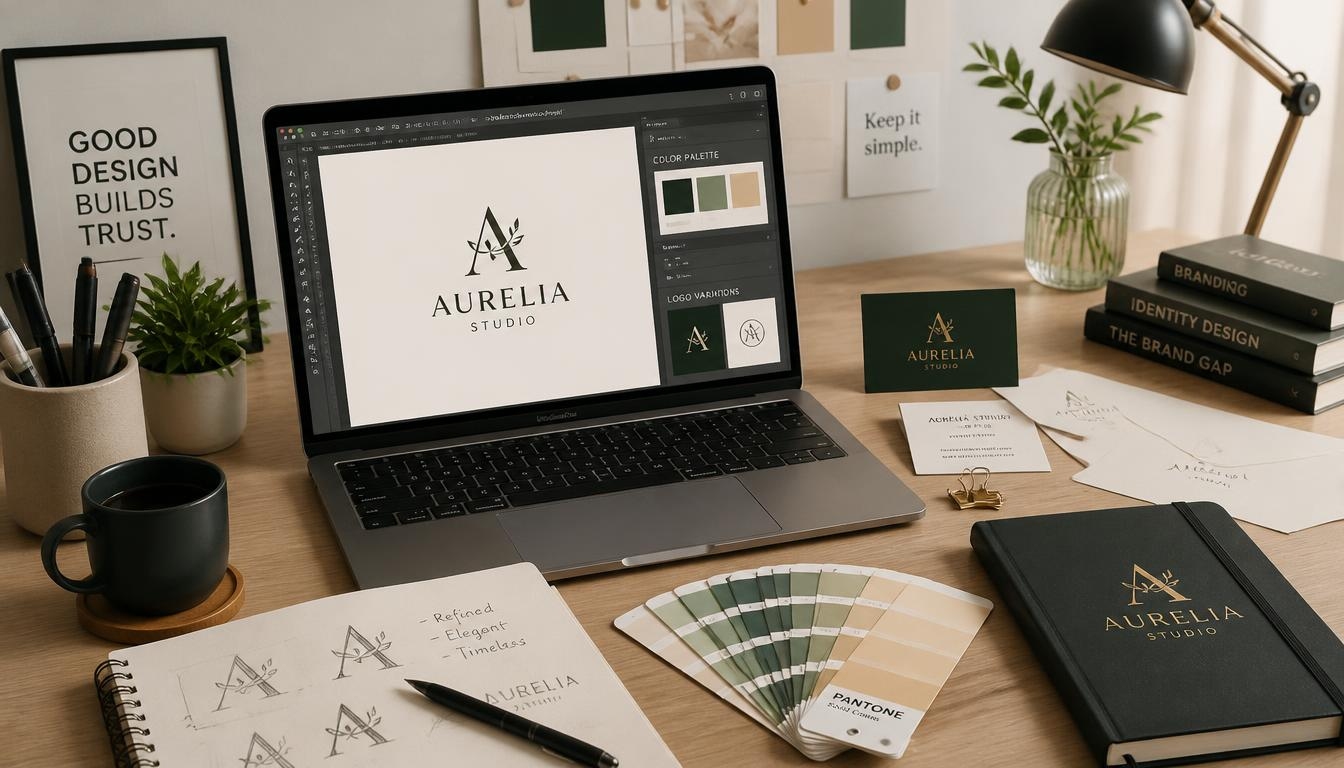
Build a Strong Brand: 7 Essential Things Every Graphic Design Business Needs
Introduction
Every successful graphic design business begins with the same spark: a passion for turning ideas into visuals that people remember.
But passion and talent alone do not build a lasting company.
Thousands of designers use the same software, follow the same trends, and offer similar services. So what makes one graphic design business thrive while another struggles to find clients?
The answer is brand.
A strong brand tells potential clients who you are, what you stand for, and why you are worth the investment. It builds trust long before you send a proposal. It also lets you charge confidently instead of competing on price.
Many designers spend years creating beautiful brands for other people while neglecting their own. They have no clear message, an outdated website, and no system for attracting clients. The result is unpredictable income and constant stress.
This guide will change that. You will learn the seven essential things every graphic design business needs to build a brand that attracts ideal clients, earns premium rates, and grows year after year.
Whether you are a freelancer working from a spare room or a small agency with a growing team, these steps will help your graphic design business stand out in a crowded market.
Here is what we will cover:
- A clear brand identity and positioning
- A memorable visual identity
- A professional portfolio website
- A defined service menu and transparent pricing
- Smooth processes, contracts, and client experience
- Consistent marketing and visibility
- Social proof and a strong reputation
Think of this article as a practical roadmap. Each section gives you actions you can start today, no matter how small your graphic design business is right now.
Remember, a graphic design business without a brand is simply a folder of nice files.
1. Define a Clear Brand Identity for Your Graphic Design Business

Before you design your own logo, answer a bigger question: who are you as a company?
Brand identity is the personality, purpose, and promise behind your work. It is not just a logo or a color palette. It is the reason clients choose you over every other option.
Choose a Clear Niche
Generalists struggle to be remembered. “I design everything for everyone” sounds flexible, but it also sounds forgettable.
A niche gives your graphic design business a sharp position in the market. You might focus on packaging for food brands, pitch decks for startups, or social media graphics for fitness coaches.
Specialists are easier to refer. They also charge more, because clients pay a premium for deep experience in their exact problem.
Do not worry that a niche will limit you. It simply makes your marketing clearer and your reputation stronger.
Know Your Ideal Client
Picture the one client you would love to work with again and again. What industry are they in? What is their budget? What frustrates them about hiring designers?
When you understand your ideal client, every decision becomes easier. Your messaging, pricing, and portfolio all speak directly to them.
Write a short profile of this person and keep it beside your desk.
Write a Mission and Vision
Your mission explains why your graphic design business exists today. Your vision describes where you want it to go.
For example: “Our mission is to help small ethical brands look as professional as global companies.”
Keep both statements short and honest. If they do not excite you, rewrite them until they do.
Define Your Brand Values
Values guide how you work when no one is watching. Common examples include creativity, honesty, reliability, and simplicity.
Choose three to five values and give each one a practical meaning. “Reliability” might mean always delivering on the agreed date. “Honesty” might mean telling a client when an idea will not work.
These values shape your communication, your contracts, and even the projects you decline.
Craft a Unique Value Proposition
Your unique value proposition is a single sentence that explains the benefit clients receive. A simple formula works well:
“I help [specific audience] achieve [specific result] through [your unique approach].”
For instance: “I help wellness startups attract loyal customers through warm, story-driven brand design.”
Place this sentence on your homepage, your social profiles, and your proposals. Your graphic design business should be able to repeat it in seconds.
Decide How You Want to Sound
Brand voice is how your company speaks. Are you friendly and playful, or polished and formal?
Consistency matters more than style. A warm website followed by a stiff email confuses clients and weakens trust.
Describe your voice in three words, then check every piece of writing against them.
Why Positioning Matters
Positioning is the place your graphic design business holds in the client’s mind. It answers one question: why you?
Strong positioning reduces price comparison. When clients see you as the obvious expert, they stop asking for discounts and start asking for availability.
A well-positioned graphic design business also attracts better referrals, because people know exactly what to say when they recommend you.
Take an hour this week to write your niche, ideal client, mission, values, and value proposition on one page. That page becomes the compass for your entire graphic design business.
2. Create a Memorable Visual Identity

Once your strategy is clear, it is time to give it a face. Visual identity is how your brand looks everywhere people meet it.
Clients are visual people who hire visual people. If your own branding looks careless, they will assume your client work does too.
Your graphic design business sells vision, so it must look the part.
A Distinctive Logo
Your logo is the anchor of your graphic design business’s visual identity. It should be simple, scalable, and memorable.
Test it at small sizes, such as a social media avatar, and at large sizes, such as a banner. Check it in black and white as well as in color.
Prepare several versions: a primary logo, a horizontal version, a stacked version, and a small icon. A flexible logo system serves every platform.
A Signature Color Palette
Color triggers emotion faster than words. Blue suggests trust. Orange suggests energy. Green suggests growth. Black suggests luxury.
Choose one or two primary colors and two or three supporting colors. Record their HEX, RGB, and CMYK values so they stay accurate across screens and print.
A restrained palette looks confident. Too many colors look messy.
Typography That Fits
Fonts carry personality too. A bold sans-serif feels modern. An elegant serif feels classic.
Pick one font for headings and another for body text. Make sure both are legible and licensed for commercial use.
Limit yourself to two families. Consistency is what makes a graphic design business look established.
Imagery, Icons, and Graphic Style
Decide the style of your images. Will you use bold illustrations, minimal icons, or real photography?
Create simple rules for each. For instance, all icons might share the same line weight and rounded corners.
Visual rules turn random designs into a recognizable system.
Create Brand Guidelines
Brand guidelines are your rulebook. Even a simple one-page PDF is powerful.
Include your logo versions, clear-space rules, colors, fonts, image style, and examples of correct and incorrect use.
Guidelines protect your graphic design business from inconsistency, especially when you hire freelancers or work with a team.
They also show professionalism. Clients who see your guidelines understand that you practice what you preach.
Apply Your Identity Everywhere
Your visual identity should appear on every touchpoint:
- Website and portfolio
- Social media profiles and post templates
- Email signature and newsletter
- Proposals, invoices, and contracts
- Business cards and packaging
- Presentation decks
When every touchpoint matches, your graphic design business feels organized and trustworthy.
Avoid Common Visual Branding Mistakes
Many designers fall into the same traps:
- Copying trends that do not fit their audience
- Using too many fonts or colors
- Redesigning the logo every six months
- Neglecting mobile appearance
- Ignoring accessibility, such as low-contrast text
Good branding is evolution, not constant reinvention. Refine slowly and keep the core recognizable.
Treat Yourself Like a Client
Run your own branding project with the same discipline you apply to paying clients. Write a brief, set a deadline, and present options to a trusted peer.
A strong visual identity does not need to be expensive. It needs to be intentional. When your graphic design business looks as skilled as it is, clients arrive already convinced.
3. Build a Professional Portfolio Website

Your website is your hardest-working salesperson. It never sleeps, never forgets a detail, and meets potential clients at any hour.
For a graphic design business, the website is also the biggest proof of skill. It must be fast, beautiful, and easy to use.
Make Your Homepage Crystal Clear
Visitors decide within seconds whether they are in the right place. Your homepage should answer three questions immediately:
- What do you do?
- Who do you do it for?
- What should I do next?
Use a strong headline, a short supporting sentence, and one clear call to action, such as “Book a Free Discovery Call.”
Show Your Best Work, Not All Your Work
Quality beats quantity. Six to ten outstanding projects are far more persuasive than fifty average ones.
Choose projects that match the clients you want. If you want to design for restaurants, show restaurant work first.
Remove anything that no longer represents your standard. Your graphic design business is judged by its weakest visible project.
Turn Projects Into Case Studies
Images alone do not explain your value. Case studies do.
For each featured project, tell a short story:
- The problem: What did the client struggle with?
- The process: How did you research, sketch, and refine?
- The result: What changed after the design launched?
Numbers help. “Sales increased 30 percent after the new packaging” is far stronger than “the client loved it.”
Write an About Page People Remember
Clients hire people, not logos. Your About page should show your face, your story, and your values.
Explain why you started your graphic design business and what drives your work. Keep it warm and personal, then link back to how you help clients.
Make Contact Effortless
Add a simple contact form, an email address, and links to your social profiles. Do not hide them.
Every extra click costs your graphic design business inquiries. Place a contact button in your header and at the bottom of every page.
Prioritize Speed and Mobile Experience
Most visitors will view your site on a phone. Test it on several devices.
Compress images, use modern formats, and avoid heavy animations that slow loading. A slow portfolio makes a graphic design business look unprofessional.
Add SEO Basics
A beautiful website is useless if nobody finds it. Learn the fundamentals of search engine optimization:
- Write clear page titles and meta descriptions
- Use descriptive headings
- Add alt text to portfolio images
- Publish helpful blog posts that answer client questions
- Link related pages together
A blog about branding tips, design trends, and project stories can bring steady traffic to your graphic design business. Over time, search visibility becomes one of your most reliable sources of leads.
Build Trust With Small Details
Add your location, a professional email address, a privacy policy, and a clear list of services. These details signal that your graphic design business is real, reliable, and ready for serious clients.
4. Define Your Services, Packages, and Pricing

Confusion kills sales. If potential clients cannot tell what you offer or what it costs, they move on.
A strong graphic design business presents services clearly and prices them with confidence.
Create a Clear Service Menu
List the core services you provide, such as logo design, full brand identity, social media graphics, packaging, and brand guidelines.
Describe each one in plain language: what is included, who it is for, and what the client receives at the end.
Avoid long lists of everything you could do. Focus on what your graphic design business does best.
Offer Packages Instead of Only Custom Quotes
Packages make buying easier. A common structure includes three tiers:
- Starter: A logo and basic brand files
- Standard: Logo, color palette, typography, and social media kit
- Premium: Complete brand identity with guidelines, stationery, and templates
Three options help clients self-select and make the middle choice feel like a smart decision.
You can still offer custom projects, but packages give your graphic design business a predictable foundation.
Move Beyond Hourly Billing
Hourly rates punish efficiency. The faster you become, the less you earn.
Value-based pricing focuses on the result. A logo that helps a company win larger customers is worth more than the hours it took to draw.
Ask clients about their goals and budget during discovery. Then price according to the value you will deliver.
Define Scope, Revisions, and Timelines
Many pricing problems are actually scope problems. Define what each package includes before work begins:
- Number of concepts
- Number of revision rounds
- Final file formats
- Delivery timeline
- Extra costs for additional changes
Clear boundaries protect your time and your relationship with the client.
Use Deposits and Payment Schedules
Ask for a deposit, often 30 to 50 percent, before starting. It confirms commitment and covers early costs.
Split remaining payments across milestones or at final delivery. A good payment structure keeps cash flow healthy in your graphic design business.
Add Retainers and Upsells
Ongoing support creates stable income. Offer monthly retainers for social media graphics, marketing materials, or brand maintenance.
Upsells also help. After a logo project, suggest brand guidelines, business cards, or website graphics.
Retainers turn one-time projects into long-term relationships, which is the healthiest way to grow a graphic design business.
Review Your Prices Regularly
If you are always booked, your prices are probably too low. Raise them gradually for new clients, and give existing clients fair notice.
Higher prices often attract more serious clients to a graphic design business, because they signal quality and expertise.
5. Set Up Professional Processes, Contracts, and Client Experience

Clients remember how working with you felt long after they forget the exact colors you chose.
A smooth, professional experience is one of the strongest brand assets a graphic design business can build. It creates repeat work and enthusiastic referrals.
Start With a Discovery Call
Before quoting, learn about the client. A short discovery call helps you understand their goals, audience, competitors, and budget.
Ask questions such as:
- What problem are we solving?
- Who is your ideal customer?
- Which brands do you admire, and why?
- What does success look like in six months?
This conversation shows you care about results, not just aesthetics.
Use a Creative Brief
A written brief keeps everyone aligned. It should summarize the project goals, target audience, tone, deliverables, deadlines, and budget.
Ask the client to review and approve it. A good brief prevents misunderstandings and protects your graphic design business from endless changes later.
Send a Clear Proposal
A proposal should feel like part of your brand. Use your colors, fonts, and voice.
Include an overview of the problem, your proposed solution, the timeline, the investment, and the next steps. Keep it short, visual, and easy to approve.
Never Skip the Contract
Contracts are not unfriendly. They are a sign of professionalism. A solid agreement protects both sides and sets expectations.
Make sure it covers:
- Scope of work and deliverables
- Payment terms and late fees
- Number of revisions
- Ownership and usage rights
- Cancellation or kill fee
- Confidentiality
- Project timeline
Every graphic design business should use a written agreement for every project, even for friends and family. Consider asking a qualified legal professional in your country to review your template.
Organize Projects With the Right Tools
Choose simple tools and use them consistently. A project management app, a shared cloud folder, and a scheduling link can handle most needs.
Give each client one place to find files, feedback, and updates. Organized systems make a small graphic design business look like a well-run agency.
Manage Feedback Professionally
Feedback can make or break a project. Set a clear process from the start.
Present your work with a short explanation of your thinking, not just the visuals. Ask clients to consolidate feedback into one list. Respond calmly, even when comments feel subjective.
When feedback conflicts with the brief, gently remind the client of the original goals. This keeps decisions grounded in strategy instead of personal taste.
Communicate Proactively
Silence creates anxiety. Send regular updates, even when there is no big news.
Set boundaries too. Share your working hours and typical reply times, so clients know what to expect.
Predictable communication builds confidence in your graphic design business.
Finish Strong
A great ending is as important as a great start. Deliver organized files with clear names, usage notes, and brand guidelines.
Send a thank-you message and request a testimonial while the client is happiest. Then check in a few weeks later to see how the new brand is performing.
Small gestures like these turn one-time customers into advocates.
6. Market Your Brand With Consistency and Purpose

Even the best brand stays invisible without marketing. Clients cannot hire you if they have never heard of you.
The secret is not doing everything. It is doing a few things consistently. Every graphic design business has limited time, so focus matters.
Choose Your Main Platforms
Pick one or two channels where your ideal clients spend time. Popular options include:
- Instagram and Pinterest for visual storytelling
- LinkedIn for B2B clients and corporate work
- Behance and Dribbble for showcasing and discovery
- YouTube for tutorials and process videos
Do not try to be everywhere. Master a platform before adding another.
Share Content That Helps
Selling constantly pushes people away. Teaching attracts them.
Share branding tips, before-and-after transformations, design breakdowns, and behind-the-scenes process videos. Explain why a color or layout works.
Helpful content positions your graphic design business as an expert and keeps you visible in your audience’s feed.
Create a Simple Content Calendar
Consistency beats intensity. Plan a realistic schedule, such as three posts per week and one newsletter per month.
Batch your work. Spend one afternoon creating several posts, then schedule them in advance.
A modest calendar you can maintain is better than a bold one you abandon.
Build an Email List
Social platforms change their algorithms, but your email list belongs to you.
Offer a useful freebie, such as a brand checklist, a color palette guide, or a set of templates. Then send helpful emails and occasional updates about your services.
Email is one of the most effective ways for a graphic design business to stay in touch with future clients.
Use SEO and Blogging
Search engines send visitors who are already looking for help. Write articles that answer real questions, such as “How much does a logo cost?” or “What is included in a brand identity?”
Use clear headings, short paragraphs, and helpful images. Update older posts to keep them fresh.
Over time, your blog can become a steady source of leads for your graphic design business.
Build Partnerships
Many of your best referrals will come from people who serve the same clients. Connect with web developers, copywriters, photographers, marketers, and business coaches.
Offer to collaborate on projects or share each other’s work. Partnerships widen your reach without increasing your advertising costs.
Network Online and Offline
Join local business groups, creative meetups, and online communities. Show up consistently and contribute value instead of pitching.
Relationships take time, but they compound. One strong connection can send work to your graphic design business for years.
Try Thoughtful Outreach
Reach out directly to businesses that could benefit from better design. Personalize every message. Mention something specific about their brand and offer a clear idea for improvement.
Generic mass emails get ignored. Thoughtful outreach feels like help, not spam.
Measure and Improve
Track what works. Review website traffic, inquiry sources, and engagement every month.
Double down on the channels that bring real clients, and drop the ones that do not. Marketing for a graphic design business should always be guided by data, not guesswork.
7. Build Social Proof and a Reputation Clients Trust

People trust other people more than they trust advertising. Social proof is the evidence that others have hired you and been happy.
For a new graphic design business, collecting proof early is one of the smartest investments you can make.
Collect Testimonials Consistently
Ask every satisfied client for a testimonial. The best time is right after delivery, when excitement is high.
Make it easy. Send three short questions:
- What problem were you facing before we worked together?
- What was it like working with me?
- What results have you seen since?
Specific stories are far more convincing than general praise.
Display Testimonials Strategically
Place testimonials where visitors make decisions: on your homepage, service pages, and proposals.
Add the client’s name, company, and photo if they agree. Real faces build credibility.
A short video testimonial can be even more powerful for a graphic design business.
Publish Detailed Case Studies
Case studies show your thinking and your results. They answer the unspoken question every client has: “Can this designer solve my problem?”
Include the challenge, your process, the final design, and the measurable outcome. Share them on your website, social media, and newsletter.
Build a Strong Online Presence on Review Platforms
Claim your profile on relevant platforms, such as Google Business Profile, Clutch, or industry directories. Encourage happy clients to leave honest reviews.
Respond to every review with gratitude. If you receive criticism, reply politely and focus on solutions.
How you handle a difficult review can strengthen the reputation of your graphic design business.
Create a Referral System
Referrals are often the best clients: they arrive trusting you already.
Make asking easy. Add a line to your final email, such as “If you know anyone who needs design help, I would love an introduction.” Some studios offer a small thank-you gift or discount.
Always thank people who refer you.
Earn Authority
Authority grows when others recognize your expertise. Look for chances to:
- Write guest articles for industry blogs
- Speak at workshops or webinars
- Appear on podcasts
- Teach classes or share templates
- Enter design awards
Each mention strengthens trust in your graphic design business and improves your visibility online.
Protect Your Reputation
Reputation takes years to build and seconds to damage. Deliver on promises, communicate clearly, and fix mistakes quickly.
Keep your work ethical. Credit collaborators, respect copyright, and be honest about what you can do.
When people know they can count on you, your brand becomes your most valuable asset.
Bonus: Common Branding Mistakes That Hold Back a Graphic Design Business

Even talented designers make avoidable errors. Watch out for these common traps:
- Skipping strategy. Jumping straight to visuals leads to pretty but unfocused branding for your graphic design business.
- Inconsistent messaging. A different tone on every platform confuses clients and weakens trust.
- Low prices attract difficult clients and quickly burn out the owner of a graphic design business.
- Ignoring your own marketing. Client work always comes first, until the pipeline runs dry.
- Saying yes to everything. Projects outside your niche dilute your message and slow down your graphic design business.
- Copying competitors. Learn from them, but never imitate them. Your graphic design business needs its own voice.
Most of these mistakes come from being too busy to step back. That is why a regular review matters.
Once every quarter, set aside an hour for a simple brand audit. Ask whether your website, pricing, and messaging still reflect where you are heading. Check whether your newest projects belong in your portfolio. Look at your inquiries and notice which ones feel like a perfect fit.
Small corrections prevent big problems later, and they keep your graphic design business moving in the right direction.
Remember that a brand is never finished. It grows with you, so review it often and your graphic design business will stay sharp.
Conclusion
A strong brand is not a luxury for a creative studio. It is the foundation that turns skill into a sustainable company.
Let’s recap the seven essentials every graphic design business needs:
- A clear brand identity and positioning
- A memorable visual identity
- A professional portfolio website
- Defined services, packages, and pricing
- Professional processes, contracts, and client experience
- Consistent marketing and visibility
- Social proof and a trusted reputation
You do not need to complete everything at once. Start small.
This month, write your positioning statement and refresh your portfolio. Next month, create your service packages and a simple contract. After that, build a content plan and begin collecting testimonials.
Small, consistent actions compound. Within a year, your graphic design business can look and feel completely different: clearer, more confident, and far more profitable.
Your clients are searching for a designer they can trust. Build the brand that makes you the obvious choice, and your graphic design business will keep attracting the right people.
Frequently Asked Questions (FAQs)
1. How do I start a graphic design business with no clients?
Start by defining your niche and building a small portfolio of strong projects. Create a few self-initiated or pro bono projects if you need samples. Then set up a simple website, share your work online, and reach out to local businesses. Your first clients often come from your personal network.
2. How much does it cost to start a graphic design business?
Costs vary, but a lean graphic design business can start with a computer, design software, a domain name, and hosting. Many designers begin for a few hundred dollars and invest more as income grows. Legal registration and insurance costs depend on your country.
3. Do I need a degree to run a graphic design business?
No. Clients care about your portfolio, results, and professionalism more than a certificate. However, courses, mentorship, and continuous practice help you sharpen your skills and stay current with trends.
4. What software does a graphic design business need?
Most designers use Adobe Photoshop, Illustrator, and InDesign, though tools like Figma, Affinity, and Canva are also popular. Add a project management tool, an invoicing app, and cloud storage to keep your graphic design business organized.
5. How do I find my first clients?
Tell friends, family, and former colleagues what you do. Share your work on social platforms, join local business groups, and contact small companies with outdated branding. Freelance marketplaces can help too, though building direct relationships usually pays better.
6. How much should I charge for design services?
Research your market, consider your experience, and price based on value, not just hours. Packages with clear deliverables work well. Increase your rates as demand grows and your results improve.
7. How long does it take to build a strong brand?
You can create a basic brand identity in a few weeks. Building recognition and trust takes longer, often six to twelve months of consistent effort. Patience and consistency are the real keys for any graphic design business.
8. Should I register my graphic design business?
Requirements depend on where you live. Many freelancers start as sole proprietors, while others form a company for liability and tax reasons. Speak with a local accountant or legal professional to choose the right structure for your graphic design business.
9. How can my graphic design business stand out from competitors?
Choose a niche, show real results, and deliver an excellent client experience. Share your expertise through helpful content, collect testimonials, and keep your branding consistent. Stand-out brands are specific, reliable, and easy to remember.
10. Can I run a graphic design business from home?
Yes. Many successful studios begin at a kitchen table or a spare room. What matters is a reliable internet connection, organized systems, and a professional presentation. As your graphic design business grows, you can hire help or rent a studio space.
7 Passive Income Ideas for Designers Who Want to Earn Beyond Client Work
Introduction: Why Designers Need More Than Client Work
Most designers begin their careers by trading time for money. You take a brief, deliver the files, send the invoice, and start all over again with the next client.
That model works, but it has a ceiling. There are only so many hours in a week, and a single slow month can shake your confidence and your bank balance.
This is why more creatives are searching for passive income. The idea is simple. You create something once, then sell it again and again while you focus on other work.
In this guide, you will discover seven practical ways to build passive income using skills you already have. Each idea explains how it works, what you need to start, where to sell, and which mistakes to avoid.
A steady stream of passive income will not replace your client work overnight. What it can do is give you stability, creative freedom, and the confidence to say no to projects that do not fit.
You will also find a realistic timeline, a short action plan, and a full FAQ section. If you have ever wanted to earn beyond client work, this article is the right place to begin.
What Passive Income Really Means for Designers
Before we dive into the ideas, it helps to define the term. Passive income is money you earn with little ongoing effort after the initial work is complete.
For designers, that usually means a digital product, a license, or a piece of content that keeps selling long after you published it. You do the heavy lifting up front. After that, sales arrive with only light maintenance.
It is important to be honest here. Passive income is rarely completely hands-off. Most products still need marketing, updates, and customer support from time to time.
Think of it as front-loaded work. You might invest several weeks or even months, and the payoff arrives gradually over the following years.
That said, the payoff can be very real. Many designers now earn a steady monthly amount from products they built long ago. This kind of passive income becomes a financial cushion, and it makes freelancing far less stressful.
Why Designers Are Perfectly Placed to Build Passive Income
Designers have a major advantage over most people who want to earn passive income. You already know how to create things that other people want to buy.
Logos, layouts, icons, mockups, and illustrations are always in demand. Small businesses, creators, and students all need good design, but many cannot afford a fully custom project.
A ready-made product solves that problem at a lower price. Better still, you get to sell the same file to hundreds of buyers instead of just one client.
Marketplaces and creator platforms also make selling easier than ever. You do not need your own website to start, although having one helps a lot in the long run.
There is one more benefit worth mentioning. Every product you sell works as a public sample of your style. That can bring better clients to your door, so your passive income and your client work can grow together.
How to Choose the Right Idea for You
Seven ideas can feel like a lot. You do not need to try them all at once. In fact, trying everything at the same time is one of the fastest ways to burn out.
Instead, ask yourself three simple questions.
What do I enjoy making? You will be creating for months, so pick a format you genuinely like.
What do I already have? Old client work, unused sketches, and personal projects can often be turned into products with very little extra effort.
How fast do I want results? Templates and assets can start generating passive income within weeks. Courses and content channels take longer, but they often pay more in the long run.
Pick one idea, finish it, and publish it. Then move on to the next. Building passive income works best when you treat it like a series of small launches rather than one giant project.
Idea 1: Sell Design Templates

Templates are one of the most popular passive income ideas for designers, and for good reason. They are fast to create, easy to price, and always in demand.
A template is a pre-made design that buyers can edit to fit their own needs. Think social media kits, resumes, pitch decks, brand style guides, invoices, menus, and Notion dashboards.
How it works
You design the template in a tool such as Photoshop, Illustrator, Figma, or Canva. Then you upload it to a marketplace or your own store and set a price.
Buyers download the file, customize it, and use it right away. Every sale after that is passive income, because the product is already built.
What you need to start
- A clear niche, such as templates for coaches, restaurants, or real estate agents
- Five to ten polished templates to launch with
- Attractive preview mockups that show the product in real use
- A simple license explaining how buyers may use the files
Where to sell
Popular options include Creative Market, Etsy, Gumroad, Envato, and the Canva creator program. Each platform has different fees and a different audience, so test a few before you commit.
Choose the platform that best fits your passive income goals, not just the one with the biggest crowd.
Tips for success
Focus on one niche and go deep. A pack of thirty wedding templates will usually outsell a random mix of unrelated designs.
Add clear instructions and links to free fonts. Good support reduces refunds and earns better reviews, which helps you build lasting passive income.
Idea 2: Create Print-on-Demand Products

Print-on-demand lets you sell physical products without holding any inventory. It is a smart way to turn your artwork into passive income without ever visiting a post office.
You upload a design, choose a product, and a partner prints and ships each order for you. The customer pays, the partner takes the base cost, and you keep the profit.
How it works
Services like Printful, Printify, and Redbubble connect to online stores. When a customer orders a t-shirt, mug, or poster, the partner handles printing, packing, and delivery.
Because the partner handles fulfillment, this is one of the most hands-off passive income models for beginners. Your margin is the difference between the base cost and your selling price.
What sells well
- Typography designs and slogans for specific communities
- Minimalist posters and wall art
- Pattern designs for phone cases, tote bags, and notebooks
- Niche humor for hobbies and professions
Evergreen designs tend to earn passive income all year, while seasonal designs create nice spikes around holidays.
Tips for success
Research before you design. Look at what is already selling in your niche, then find a gap you can fill with your own style.
Order samples first. Checking print quality protects your reputation and prevents unhappy buyers.
Be patient with this one. Print-on-demand is slow to build at first, but a large catalog can create steady passive income as each design collects a few sales every month.
Idea 3: Sell Fonts, Icons, and Graphic Assets

If you love the fine details of design, selling digital assets can be very rewarding. Fonts, icon sets, textures, brushes, and vector packs all belong in this category.
These products are used by other designers, so buyers already understand their value. They also make excellent passive income because a single asset can sell for years with very little upkeep.
Types of assets you can sell
- Typefaces and font families
- Icon sets in several styles
- Photoshop brushes, actions, and textures
- Vector illustration packs and mockup scenes
How to get started
Start small. A set of fifty consistent icons is easier to finish than a complete font family, and it can still sell very well. Even a small asset pack can become a dependable source of passive income.
Study the bestsellers on marketplaces to learn which styles and file formats buyers prefer. Include PNG, SVG, and editable source files whenever possible.
Why licensing and bundles matter
Offer clear license tiers, such as personal, commercial, and extended use. Higher tiers let you charge more for the exact same product.
Bundles are another smart move. Grouping related items raises the average order value and strengthens your passive income without extra design work.
Keep your catalog fresh
Update your assets from time to time. A refreshed bundle can bring old customers back, and it can boost your passive income during slow seasons.
Idea 4: Launch an Online Course or Workshop

Teaching is one of the strongest ways to earn beyond client work. If you can explain how you design, someone is willing to pay to learn it.
A recorded course is a classic example of passive income. You film it once, then sell it for as long as the content stays useful.
Topics that work well
- Logo design in Photoshop or Illustrator
- Branding basics for freelancers
- Procreate illustration for beginners
- Figma for UI design
- Portfolio building and pricing
How to build your course
Start with an outline of five to eight lessons, each solving one clear problem. Short lessons keep students engaged and help them finish.
Record screen tutorials with simple tools, then add worksheets, project files, and a certificate. A course that teaches one specific skill can bring in passive income for years, especially if you refresh it once or twice a year.
Where to sell
Skillshare, Udemy, Teachable, Gumroad, and Podia are popular choices. Udemy brings built-in traffic, while your own platform gives you better margins and direct contact with students. Choose based on how much control you want over your passive income.
Tips for success
Offer a free lesson to build an email list. People who finish a free lesson are far more likely to buy the full course, and that grows your passive income over time.
Idea 5: Sell Ebooks, Guides, and Printables

Designers know how to make information look beautiful. That skill turns simple knowledge into products people happily pay for.
Ebooks, guides, planners, checklists, and workbooks are cheap to produce and easy to deliver. They also fit neatly into a long-term passive income plan because the files never run out of stock.
Product ideas
- A brand style guide workbook for small business owners
- A freelance pricing guide with contract templates
- Printable planners, journals, and wall calendars
- A color palette and font pairing handbook
How to create them
Choose a problem you can solve in under fifty pages. Write clear, short sections, and design the layout with the same care you give client work.
Export a polished PDF and, if relevant, a printable version. Once it is published, the ebook becomes passive income with no stock to manage.
Where to sell
Gumroad, Etsy, Payhip, and your own website all work well. Etsy is especially strong for printables, since many shoppers search there for planners and wall art. Delivery is automatic, which makes this a clean passive income model.
Tips for success
Write a strong sales page with a clear preview of the inside pages. Buyers want to see what they are getting before they click the buy button.
Release a new edition each year. An updated planner or pricing guide can revive interest and keep passive income flowing.
Idea 6: License Your Artwork and Patterns

Licensing means you keep ownership of your artwork while a company pays to use it on products. Those products might include fabric, stationery, home decor, packaging, or greeting cards.
It can be one of the most rewarding forms of passive income, because one strong design may appear on many products and sell for years.
How it works
You create a collection of related patterns or illustrations. Then you pitch it to brands or upload it to agencies and marketplaces. If a company likes it, they sign an agreement and pay you a royalty or a flat fee.
After the contract is signed, payments arrive without extra design work. That is exactly what passive income should feel like.
What you need to start
- A cohesive portfolio of ten to twenty pieces in one style
- A basic understanding of repeat patterns and color palettes
- A simple licensing agreement or a trusted agent
- Patience, because deals can take months
Where to find buyers
Stock marketplaces such as Adobe Stock and Shutterstock pay per download. They are a beginner-friendly way to start earning passive income. You can also approach fabric brands, stationery companies, and licensing agents directly.
Tips for success
Follow trends in color and theme, but stay true to your style. A recognizable look makes brands remember you.
Keep records of every agreement. Knowing who has the rights to what will protect you and make it easier to manage passive income from several partners.
Idea 7: Grow a Blog, YouTube Channel, or Newsletter

Content is the long game of passive income. A helpful tutorial can attract visitors for years, and each visit is a chance to earn.
You can make money through ad revenue, affiliate links, sponsorships, and by sending readers to your own products. In fact, content often becomes the engine that turns readers into customers for your other passive income products.
Content that works for designers
- Step-by-step software tutorials
- Design tool reviews and comparisons
- Before-and-after case studies
- Beginner guides with free downloadable resources
How affiliate income works
Many software companies and marketplaces pay a commission when someone buys through your link. This is a natural form of passive income for creators who already teach and review tools.
Always disclose affiliate links, and recommend only tools you genuinely use.
How to get started
Pick one channel and post consistently for at least six months. Search-friendly topics, such as how to design a logo in Photoshop, tend to keep attracting traffic long after publication.
Be patient. Results come slowly, but a library of strong content can become a dependable source of passive income that grows with every new post.
Essential Tools for Building Passive Income as a Designer
Having the right tools makes every idea easier. You do not need expensive software to begin, but a few essentials will save you hours.
Design software: Photoshop, Illustrator, Figma, Affinity, and Canva all work well for creating products.
Mockup tools: Placeit, Smartmockups, and free Photoshop mockup files help you present your products professionally.
Selling platforms: Gumroad, Etsy, Creative Market, and Shopify let you accept payments and deliver files automatically. Automation is the backbone of passive income, so choose tools that send files and receipts without you.
Email tools: Mailchimp, ConvertKit, and MailerLite help you build an audience you own, which is vital for long-term passive income.
Analytics: Google Analytics and platform dashboards show which products earn the most, so you can build more of what works.
Keep your setup simple. A lean toolset keeps your passive income business easy to run, and a small stack you understand beats a large one you never learn.
How to Market Your Products Without Burning Out
Even the best product will not sell if nobody sees it. Marketing is the part of passive income that most designers underestimate.
The good news is that you only need a few reliable channels.
Search engine traffic
Optimize your product pages and blog posts with keywords that buyers actually search for. Clear titles, descriptions, and image alt text help your listings appear on Google and inside marketplaces.
Over time, search traffic can become the most dependable driver of passive income.
Pinterest and Instagram
Visual platforms suit designers perfectly. Pin your product mockups and link them to your store. Pinterest posts keep circulating for months, which fits a hands-off business model well.
Your email list
Offer a free mini template pack in exchange for an email address. Then send occasional updates about new releases and discounts.
An email list turns one-time buyers into repeat customers, and it is the one audience no algorithm can take away.
Collaborations and partnerships
Partner with bloggers, educators, and other creators who serve the same audience. A single mention can send hundreds of visitors to your shop.
Spend a few hours each week on marketing, and your passive income will compound much faster.
A Realistic Timeline and Earnings Expectations
Let us be realistic. Nobody becomes wealthy from a single template pack in the first week. Building passive income is a gradual process, and most designers see their first sales within a month or two.
Here is a typical pattern:
- Months 1 to 3: You create and launch your first products. Sales are small and sporadic.
- Months 4 to 6: You learn what sells, improve your listings, and add new items.
- Months 7 to 12: A growing catalog and a small audience produce steadier results.
- Year two and beyond: Older products keep selling while new ones add to the total.
Earnings vary widely. Some designers make only a few extra dollars of passive income each month, while others replace a full salary. The difference usually comes from consistency, niche focus, and the number of quality products published.
Treat your first year as an investment. The passive income you build in year one can support you for many years to come.
Track your numbers monthly. Knowing your revenue, best sellers, and traffic sources helps you decide where to spend your time.
Avoid comparing yourself to screenshots online, since those rarely show the full story. Building passive income is a personal journey.
Common Mistakes to Avoid
Even talented designers stumble when building passive income. Here are the mistakes that come up most often.
1. Launching too many things at once
Spreading yourself thin leads to unfinished products and weak launches. Finish one thing, learn from it, then continue.
2. Ignoring licensing and copyright
Always check the license for fonts, images, and mockups you use inside your products. One mistake can lead to refunds, takedowns, or legal trouble. Protecting your work also means protecting your passive income.
3. Skipping market research
Do not guess what people want. Browse bestseller lists, read reviews, and study customer questions before you design.
4. Underpricing your work
Low prices attract buyers but erode your profit. Price based on the value you deliver, not on fear.
5. Quitting too early
Most products need time to gain traction. If you give up after a month, you will never see what compounding passive income can do.
6. Neglecting customer support
Quick, friendly replies protect your reviews. Good reviews drive more sales, and more sales mean more passive income.
Your 30-Day Action Plan
Ready to begin? Use this simple plan to take your first step this month.
- Week 1: Choose one idea from this list and one specific niche. Research ten competitors.
- Week 2: Design your first product. Aim for quality over quantity.
- Week 3: Create mockups, write your listing, and set up your store or marketplace account.
- Week 4: Launch, share on social media, and email friends or followers. Collect early feedback.
After launch, spend one hour a week improving your listing and one hour creating the next product. Small, steady effort is how passive income grows.
By day 30, you will not be rich, but you will have something far more valuable: a real product in the market and a clear path forward. Remember that every successful passive income stream started with a single published product.
Final Thoughts
Client work will always have its place, and it is a wonderful way to grow your skills. But relying on it alone puts your income at the mercy of deadlines, budgets, and other people’s decisions. That is why building passive income is such a powerful goal for creatives.
The seven ideas in this guide give you a way out of that cycle. Whether you sell templates, courses, or artwork licenses, each path can turn your talent into passive income.
Choose one idea, start small, and stay consistent. Over time, your products will work for you even when you are not at your desk. That is the real promise of passive income, and it is within reach for any designer willing to start.
Frequently Asked Questions
What is passive income for designers?
It is money earned from design products or content that you create once and sell repeatedly, such as templates, fonts, courses, or licensed artwork. It takes upfront effort but little daily work after launch.
How much can designers earn from passive income?
Results vary. Many beginners earn small amounts in their first months, while creators with large catalogs can earn a full-time income. Your niche, product quality, and marketing effort make the biggest difference.
Which passive income idea is best for beginners?
Templates and graphic assets are usually the easiest place to start. They are quick to make and sell on established marketplaces. Print-on-demand is another low-risk option.
Is passive income really passive?
Not entirely. After the initial work, you will still handle updates, marketing, and customer questions. However, the time required drops dramatically compared with client projects.
How long does it take to see results from passive income?
Most designers see their first sales within one to three months. Meaningful earnings usually take six to twelve months of consistent effort.
Do I need a website to earn passive income as a designer?
No. Marketplaces like Etsy, Creative Market, and Gumroad let you start without a website. Still, your own site gives you control, better margins, and long-term search traffic.
Can I keep freelancing while building passive income?
Yes, and that is the smartest approach. Use client work to fund your time, and invest a few hours each week in building products until they can support you.
Do I need to pay taxes on passive income?
Yes. In most countries, earnings from digital products and licenses are taxable. Keep clear records and consult a local accountant for advice specific to your situation.
-

 Graphics Design3 years ago
7.Exploring the Importance of Color Theory Charts
-

 Graphics Design1 year ago
Top 10 Best Graphic Design Tools for Beginners in 2025 (Free & Paid)
-

 Graphics Design2 years ago
10 Stunning Gradient Design Trends You Need to Know in 2024
-

 Graphics Design1 year ago
15 Freelance Graphic Design Tips to Boost Your Career in 2025
-

 Graphics Design2 years ago
29.Retro Design Is Making a Comeback in Modern Spaces
-

 Graphics Design2 years ago
Best Laptops for Graphic Designers – 2025 Buying Guide
-

 Graphics Design2 years ago
2025 Logo Design Trends: What’s In, What’s Out?
-

 Graphics Design3 years ago
15.The Importance of Effective Flyer Design in Marketing
Pingback: Pricing Guide: 9 Smart Ways to Set the Right Price for Your Graphic Design Services - The Designing Fashion
Pingback: Build a Strong Brand: 7 Essential Things Every Graphic Design Business Needs - The Designing Fashion
Pingback: Is a Graphic Design Career Still Worth It? 7 Opportunities and Challenges - The Designing Fashion