
Graphics Design
14.Mastering the Art of Print Design: Tips and Tricks

Mastering the Art of Print Design: Tips and Tricks
Here’s an overview:
• Writing on print design.
• Understanding Typography
• Role of Colors in Print Designing.
• Lay Out and Composition principles.
• The smart utilization of images and graphics is the key
• The Correct Paper Type and Printing Process is Vital.
• Crafting an Impressive visual hierarchy
• Incorporating Branding Elements
• Printing Best Tips
• Conclusion
• Writing on print design-Mastering the Art of Print Design: Tips and Tricks

Mastering the art of print design: tips and tricks, details will make or break your publication. While working with printed materials, particularities such as colors, typography, layout, and imagery are the subject of my research to make sure the message is appealing to the audience. Learning about the construction principles, including balance, contrast, and hierarchy, gives me a chance to express myself in the form of the visual representations that are amazing and attractive. In addition, a solid understanding of different software packages including Adobe InDesign and Photoshop is what lets me visualize and transform my designs into written work. Through the ability to unite artistic sense with technical skills, I can create eye-catching print media that stay with the recipients.
• Watch over the elements, for instance, the shades, typography, layout, and the images.
• Understand, and be able to use the design principles such as symmetry, contrast and order.
• Be conversant with both print and digital medium by mastering software tools like Adobe InDesign and Photoshop.
• Understanding Typography.

- Mastering the art of print design: tips and tricks is dominated by typography, which is an important determinant of the finished artwork. It involves picking out font type, size, space, and alignment.
• Mastering the art of print design: tips and tricks I do take the aesthetics into numerical considerations. The specific emphasis is the proper font pairing. When creating a multifaceted visual identity for a brand, it is advisable to use fonts that will pad up the whole expression.
• Mastering the art of print design: tips and tricks Hierarchy in typography also matters besides being correct. I observe the headings, subheadings, and body text to be distinctive for the reader to guide them through the sections accurately.
• Mastering the art of print design: tips and tricks, I take into account the easy text to read. Careful font choice together with size requirements ensures easy readability which is quite vital.
• Mastering the art of print design: tips and tricks with the growing awareness of the relationships between fonts and emotions, I am able to express my design ideas to the flagged audience using my print designs.
• Role of Colors in Print Designing.

- Using color is a great way to fill print design with an ability to pass on exactly the message and evoke the emotions you want.
• The same when communicating with the print the most important thing for me is the deeper meaning behind the colors used to trigger the right mood.
• The color influences the lens of the readers to understand, organize and interpret the content in an effective way as well as there by making sure the general appearance of the printed piece is.
• I make certain that I apply such limited colors that blending into consistency is possible and neither viewers becomes tired and consequently viewer tend to enjoy it more.
• The use of the right color varieties is not only the way to guide the eyes of the visitor but also help to emphasize the key elements in the composition.
• Lay Out and Composition principles.

- Mastering the art of print design: tips and tricks Defining a visible hierarchy is something I attribute first and foremost to my print design process. Therefore, it means considering which item to prioritize and manifesting it the most to draw the viewers’ attention.
• Mastering the art of print design: tips and tricks, I make sure that all the elements are arranged properly and are in harmony; to have the design look ordered and well-klayed. Consistently used margins and grids systems can drastically improve not only the look but the feel as well of the whole work.
• Mastering the art of print design: tips and tricks making white space to work with is one of the integral things needed in print design. It may assist in adjusting the readers’ gaze direction, and will be also known as improving readability, and to give the design a nice and formal look.
• Mastering the art of print design: tips and tricks through research, I will also look into the pattern of the content and how the reader is to progress through the piece. This can be done through s well as setting up other components like headlines and call boxes to guide the reader through the information.
• The smart utilization of images and graphics is the key.

- The visual appeal is one key for good print design, so make sure to use high-resolution photos and infographics to ensure the best quality.
• Choose pictures that underpin your idea and add more information. They play second fiddle to the message you are conveying.
• Be Creative in the use of photos, illustrations, and icons to keep the user engaged. Write down the reasons that may be contributing to the low attendance in the classroom. Discuss the potential role of the teacher in promoting and encouraging students’ participation and emphasize the importance of this job. Analyze the possible impact
• Keep testing the variations in arrangements and placements to come up with the design that has maximum impact.
• Color schemes play a vital role in design and in that case pictures shouldn’t only copy the general design appearance.
These tips can be the basic point to get capacity in the print media design and to create beautiful attractive and efficient materials that have special relations with the audience.
• The Correct Paper Type and Printing Process is Vital.

- Mastering the art of print design: tips and tricks, these factors like texture, weight, and finish may be taken into consideration if the following result is what you want.
• Try to choose the best option papper which both correspond to your design and get your message across to your audience effectively.
• Try out different techniques like offset, digital, letterpress, or screen printed for your project and pick the one that is suitable for the look of your image.
• Try different finishes like embossing, foil stamping or varnishing to give an exclusive and special feeling to the final prints.
• Mastering the art of print design: tips and tricks investing sufficiently in the selection of proper paper and innovative printing methods, you can definitely enhance your project’s visual momentum and messaging value.
• Crafting an Impressive visual hierarchy.

- Vary the sizes and weights of the font to provide a good readability.
• Add economic colors that also function as the picture leading line.
• Give a simple yet effective outline by arranging points in accordance with the importance.
• Make certain to use white space as a tool that will highligh readability and let the most important items stand out.
• Incorporating Branding Elements.

Mastering the art of print design: tips and tricks this point to be attention where the branding aspects will be added into print materials with the aim of maintaining consistency from one marketing channel to another.
• I am particular in using colors, fonts, and images that match with the brand’s personality as well.
• The red circle and the rocket which I placed on the banner of the coffee shop make it easy to stand out.
• I employ a similar design concept through the entire website design and this is achieved by the brand guidelines standards.
• I drive this idea home through you branding by using message profiling and tag lines to echo brand values and messages.
Mastering the art of print design: tips and tricks through the application of these branding elements, I contrast designs that capture the target audience and leave an impact on its mind that helps to build brand awareness.
• Printing Best Tips.

- Employ high resolution images which in turn will translate into photographs of a clear print quality.
• Make sure to look over the hues of colors in order to keep everything uniform and the text clear.
• Implementing empty gaps for the layout to look neat and tidy.
• Conduct a thorough check of your document to pick any grammar and spelling errors before going to press.
• Run a test print for the design to seize the colors and layouts come out fine.
• Have a look at the paper quality and the finish that the paper might have to achieve a sensory goal.
• vector graphics is best for scalability and small print.
• Together with printing companies figure how to align predictive printing and sculpting patterns with the boundaries of printers technical specifications.
• Save a copy of all your present designs for making changes in the future edits and reprints.
• Conclusion.

- First and foremost, you have to construct a comprehensive blueprint that you will use as a guide in the process of design.
• Recall the significance of the hierarchy in print design that helps to send off the viewer?s eyes.
• White space is the key to create balance and additionally it makes the entire visual appeal exciting.
• Separate a particular kind of text via typography as bad typography can spoil the design totally.
• Be sure to look over everything multiple times to catch any mistakes as you proceed to printing stage.
• Be alert for sources of inspiration, as well as, constantly keep yourself abreast of the latest development in design to come up with output that is always new and exciting.
7 Modern UI Design Trends 2026 That Make Websites Look Premium
Introduction
The digital world is evolving faster than ever, and businesses are constantly searching for ways to make their websites look more luxurious, interactive, and trustworthy. In 2026, user expectations are no longer limited to fast-loading websites and responsive layouts. Users now expect immersive experiences, clean aesthetics, intuitive navigation, and emotionally engaging interfaces. That is exactly why Modern UI Design Trends 2026 are becoming one of the most important topics for designers, developers, startups, agencies, and brands.
Modern websites are no longer simple information pages. They are digital experiences that communicate a brand’s identity, quality, and professionalism within seconds. If a website looks outdated, visitors instantly lose trust. However, when a website follows the latest Modern UI Design Trends 2026, it immediately feels premium, modern, and credible.
The newest UI trends focus heavily on user psychology, smooth interactions, minimal layouts, AI-powered personalization, immersive animations, accessibility, and futuristic visual aesthetics. These trends are not only about making websites beautiful. They also improve engagement, conversion rates, retention, and overall user experience.
Many global companies are already redesigning their platforms according to Modern UI Design Trends 2026 because premium interfaces help brands stand out in a competitive market. Whether you run a blog, SaaS platform, eCommerce store, portfolio website, agency site, or startup landing page, implementing these UI trends can dramatically improve your website performance and visual appeal.
In this detailed guide, you will discover the top 7 Modern UI Design Trends 2026 that are dominating the web design industry. Each trend is explained in detail with benefits, practical applications, and ideas you can implement immediately.
-
Glassmorphism 2.0 Interfaces

One of the biggest Modern UI Design Trends 2026 is the evolution of Glassmorphism. While glass-style interfaces started gaining popularity a few years ago, 2026 introduces a more refined and premium version known as Glassmorphism 2.0.
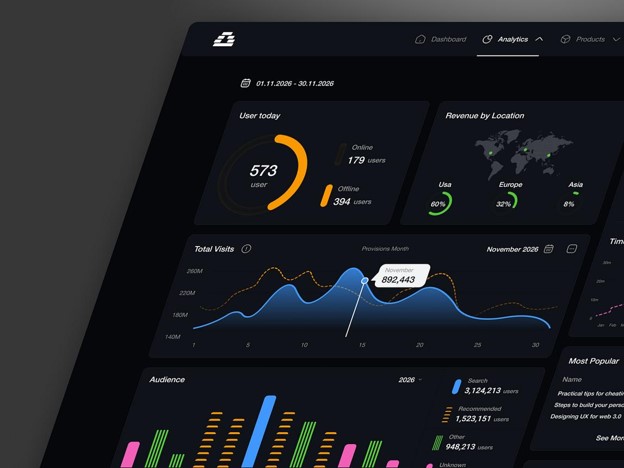
This trend focuses on frosted-glass effects, blurred backgrounds, layered transparency, smooth shadows, and soft gradients. Websites using this design style instantly feel futuristic and luxurious. Instead of flat design elements, interfaces now create depth and realism.
Premium SaaS websites, fintech dashboards, crypto platforms, and AI startup websites are heavily using this trend because it creates a sophisticated visual identity. Modern Glassmorphism combines transparency with subtle animations and dynamic lighting effects to produce highly engaging interfaces.
The reason this trend dominates Modern UI Design Trends 2026 is because users are now attracted to immersive digital environments. Frosted glass cards floating over colorful backgrounds create a premium user experience that feels interactive and modern.
Another reason Glassmorphism continues growing is its compatibility with dark mode interfaces. The blurred transparent layers look extremely elegant on dark backgrounds, which further enhances the premium feel of websites.
Designers implementing this trend should focus on:
- Soft background blur
- Layered depth
- Minimal text
- Rounded corners
- Smooth hover animations
- Subtle gradients
- Soft shadow systems
When used correctly, Glassmorphism makes websites feel expensive, modern, and highly interactive.
-
AI-Powered Personalized Modern UI Design Trends 2026 UI

Artificial intelligence is completely transforming web experiences, making AI-powered interfaces one of the leading Modern UI Design Trends 2026.
Modern websites now adapt dynamically based on user behavior, preferences, location, browsing history, and interaction patterns. Instead of showing the same layout to every visitor, AI-driven interfaces personalize content and design elements automatically.
For example:
- eCommerce websites recommend products intelligently
- SaaS dashboards customize layouts
- Streaming platforms personalize recommendations
- Blogs adapt content categories
- Landing pages optimize CTAs dynamically
The integration of AI into UI design creates a highly personalized and premium browsing experience. Visitors feel understood, which increases trust and engagement.
In Modern UI Design Trends 2026, personalization is becoming essential because users expect experiences tailored specifically for them. Generic websites are slowly becoming outdated.
AI-powered interfaces also improve:
- User retention
- Conversion rates
- Session duration
- Customer satisfaction
- Navigation efficiency
The visual side of AI interfaces also matters. Many modern websites now use intelligent micro-interactions, predictive search systems, chatbot integrations, adaptive color themes, and real-time UI adjustments.
This trend is especially powerful for businesses wanting to create premium user journeys and modern digital ecosystems.
-
Dark Mode With Neon Accents

Dark mode continues dominating Modern UI Design Trends 2026, but now designers are combining it with vibrant neon accents and futuristic color palettes.
This trend creates a premium cyber-futuristic appearance that feels modern, immersive, and visually powerful. Instead of plain dark backgrounds, websites now use:
- Neon gradients
- Glowing buttons
- Electric blue accents
- Purple highlights
- Animated lighting effects
- Futuristic typography
The combination of dark interfaces and vibrant accents creates high visual contrast, improving readability and user engagement.
Dark mode websites are also easier on the eyes, especially during nighttime browsing. That is why users increasingly prefer dark-themed interfaces.
One reason this trend dominates Modern UI Design Trends 2026 is because it aligns perfectly with modern technology brands, AI startups, gaming websites, fintech platforms, and creative portfolios.
Designers are now experimenting with:
- Animated neon borders
- Glow effects
- Futuristic icons
- Dynamic gradients
- Interactive lighting systems
This visual style instantly makes websites look advanced and premium.
To implement this trend successfully:
- Use dark gray instead of pure black
- Limit neon colors to key highlights
- Keep typography clean
- Avoid excessive glow effects
- Focus on readability
When balanced correctly, dark mode with neon accents creates stunning digital experiences.
-
3D Interactive Elements

Among all Modern UI Design Trends 2026, interactive 3D elements are becoming one of the most attention-grabbing innovations.
Modern websites are no longer static. Designers now use 3D graphics, interactive models, immersive product showcases, floating objects, and motion-based interactions to create engaging user experiences.
Thanks to improved browser technology and faster devices, websites can now handle advanced 3D visuals without sacrificing performance.
This trend is highly popular in:
- Product landing pages
- Fashion websites
- Luxury brands
- Technology startups
- Gaming websites
- Portfolio websites
Interactive 3D elements create a sense of realism and immersion. Users spend more time exploring websites that feel dynamic and interactive.
Many brands now use:
- Mouse-reactive animations
- Floating 3D cards
- Interactive product viewers
- Scroll-triggered 3D scenes
- Immersive storytelling sections
The reason this trend stands out in Modern UI Design Trends 2026 is because it transforms websites into digital experiences instead of simple pages.
However, designers must optimize carefully because excessive 3D effects can slow down websites. Performance optimization remains critical.
The best approach is using lightweight 3D interactions selectively to enhance storytelling and user engagement.
-
Minimalism With Bold Typography

Minimalism remains one of the strongest foundations of Modern UI Design Trends 2026, but the new version focuses heavily on bold typography and expressive layouts.
Instead of overcrowded interfaces, modern websites are now using:
- Large headlines
- Clean white space
- Minimal color palettes
- Editorial-style layouts
- Oversized typography
- High readability
This trend creates a premium and sophisticated look while improving user focus and content hierarchy.
Users today prefer simple interfaces that communicate messages quickly. Overcomplicated layouts often reduce engagement and increase bounce rates.
Modern minimalist design helps brands appear:
- Professional
- Elegant
- Luxurious
- Trustworthy
- Modern
Typography now plays a central role in branding and storytelling. Large text sections combined with clean layouts create strong visual impact.
In Modern UI Design Trends 2026, designers are increasingly using typography as a design element itself instead of simply displaying text.
This trend works exceptionally well for:
- Agency websites
- Luxury brands
- Fashion websites
- Architecture firms
- Creative portfolios
- Startup landing pages
To achieve the premium minimalist look:
- Use strong typography hierarchy
- Add sufficient white space
- Limit unnecessary elements
- Focus on clean navigation
- Use modern fonts
Minimalism with bold typography creates timeless website aesthetics that feel modern and elegant.
-
Scroll-Based Storytelling

Scroll-based storytelling is redefining user engagement and has become one of the fastest-growing Modern UI Design Trends 2026.
Instead of static page sections, websites now reveal content dynamically as users scroll. This creates an immersive storytelling experience similar to cinematic presentations.
Modern scroll interactions include:
- Parallax effects
- Animated transitions
- Text reveals
- Sticky sections
- Motion graphics
- Scroll-triggered animations
- Interactive scenes
This design trend keeps users engaged because each scroll movement reveals new visual experiences.
Many premium brands now use scroll storytelling to:
- Present products
- Explain services
- Showcase portfolios
- Highlight company journeys
- Improve engagement
The reason this trend dominates Modern UI Design Trends 2026 is because users now expect interactive experiences rather than static browsing.
When executed correctly, scroll storytelling can dramatically improve:
- Time on site
- User engagement
- Brand perception
- Emotional connection
- Conversion rates
However, designers should avoid overusing animations because excessive motion can harm usability and accessibility.
The key is balancing storytelling with performance optimization and intuitive navigation.
-
Micro-Interactions and Motion UI

Micro-interactions are small animations and responses triggered by user actions. In Modern UI Design Trends 2026, they are becoming essential for creating premium digital experiences.
These interactions may seem small, but they significantly improve user engagement and usability.
Examples include:
- Hover animations
- Button feedback
- Smooth transitions
- Loading animations
- Animated icons
- Swipe effects
- Interactive cursors
Motion UI adds personality and responsiveness to websites. It helps users understand actions, navigation flow, and interface behavior more intuitively.
Premium websites now use subtle animations to create smoother experiences that feel polished and professional.
The reason this trend is central to Modern UI Design Trends 2026 is because users now expect interfaces to feel alive and interactive.
Modern motion systems focus on:
- Smooth easing
- Natural transitions
- Responsive feedback
- Fluid navigation
- Elegant animations
Good micro-interactions improve:
- User satisfaction
- Navigation clarity
- Engagement
- Conversion rates
- Brand identity
However, animations should always support usability rather than distract users.
Subtle and purposeful motion design creates a highly premium feel without overwhelming the interface.
Why Modern UI Design Matters in 2026
The importance of Modern UI Design Trends 2026 goes far beyond aesthetics. A premium interface directly impacts:
- User trust
- SEO performance
- Website engagement
- Conversion optimization
- Brand identity
- Bounce rate reduction
Search engines increasingly prioritize user experience signals. Websites with modern interfaces, fast interactions, responsive layouts, and engaging designs tend to perform better in search rankings.
Premium UI design also helps businesses establish authority and professionalism in competitive industries.
Brands that ignore Modern UI Design Trends 2026 risk appearing outdated and losing customers to competitors with better digital experiences.
Best Practices for Implementing Modern UI Design Trends 2026
To successfully implement Modern UI Design Trends 2026, focus on the following:
Prioritize User Experience
Visual design should always support usability.
Optimize Performance
Heavy animations and large graphics should be optimized carefully.
Maintain Accessibility
Ensure your design works for all users.
Use Consistent Branding
Keep colors, typography, and design elements consistent.
Focus on Mobile Responsiveness
Mobile-first design remains essential.
Avoid Overdesign
Too many effects can hurt usability.
Conclusion
The future of web design is immersive, intelligent, interactive, and visually sophisticated. The top Modern UI Design Trends 2026 are transforming ordinary websites into premium digital experiences that engage users and build stronger brands.
From Glassmorphism 2.0 and AI-powered personalization to dark mode neon aesthetics, 3D interactions, minimalist typography, scroll storytelling, and micro-interactions, these trends are defining the next generation of web design.
Businesses, designers, and developers who adopt Modern UI Design Trends 2026 early will gain a significant competitive advantage in branding, engagement, and user experience.
If you want your website to look premium, modern, and future-ready, now is the perfect time to start implementing these UI trends.
FAQs
What are Modern UI Design Trends 2026?
Modern UI Design Trends 2026 refer to the latest user interface styles, technologies, and visual experiences shaping modern websites and applications in 2026.
Why are Modern UI Design Trends 2026 important?
They improve user experience, engagement, conversion rates, and brand perception while making websites look more premium and modern.
Which industries benefit most from Modern UI Design Trends 2026?
Industries such as SaaS, eCommerce, fintech, AI startups, gaming, fashion, and creative agencies benefit greatly from modern UI trends.
Is dark mode still popular in 2026?
Yes, dark mode combined with neon accents remains one of the most powerful Modern UI Design Trends 2026.
How does AI impact Modern UI Design Trends 2026?
AI helps personalize interfaces, improve recommendations, automate layouts, and create smarter user experiences.
Are 3D website elements good for SEO?
3D elements can improve engagement, but they must be optimized carefully to avoid slowing down website performance.
What is the biggest Modern UI Design Trend 2026?
AI-powered personalization and immersive interactive experiences are among the biggest trends dominating web design in 2026.
Can small businesses implement Modern UI Design Trends 2026?
Yes, even small businesses can apply modern UI principles like minimalism, dark mode, typography improvements, and micro-interactions to create premium websites.
10 Best AI Tools for Graphic Design in 2026 (Tested & Ranked)
Artificial Intelligence has completely transformed the design industry. In 2026, graphic designers are no longer spending hours manually creating visuals — instead, they are leveraging powerful AI tools to automate workflows, generate ideas, and produce high-quality designs in minutes. The rise of AI-powered design platforms has made it easier for beginners, freelancers, and professionals alike to create stunning visuals without extensive technical skills.
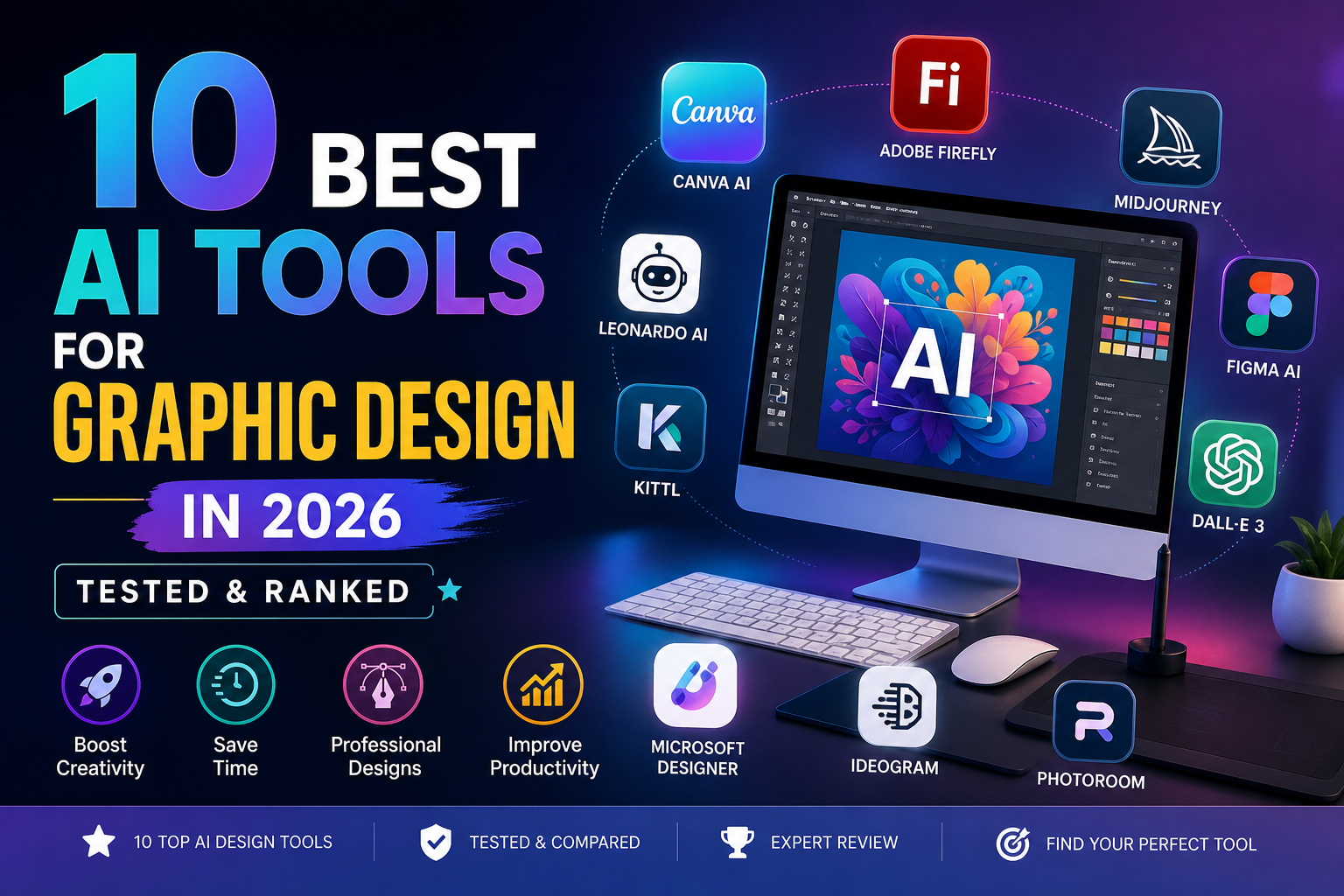
In this comprehensive guide, we will explore the 10 Best AI Tools for Graphic Design in 2026. These tools are tested, ranked, and analyzed based on performance, features, ease of use, pricing, and real-world usability. Whether you are a beginner or an expert designer, this article will help you choose the best tool for your workflow.
Why 10 Best AI Tools for Graphic Design Are Essential for Designers in 2026
The demand for faster content creation has pushed designers toward AI-powered solutions. Today, AI tools can generate images, create layouts, remove backgrounds, and even design entire branding kits automatically.
According to recent industry insights, AI tools significantly reduce repetitive tasks such as resizing, editing, and generating design variations, allowing designers to focus more on creativity and strategy. (ToolChase)
This is why the 10 Best AI Tools for Graphic Design are becoming essential for anyone working in digital design, marketing, or content creation.
1. Canva AI (Magic Studio) — Best All-in-One Tool
Canva AI remains one of the 10 Best AI Tools for Graphic Design because of its simplicity and powerful features. It is perfect for beginners and professionals who want quick results.
Canva’s Magic Studio allows users to generate designs from text prompts, remove backgrounds, and even animate graphics instantly. With millions of templates and assets, it’s ideal for social media graphics, presentations, and branding. (tasarim.ai)
Key Features:
- Magic Design (AI-generated layouts)
- Text-to-image generator
- Background remover
- Drag-and-drop editor
Best For: Beginners and marketers
2. Adobe Firefly — Best for Professionals
Adobe Firefly is one of the most powerful tools in the 10 Best AI Tools for Graphic Design list, especially for professionals already using Adobe Creative Cloud.
It integrates seamlessly with Photoshop and Illustrator, offering generative fill, text-to-image, and advanced editing features. It is also trained on licensed data, making it safer for commercial use. (BuildPilot)
Key Features:
- Generative fill
- Style transfer
- Commercial-safe outputs
- Deep Adobe integration
Best For: Professional designers
3. Midjourney — Best for Creative Concepts
Midjourney is widely considered one of the 10 Best AI Tools for Graphic Design for generating high-quality artistic visuals.
Designers use it for mood boards, concept art, and creative exploration. Its ability to produce visually stunning images makes it a favorite among artists. (AI Tools Capital)
Key Features:
- High-quality image generation
- Style consistency
- Artistic rendering
Best For: Concept designers
4. Figma AI — Best for UI/UX Designers
Figma AI is a must-have in the 10 Best AI Tools for Graphic Design list for UI/UX professionals.
It helps designers generate layouts, automate design systems, and collaborate in real-time. It also integrates with plugins for enhanced productivity. (ToolChase)
Key Features:
- AI layout generation
- Real-time collaboration
- Design automation
Best For: UI/UX design
5. DALL·E 3 — Best for Beginners
DALL·E 3 is one of the easiest tools in the 10 Best AI Tools for Graphic Design category.
It allows users to generate images using simple text prompts, making it perfect for beginners who want quick results without technical knowledge. (AI Profit Labs)
Key Features:
- Text-to-image generation
- Easy prompt-based editing
- High-quality outputs
Best For: Beginners
6. Leonardo AI — Best Budget Option
Leonardo AI is among the 10 Best AI Tools for Graphic Design for those looking for affordability and flexibility.
It offers a free plan with daily credits and supports multiple design styles, including gaming assets and illustrations. (designshifu.com)
Key Features:
- Free plan available
- Multiple art styles
- Fast rendering
Best For: Budget users
7. Microsoft Designer — Best Free Tool
Microsoft Designer is a strong competitor in the 10 Best AI Tools for Graphic Design category, offering free AI-powered design features.
It allows users to create social media graphics, presentations, and marketing materials quickly using AI suggestions. (tasarim.ai)
Key Features:
- Free AI design tools
- Quick templates
- Easy interface
Best For: Free users
8. Kittl — Best for Typography Design
Kittl is one of the 10 Best AI Tools for Graphic Design known for its typography and logo design capabilities.
It provides advanced text editing tools and AI-powered design suggestions for branding projects.
Key Features:
- Typography tools
- Logo creation
- Vector editing
Best For: Branding designers
9. Ideogram — Best for Text-Based Designs
Ideogram stands out in the 10 Best AI Tools for Graphic Design for its ability to generate images with accurate text.
This makes it ideal for posters, ads, and social media content.
Key Features:
- Accurate text rendering
- AI-generated posters
- Creative layouts
Best For: Text-heavy designs
10. PhotoRoom — Best for Product Design
PhotoRoom completes the 10 Best AI Tools for Graphic Design list with its powerful product image editing features.
It is widely used for eCommerce and marketing visuals.
Key Features:
- Background removal
- Product mockups
- Batch editing
Best For: eCommerce
Comparison Table: 10 Best AI Tools for Graphic Design
| Tool | Best For | Pricing | Skill Level |
|---|---|---|---|
| Canva AI | All-in-one | Freemium | Beginner |
| Adobe Firefly | Professionals | Paid | Advanced |
| Midjourney | Concept art | Paid | Intermediate |
| Figma AI | UI/UX | Freemium | Advanced |
| DALL·E 3 | Beginners | Freemium | Beginner |
| Leonardo AI | Budget | Freemium | Intermediate |
| Microsoft Designer | Free tools | Free | Beginner |
| Kittl | Typography | Paid | Intermediate |
| Ideogram | Text design | Freemium | Intermediate |
| PhotoRoom | Product design | Freemium | Beginner |
How to Choose the Right AI Tool
When selecting from the 10 Best AI Tools for Graphic Design, consider these factors:
- Purpose: Social media, branding, UI/UX, or product design
- Skill level: Beginner vs professional
- Budget: Free vs paid tools
- Features: Automation, templates, integrations
Future of AI in Graphic Design
The future of design is heavily influenced by AI. Tools are becoming smarter, faster, and more intuitive. New advancements are focusing on automation, collaboration, and real-time editing.
However, AI is not replacing designers — it is enhancing their capabilities and allowing them to work more efficiently. (ToolChase)
Final Verdict
The 10 Best AI Tools for Graphic Design in 2026 offer something for everyone — from beginners to professionals. Tools like Canva AI and Adobe Firefly dominate the market, while Midjourney and Leonardo AI provide creative flexibility.
If you are just starting, go with Canva or DALL·E 3.
If you are a professional, Adobe Firefly and Figma AI are your best options.
Conclusion
The rise of AI has made graphic design more accessible than ever before. By using the 10 Best AI Tools for Graphic Design, you can create high-quality visuals, save time, and boost productivity.
Whether you are a freelancer, business owner, or content creator, these tools will help you stay ahead in 2026 and beyond.
Color Theory for Designers – A Beginner’s Guide to Smart Color Choices
Color plays a powerful role in graphic design. Whether you’re creating a logo, website, social media post, or t-shirt design, understanding color theory for designers helps you make smart, strategic decisions.
Color influences mood, brand perception, and even buying behavior. If you want your designs to look professional and communicate clearly, mastering color theory is essential.
In this beginner’s guide, you’ll learn the basics of the color wheel, color harmony, emotional color meanings, and the best tools to create stunning color palettes.
Why Color Theory Is Essential in Design
Color theory is the foundation of visual communication. It helps designers:
- Create visually balanced compositions
- Build strong brand identities
- Trigger emotional responses
- Improve readability and accessibility
- Increase conversions and engagement
For example, brands like use red to create excitement and energy, while uses blue to build trust and reliability.
When you understand color psychology and harmony, you design with intention—not guesswork.
The Color Wheel Basics
The color wheel is a circular diagram that organizes colors based on their relationships.
It was first developed by in the 17th century. The modern color wheel helps designers understand how colors interact with each other.
There are three main categories on the color wheel:
- Warm colors (Red, Orange, Yellow)
- Cool colors (Blue, Green, Purple)
- Neutral colors (Black, White, Gray, Brown)
Warm colors feel energetic and bold. Cool colors feel calm and professional.
Understanding the color wheel is the first step to mastering color harmony.
Primary, Secondary, and Tertiary Colors
1. Primary Colors
Primary colors cannot be created by mixing other colors.
- Red
- Blue
- Yellow
These are the base of all other colors.
2. Secondary Colors
Secondary colors are made by mixing two primary colors.
- Red + Blue = Purple
- Blue + Yellow = Green
- Red + Yellow = Orange
3. Tertiary Colors
Tertiary colors are created by mixing a primary and a secondary color.
Examples:
- Red-Orange
- Yellow-Green
- Blue-Purple
Using primary, secondary, and tertiary colors correctly helps create balanced and attractive designs.
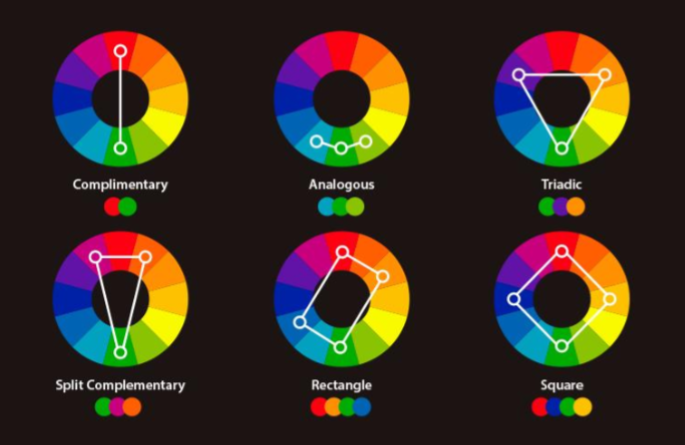
Color Harmony: Complementary, Triadic, and Analogous
Color harmony refers to combinations of colors that look pleasing together.
1. Complementary Colors
These are colors opposite each other on the color wheel.
Examples:
- Blue & Orange
- Red & Green
- Yellow & Purple
Complementary colors create high contrast and bold designs. Great for call-to-action buttons.
2. Triadic Colors
Triadic color schemes use three evenly spaced colors on the wheel.
Example:
- Red, Blue, Yellow
This combination creates vibrant and balanced designs.
3. Analogous Colors
Analogous colors sit next to each other on the color wheel.
Examples:
- Blue, Blue-Green, Green
- Red, Red-Orange, Orange
These create soft, harmonious, and natural-looking designs.
Choosing the right color harmony makes your design look professional and intentional.
Emotional Meaning of Colors
Color psychology plays a huge role in branding and marketing.
Here’s what common colors represent:
- Red – Energy, passion, urgency
- Blue – Trust, calm, professionalism
- Yellow – Happiness, optimism
- Green – Growth, health, nature
- Purple – Luxury, creativity
- Black – Power, elegance
- White – Simplicity, cleanliness
For example, luxury brands often use black and gold for a premium look. Eco-friendly brands prefer green to reflect sustainability.
Understanding emotional meaning helps designers choose colors that match the brand message.
Best Color Tools for Designers
Choosing the right colors becomes easier with professional tools.
1.
Coolors is a fast and easy color palette generator. You can lock colors and generate variations instantly.
2.
Adobe Color allows you to create palettes using color harmony rules like complementary, triadic, and analogous.
It also integrates smoothly with Adobe software like and .
These tools help you experiment and create professional color schemes quickly.
FAQ: What Are the Best Color Combinations?
There is no single “best” color combination. It depends on:
- Your target audience
- Brand personality
- Industry
- Cultural context
However, some popular combinations include:
- Blue & White (Clean and professional)
- Black & Gold (Luxury and premium)
- Purple & Yellow (Creative and bold)
- Green & Beige (Natural and organic)
The best approach is to test and refine your palette based on real design projects.
FAQ: Does Color Affect Conversions?
Yes, color significantly affects conversions.
Studies show that color can influence purchasing decisions and brand recognition. For example:
- Red creates urgency in sales banners
- Green encourages action (often used for CTA buttons)
- Blue builds trust on websites
Choosing the right call-to-action color can increase click-through rates and sales.
Conclusion: Practice Using Real Projects
Understanding color theory for designers is not just about learning rules—it’s about applying them.
Start practicing by:
- Redesigning a logo with different color harmonies
- Creating 3 social media posts using complementary colors
- Testing CTA button colors on your website
The more you experiment, the stronger your color instincts will become.
Smart color choices transform ordinary designs into powerful visual experiences.
Now it’s your turn—start creating with confidence! 🎨
-

 Graphics Design2 years ago
7.Exploring the Importance of Color Theory Charts
-

 Graphics Design12 months ago
Top 10 Best Graphic Design Tools for Beginners in 2025 (Free & Paid)
-

 Graphics Design2 years ago
10 Stunning Gradient Design Trends You Need to Know in 2024
-

 Graphics Design11 months ago
15 Freelance Graphic Design Tips to Boost Your Career in 2025
-

 Graphics Design2 years ago
29.Retro Design Is Making a Comeback in Modern Spaces
-

 Graphics Design1 year ago
Best Laptops for Graphic Designers – 2025 Buying Guide
-

 Graphics Design1 year ago
2025 Logo Design Trends: What’s In, What’s Out?
-

 Graphics Design2 years ago
15.The Importance of Effective Flyer Design in Marketing
Charita Below
October 26, 2024 at 8:03 am
I like this blog very much, Its a rattling nice spot to read and get info . “There’s nothing I’m afraid of like scared people.” by Robert Frost.
portal liputan online
November 16, 2024 at 5:38 pm
Very interesting info !Perfect just what I was searching for!
buletin online
November 16, 2024 at 9:03 pm
Its like you read my mind! You appear to know a lot about this, like you wrote the book in it or something. I think that you could do with some pics to drive the message home a bit, but other than that, this is great blog. A great read. I will definitely be back.