
Graphics Design
18.Key Elements to Consider in Packaging Design


Key Elements to Consider in Packaging Design
Here’s an overview:
- Introduction
- Importance of Packaging Design
- Key Ingredients in Packaging Design
- Packaging Attributes of Effective Design
- Case Studies
Introduction-Key Elements to Consider in Packaging Design

Key elements to consider in packaging design a packaging design has several factors that pull potential customers and are expressing the brand in the truest sense. Among the issues to examine are the essential aspects of good package designing which should not only provide aesthetic beauty but also perform their functions satisfactorily.
Purpose and Brand Identity: The first task of packaging design is understanding the intentions of the products and recognizing the brands. I make sure that the package not only conveys the brand values and image but also make them congruent to get a uniform appearance.
Target Audience: Key elements to consider in packaging design the primary step in design programming is to define the target audience. Making the design resonate with their preferences and tastes is essential. This includes the ability to interpret the demographics and psychographics of the target market, which are in turn used in the packaging process to attract the attention of the target market.
Functionality: Key elements to consider in packaging design first of all, the function becomes the main thing in packaging design. I focus on the packaging should not only look good but also shouldfulfill its purposes such as protecting the product anda adding to the user experience.
Materials and Sustainability: Careful choice of the appropriate materials define sustainable packaging design. To me, obtaining environment friendly materials with zero waste and at the same time maintaining the integrity and quality of the packaging is a priority.
Typography and Visuals: Key elements to consider in packaging design both typeface and imagery are very important in making a layout effective and informative. The brand is the main source of the design. I select fonts and graphics to support the brand and provide good readability.
Colors and Finishes: Key elements to consider in packaging design colors produce feelings and affect positively our spending intentions. I chose the colors and the finishes that predict the brand messaging and made an interesting package that has an eye-catching look on the shelf.
Legibility and Information: “Clear and concise information” is the main thing on a label. I always make sure all the relevant, legible, and momentous details are present which can be easily understood by consumer such as product information, instructions, and branding.
Key elements to consider in packaging design looking at these crucial aspects of packaging design help me in coming up with designs that are innovative and creative, not just aesthetic but also functional and suitable with brand’s identity and values.
Importance of Packaging Design
Key elements to consider in packaging design of course, I think the packaging design is very important because it has several virtually essential functions for any product. First and foremost, it has a fundamental impact on enabling consumers to locate and catch their attention. As a consumer myself, I can imagine people being impressed by the package design and this might lead to a buying decision. An impressive design and a package that stands out may have this remarkable ability to hook me on the shelf racks and make me take a closer look at it.
Key elements to consider in packaging design for instance, packaging lets the customer know some really fundamental facts about the product. From product information to usage calendar and ingredients list everything should be shown in a way that makes them easily understood by consumer. In my opinion, the simple and easy to understand packaging design is a considerable asset in developing consumers trust and assisting them in making the right choice.
Yet, importantly, sustainability packaging also serves as a medium of brand messages. Key elements to consider in packaging design the design, color themes and logos on the package can establish the brand identity and the values of the brand. If you want your product to be recognizable and your brand to have loyal consumers, put in the effort and get the packaging right. Consequently, from my observation, I now understand the package design potential in shaping brand perception and consumer behavior.
The other thing I want to mention is that key elements to consider in packaging design of products is another factor contributing to the protection of the merchandise during shipment and storage. A good design plan will stop the product from getting cracked or damaged early even before it gets to the end-customer. It, however, is an ingredient of the total consumer experience as well, since a properly prepared wrapping paper can improve the perception of product worthiness.
Taking these into account, I want to highlight the crucial point that adequate investment and effort into a suitable key elements to consider in packaging design strategy which involves the product, target audience and brand image is a must. Finally, I believe that although packaging is not only just a receptacle but a significant tool which can be use as a competitive advantage of products in the market.
Key Ingredients in Packaging Design

It is an integral part of product development process. There are several factors that I always keep in mind to make sure that the covered product draws customer’s attention and persuades them to buy it.
Brand Identity: To begin with, I must always achieve a good comprehension of the brand identity and the packaging design must fit in with the brand image. Consistency in the colors, fonts and overall look and feel of the brand is vital to maintain brand visibility.
Target Audience: The target audience of your product must always come to the fore while designing the package of the product which will attract the right demographic. It means realizing why they like each package and how it influences them.
Product Information: It is imperative to make a clear labeling of the important materials of the product on packaging. This is to help them understand what the product is, its benefits, how to use it, and any safety or regulatory information related to it.
Visual Elements: Key elements to consider in packaging design certain things like charts, pictures, and trademarks grab the attention of consumers visually. I specialize in crafting visually appealing designs that not only show time the product but also tend to appeal to the eye of prospective buyers.
Typography: Factors as typography and fonts choices are very important for readability and to show brand personality. I create texts that are easy to read and are consistent with the whole design idea of the project.
Materials and Sustainability: The right materials for packaging not only will give those a unique looking it will also helps sustainability. I contemplate eco-friendly fashion and eco-friendly wardrobe staples that reflect the brand’s green philosophy and eco-consciousness.
Practicality and Functionality: Key elements to consider in packaging design the design of packaging should not only be colorful and beautiful but also of a usable and working nature. I consider issues like ease of use, maximized storage and transportability, when thinking about design of packaging.
Differentiation: In the crowded market, it is necessary for the packaging to be shiny and pop up. I put all my energies into designing the wonderful and distinctive products which are different from others in the same market.
Therefore, any key elements to consider in packaging design should keep in mind these main components in order to produce not only attractive but also effective designs that clearly present the brand values and are accepted by the target audience.
Packaging Attributes of Effective Design
When designing for a packaging, there are some major ones that one must consider. All this is meant for the development of such key elements to consider in packaging design that not only improve the storage but also appeal to the target consumers and increase the overall brand experience.
Understand the Target Audience: Before we start a design process, it’s necessary to have an in-depth understanding of the target-audience. Take into account their own tastes, age and shopping habits to make the product packaging to match these consumer trends.
Brand Consistency: Key elements to consider in packaging design branding involvement necessitates ensuring brand consistency. You have got to ensure that the packaging matches up with the brand’s visual components like the colour palette, logo, and typography to have a consistent brand image across every touch point.
Functionality: Aesthetics are surely a major feature in package designing but function effectiveness should not be passed over. The packaging should be functional and simple to use, with the main importance being in ensuring that it secures the product from property damage during storage, transportation, and use.
Material Selection: Pick up the materials of packaging with care taking into account the characteristics like environment friendliness, durability, and cost-efficiency. When brands offer eco-friendly items, they can also depict their ecological responsibility.
Legibility and Information: Key elements to consider in packaging design to make sure all the text on the packaging and the product information, instructions and branding messages are clearly readable. Size, color and also position should be modified for simple reading.
Differentiation: In the market where there is fierce competition, packages need to be outstanding, and should be different from competitors. Through unique design elements, innovative shapes or special finishing touches exhibited on the shelves, a product may catch the eyes of consumers.
Regulatory Compliance: Comply with the regulations that relate to packaging, for instance, the laws on labeling, safety guidelines, and environmental regulations. Violating can cause legal problems and ruin the brand’s reputation.
Key elements to consider in packaging design through integrating these considerations into the packaging design method, I will generate packages which attract and inform customers on that very brand message and the product itself.
Case Studies
I find that looking at real-life examples of entertainment key elements to consider in packaging design can usually be very helpful especially if you need to know about the advanced techniques of the subject. Here are a few illustrative examples: Here are a few illustrative examples:
Case Study 1: Brand X has repacked themselves with bright colors and concise and effective label with product description. As a consequence, the income growth amounting to 20% was served in the first three months after the program was on the air.
Case Study 2: Firm Y switched their packaging materials to be eco-friendly in their quest for harmony with their sustainability goals. Moreover, this accomplishment consented the brand to an increased from the customers because there was a 15% increase in the brand loyalty.
Case Study 3: One of the methods Brand Z used was the focus group study. As a result, this study showed that sleek, minimalist packaging had a better response in the target demographic. This proved to be a very proactive marketing strategy which resulted in a 30% of market share increase.
These case studies, thus, underscore the significance of packaging design ingredients, and how they could propel the brand’s performance in multiple angles. Looking at the examples of existing real-life solutions can be a source of such limiting power in creating effective packaging in the future.

Photo Editing for Beginners: 15 Essential Techniques to Improve Your Photos
Photo editing has become one of the most valuable skills for anyone who takes pictures, whether you’re a hobbyist, a small business owner, or an aspiring content creator. With the right approach to photo editing, even an average shot can be transformed into something that looks professional and polished. This guide walks you through 15 essential photo editing techniques that every beginner should learn.
Good photo editing isn’t about making drastic changes. It’s about small, thoughtful adjustments that bring out the best in your original image. Once you understand the fundamentals of photo editing, you’ll be able to fix common issues, enhance colors, and create images that truly stand out on social media, websites, or in print.
Let’s dive into the essential photo editing techniques that will take your images from ordinary to extraordinary.
1. Understanding Basic Photo Editing Tools

Before you start any photo editing project, it helps to understand the tools available to you. Most photo editing software, whether it’s Adobe Lightroom, Photoshop, Snapseed, or a free online editor, shares a similar set of core features.
These typically include exposure sliders, cropping tools, color correction panels, and retouching brushes. Familiarizing yourself with these basic photo editing tools will make every other technique on this list much easier to apply.
Beginners often feel overwhelmed by the number of options in professional photo editing apps. Start simple. Learn one tool at a time, practice on a few photos, and slowly build your skillset. This patient approach to photo editing will save you time and frustration in the long run.
2. Adjusting Exposure and Brightness

Exposure is one of the very first things to check during photo editing. An underexposed photo looks dark and muddy, while an overexposed photo looks washed out and loses detail in the highlights.
Most photo editing apps offer a simple exposure slider. Move it slightly to the right if your image is too dark, or to the left if it’s too bright. The goal of this photo editing step is to find a natural balance where details are visible in both shadows and highlights.
Brightness adjustments work hand in hand with exposure. While exposure affects the overall light in the image, brightness fine-tunes the midtones. Combining both during your photo editing workflow gives you more control over the final look of your picture.
3. Correcting White Balance

White balance determines whether your photo looks warm (yellow/orange) or cool (blue). Getting the white balance right is a crucial part of editing because it directly affects how natural your colors appear.
If your photo was taken indoors under artificial light, it might have an unwanted yellow or orange tint. Outdoor shade photos often come out too blue. Photo editing software allows you to correct this using a white balance tool, often represented by an eyedropper you click on a neutral gray or white area of the image.
Adjusting the temperature and tint sliders manually is another effective photo editing method. Slide toward blue to cool down a photo, or toward orange to warm it up. Practicing white balance correction is one of the fastest ways to improve your photo editing results.
4. Enhancing Contrast

Contrast refers to the difference between the darkest and lightest parts of your image. A photo with too little contrast looks flat and dull, while excessive contrast can make an image look harsh.
During photo editing, gently increasing contrast can add depth and dimension to your photos. Most editing apps have a simple contrast slider, but more advanced tools let you adjust contrast using curves for finer control.
A useful photo editing tip is to zoom in and compare your before and after images side by side. This helps you avoid over-editing, which is a common mistake beginners make when learning editing for the first time.
5. Cropping for Better Composition

Cropping is one of the simplest yet most powerful editing techniques. It allows you to remove distracting elements from the edges of your frame and improve the overall composition of your photo.
A popular composition guideline used in photo editing is the rule of thirds. Imagine your image divided into a 3×3 grid; placing your subject along these lines or at their intersections creates a more visually pleasing photo.
Cropping can also help you fix awkward spacing, remove unwanted objects at the edges, or change the aspect ratio for different platforms like Instagram, Pinterest, or your website. This photo editing step is quick, but it makes a noticeable difference in how professional your final image looks.
6. Straightening Crooked Photos

Nothing distracts a viewer faster than a tilted horizon or a crooked building in your photo. Straightening is an essential photo editing technique that beginners often overlook.
Most photo editing software includes a straighten tool, sometimes combined with the crop tool. Simply align a horizontal or vertical reference line in your photo, like a horizon or a building edge, and the software will rotate the image accordingly.
This small editing adjustment instantly makes your photos look more intentional and professional. It’s especially important for landscape photography, architecture shots, and any image with clear straight lines.
7. Removing Blemishes and Spots
Whether you’re editing a portrait or a product photo, removing distracting spots, blemishes, or dust particles is a fundamental photo editing skill. Most editing apps offer a spot healing or clone tool for this purpose.
The spot healing brush works by sampling nearby pixels and blending them over the area you want to fix. This makes it one of the easiest editing tools for beginners, since it requires minimal manual adjustment.
For more complex photo editing tasks, like removing a person from the background or fixing larger imperfections, the clone stamp tool gives you more precise control. Practice on a few test photos before working on important images, since this editing technique takes a bit of hand-eye coordination to master.
8. Sharpening Images

Sharpening enhances the edges and fine details in your photo, making it appear crisper and more defined. This photo editing technique is especially useful for images that were shot slightly out of focus or need a final polish before publishing.
Be careful not to over-sharpen your photos during editing. Too much sharpening creates a harsh, grainy look with visible halos around edges. A subtle approach to this photo editing step usually produces the most natural-looking results.
Different photo editing tools offer sharpening in different ways, some through a simple slider, others through more advanced masking options that let you sharpen only specific areas of the image, like the subject’s eyes in a portrait.
9. Reducing Noise

Noise appears as grainy speckles in your photo, most commonly in images shot in low light or at a high ISO setting. Reducing noise is an important editing step for cleaning up your final image.
Most editing software includes a noise reduction tool that smooths out grain while trying to preserve detail. Applying too much noise reduction, however, can make your photo look blurry or plastic-like, so it’s best to find a balance.
A helpful photo editing trick is to zoom in to 100% while adjusting noise reduction, so you can clearly see the effect on fine details like hair, texture, and edges.
10. Adjusting Saturation and Vibrance

Saturation and vibrance both affect the intensity of colors in your photo, but they work slightly differently. Saturation boosts all colors equally, while vibrance intelligently enhances muted colors while protecting skin tones from looking unnatural.
Understanding this distinction is important in photo editing, especially when working with portraits. Boosting vibrance rather than saturation often gives a more natural-looking result during photo editing sessions.
Over-saturating an image is a common beginner mistake in editing. Colors that are too vivid can look unrealistic and distracting. Aim for subtle, controlled adjustments that enhance rather than overpower your original photo.
11. Using Filters and Presets
Filters and presets are pre-made editing settings that apply a consistent style to your images. They’re a great starting point for beginners who are still learning how individual editing tools work.
Many editing apps, like Lightroom, VSCO, and Snapseed, offer built-in filters or downloadable presets created by professional photographers. Applying a preset gives your photo editing workflow a quick, cohesive look, especially useful if you’re editing a batch of photos for a consistent social media feed.
However, presets shouldn’t be applied blindly. Every photo is different, so after applying a filter, take time to fine-tune exposure, contrast, or color balance. This extra photo editing step ensures the preset complements your specific image rather than overpowering it.
12. Mastering the Dodge and Burn Technique
Dodging and burning is a classic photo editing technique borrowed from traditional darkroom photography. Dodging lightens specific areas of your image, while burning darkens them, allowing you to guide the viewer’s eye toward your subject.
This editing method is particularly effective for portraits, where you might dodge the eyes to make them pop or burn the edges of the frame to create a subtle vignette effect.
Using a soft brush at low opacity is key when practicing dodge and burn in editing. Building up the effect gradually, rather than applying it all at once, creates a more natural and professional-looking result.
13. Removing or Blurring Backgrounds
A distracting background can take attention away from your main subject. Background removal and blurring are popular photo editing techniques used in portrait, product, and e-commerce photography.
Many editing tools now use AI-powered background removal, which automatically detects your subject and separates it from the background with a single click. This has made what used to be a complex photo editing task accessible to complete beginners.
Alternatively, applying a blur effect to the background, mimicking a shallow depth of field, keeps the background in the scene while softening it. This editing technique draws focus naturally to your subject without completely removing the setting.
14. Adding Text and Watermarks
If you’re editing photos for a business, blog, or portfolio, adding text or a watermark is a practical editing step worth learning. Watermarks help protect your work from unauthorized use, while text overlays are useful for social media graphics, quotes, or promotional images.
Most photo editing software lets you customize font, size, color, and opacity for your text or watermark. Keep it subtle. A watermark that’s too large or opaque can distract from the photo itself, defeating the purpose of good photo editing.
Positioning also matters. Placing your watermark in a corner, rather than the center, keeps the focus on your image while still marking it as your work. This small photo editing detail adds a professional touch to your final output.
15. Exporting and Saving in the Right Format
The final step in any editing workflow is exporting your image correctly. Choosing the wrong file format or resolution can undo all your hard work, resulting in a blurry or oversized file.
For web use, JPEG is usually the best format, offering a good balance between quality and file size. If you need transparency, such as for a logo, PNG is the better choice. When you want to preserve every editing detail for future adjustments, saving a layered file, like a PSD or TIFF, keeps your photo editing work flexible.
Pay attention to resolution and dimensions too. A photo optimized for website use loads faster, while a print-ready photo editing export needs a much higher resolution to look sharp on paper. Getting this last step right ensures your editing efforts actually shine through in the final result.
Bringing It All Together
Learning editing is a journey, not a one-time task. Start by practicing one or two techniques at a time rather than trying to master everything at once. As you become more comfortable with basic photo editing tools, you’ll naturally start combining techniques, like adjusting exposure, correcting white balance, and cropping, into a smooth, efficient workflow.
Remember that the best photo editing enhances a photo without making it look artificial. Subtle, well-considered adjustments almost always outperform heavy-handed edits. With consistent practice, these 15 essential techniques will become second nature, and you’ll be able to transform your photos with confidence every time you sit down to edit.
Frequently Asked Questions
- What is the best software for photo editing beginners? Popular options include Adobe Lightroom, Photoshop Elements, Snapseed, and Canva. Free tools like Snapseed and Canva are great starting points before moving to more advanced photo editing software.
- How long does it take to learn photo editing? Basic editing skills can be learned in a few weeks of consistent practice. Mastering advanced techniques, however, can take months or years of ongoing learning.
- Is photo editing necessary for every photo? Not every photo needs heavy editing, but small adjustments like exposure and color correction almost always improve the final result, even for casual, everyday shots.
- Can I do photo editing on my phone? Yes. Many mobile apps, such as Snapseed, Lightroom Mobile, and VSCO, offer powerful photo editing tools that rival desktop software for most everyday needs.
- What’s the difference between photo editing and photo retouching? Photo editing usually refers to overall adjustments like exposure, color, and cropping, while retouching focuses on detailed fixes like removing blemishes or smoothing skin.
- How much should I edit my photos? A good rule of thumb in editing is to enhance, not transform. If your edits make the photo look unnatural, you’ve likely gone too far.
- Are there free photo editing tools available? Yes, tools like GIMP, Photopea, Snapseed, and Canva offer free, beginner-friendly photo editing features without requiring a paid subscription.
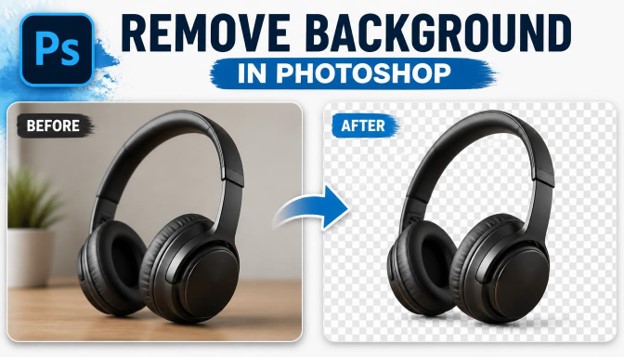
How to Remove Background in Photoshop: 5 Fast & Easy Methods Without Hassle
If you have ever opened a product photo, a portrait, or a random snapshot and wished the messy remove background in photoshop would simply disappear, you already understand why so many people search for ways to Remove Background in Photoshop every single day. Whether you are an online seller who needs clean product shots, a graphic designer preparing a poster, or a hobbyist editing family photos, learning how to Remove Background in Photoshop is one of the most useful skills you can pick up in the world of digital editing.
The good news is that you do not need years of experience to get professional-looking results. In this guide, we will walk through five different ways to Remove Background in Photoshop, ranging from beginner-friendly one-click tools to more advanced, pixel-precise techniques. Each method has its own strengths, so by the end of this article you will know exactly which approach fits your image, your skill level, and your deadline.
This article is written to be short, scannable, and easy to follow. Every section uses short paragraphs so you can skim the steps quickly, copy the workflow, and get straight back to editing. Let’s get started.
Why You Might Need to Remove Background in Photoshop
Before we jump into the methods, it helps to understand why so many creators, marketers, and small business owners need to Remove Background in Photoshop on a regular basis.
E-commerce sellers often need pure white or transparent backgrounds for product listings on Amazon, Etsy, or Shopify. A clean background makes the product look professional and consistent across the entire catalog.
Photographers and portrait editors frequently need to Remove Background in Photoshop so they can swap in a new backdrop, place a subject into a studio-style scene, or simply clean up a distracting environment.
Marketers and social media managers use background removal to create eye-catching graphics, transparent PNG logos, and layered designs for ads and banners.

Whatever your reason, the ability to Remove Background in Photoshop quickly and cleanly saves hours of manual work and gives your images a polished, professional finish.
What You Need Before You Start
To follow along with these methods, you will need Adobe Photoshop installed on your computer, either the desktop version or the current Creative Cloud subscription. Most of the tools described below are available in Photoshop CC 2021 and later, although older versions can still Remove Background in Photoshop using the more traditional selection tools.
It also helps to work with a good quality image. Photos with clear contrast between the subject and the background are much easier to edit, and the AI-powered tools in Photoshop tend to perform better on sharp, well-lit pictures.
Finally, always duplicate your original layer before you start. This way, if something goes wrong while you Remove Background in Photoshop, you can always undo your changes without losing the original file.
Method 1: Remove Background in Photoshop Using the Quick Selection Tool
The Quick Selection Tool is one of the fastest ways to Remove Background in Photoshop, especially for images with a clear subject and a relatively simple background.

Step 1: Open Your Image
Open the photo you want to edit in Photoshop. Duplicate the background layer so your original stays untouched while you Remove Background in Photoshop.
Step 2: Select the Quick Selection Tool
Choose the Quick Selection Tool from the toolbar, or press the W key on your keyboard. This tool lets you paint over the area you want to select, and Photoshop automatically detects the edges of your subject.
Step 3: Paint Over Your Subject
Click and drag over the subject you want to keep. Photoshop will expand the selection intelligently, following contrast and color differences. This step is where most of the work happens when you Remove Background in Photoshop with this method.
Step 4: Refine the Edge
Go to Select and Mask to fine-tune your selection. Use the Refine Edge Brush around hair, fur, or fine details so the selection looks natural. This is a critical step if you want to Remove Background in Photoshop without leaving harsh, jagged edges.
Step 5: Delete or Mask the Background
Once your selection is accurate, press Delete to remove the background, or add a layer mask to keep your edit non-destructive. Non-destructive masking is always the safer choice when you Remove Background in Photoshop for client work.
This method works best on images with a clear subject, like portraits, products, or simple objects on a plain backdrop. It is quick, intuitive, and a great starting point for anyone learning how to Remove Background in Photoshop.
Method 2: Remove Background in Photoshop With the Background Eraser Tool
The Background Eraser Tool is another classic option to Remove Background in Photoshop, and it works especially well when your subject has soft or complicated edges, like hair or fabric.

Step 1: Select the Background Eraser Tool
Find the Eraser Tool group in the toolbar and choose the Background Eraser. This tool erases pixels based on color sampling, which makes it useful when you need to Remove Background in Photoshop around uneven or textured edges.
Step 2: Adjust the Brush Settings
Set the brush size to match the detail level you are working with. Adjust the tolerance and sampling options in the top toolbar so the tool only erases the background color and not your subject.
Step 3: Trace Around the Edges
Slowly trace along the outline of your subject. The crosshair in the center of the brush tells Photoshop which color to erase, so keep it centered on the background as you Remove Background in Photoshop pixel by pixel.
Step 4: Zoom In for Detail Work
Zoom into tricky areas like hair strands or thin edges. Working slowly here makes a big difference in the final quality of this manual editing method.
Step 5: Clean Up Leftover Pixels
After the main background is gone, use a regular eraser or layer mask to clean up any stray pixels. This final polish step ensures your image looks crisp once you Remove Background in Photoshop completely.
The Background Eraser Tool takes more patience than the Quick Selection Tool, but it gives you more control, which is helpful when you need to Remove Background in Photoshop around complex, detailed subjects.
Method 3: Remove Background in Photoshop Using the Pen Tool for Precision
When accuracy really matters, professionals often choose the Pen Tool to Remove Background in Photoshop. This method takes more time, but it produces the cleanest, most precise edges of any technique in this guide.

Step 1: Select the Pen Tool
Press P on your keyboard or click the Pen Tool icon. Make sure the mode is set to Path in the options bar before you start tracing.
Step 2: Trace the Outline of Your Subject
Click to create anchor points along the edge of your subject, using curved handles for rounded areas. This is the most time-intensive part of learning how to Remove Background in Photoshop with the Pen Tool, but it offers unmatched precision.
Step 3: Close the Path
Connect your last anchor point back to the first one to close the path completely. A closed path is required before you can convert it into a selection.
Step 4: Convert the Path to a Selection
Right-click the path and choose Make Selection. Add a small feather value, usually around 0.5 to 1 pixel, so the edge blends naturally when you Remove Background in Photoshop.
Step 5: Apply a Layer Mask
With your selection active, click the Add Layer Mask icon at the bottom of the Layers panel. This hides the background without deleting any pixels, which is the safest way to Remove Background in Photoshop for professional projects.
Because the Pen Tool creates vector-based paths, it is ideal for product photography, logos, and any image where sharp, geometric edges are important. Many professional retouchers rely on this method whenever they need to Remove Background in Photoshop for print or high-resolution use.
Method 4: Remove Background in Photoshop Automatically With Select Subject
If you want speed without sacrificing too much quality, the Select Subject feature is one of the smartest ways to Remove Background in Photoshop. This tool uses Adobe’s built-in AI to detect your subject in a single click.

Step 1: Open the Select Menu
Go to the Select menu at the top of your screen and click Subject. Photoshop will instantly analyze your image and generate a selection around the main subject.
Step 2: Review the Automatic Selection
Check how accurate the automatic selection is. On most modern photos, this single click gets you 80 to 90 percent of the way toward a clean edit when you Remove Background in Photoshop.
Step 3: Fine-Tune With Select and Mask
Open Select and Mask to smooth edges, adjust the contrast slider, and clean up any spots the AI missed. This refinement step is essential if you want a truly polished result when you Remove Background in Photoshop.
Step 4: Output Your Selection
Choose to output as a new layer with a layer mask. This keeps your edit flexible in case you need to adjust anything later while you Remove Background in Photoshop for a client or project.
Step 5: Add a New Background
Once the old background is hidden, drop in a new background layer underneath your subject. Blend the lighting and shadows so the composite looks realistic after you Remove Background in Photoshop.
Select Subject is one of the fastest ways to Remove Background in Photoshop, and it keeps improving with every Photoshop update, making it a favorite among beginners and busy professionals alike.
Method 5: Remove Background in Photoshop With Neural Filters and One-Click Tools
The fifth method leans on Photoshop’s Neural Filters and Adobe’s cloud-based AI tools, which is now one of the most popular ways to Remove Background in Photoshop for beginners who want near-instant results.

Step 1: Open the Neural Filters Panel
Go to Filter and select Neural Filters. Photoshop will load a panel of AI-powered tools, some of which can help isolate subjects and simplify how you Remove Background in Photoshop.
Step 2: Use Remove Background in the Properties Panel
On an image layer, open the Properties panel and click Remove Background. This one-click feature is one of the quickest ways to Remove Background in Photoshop without touching a single selection tool.
Step 3: Check the Transparency Result
Photoshop will automatically create a transparent background using a layer mask. Zoom in to check the edges, especially around hair or transparent materials like glass.
Step 4: Touch Up With the Brush Tool
Use a soft brush on the layer mask to paint back any areas that were removed by mistake, or hide any background bits that were left behind. This quick manual pass ensures accuracy when you Remove Background in Photoshop with AI tools.
Step 5: Export as PNG
Save your file as a PNG to preserve transparency. This format is essential whenever you Remove Background in Photoshop and plan to layer the subject onto a different scene later.
This AI-driven approach is perfect for people who need to Remove Background in Photoshop quickly, in bulk, or without advanced editing experience. It will not always be perfect on complex images, but for most everyday photos, it delivers fast, reliable results.
Quick Comparison: Which Method Should You Use?
Choosing the right way to Remove Background in Photoshop depends on your image and your goals.
If you need speed and your image has a simple background, Select Subject or the one-click Remove Background feature will save you the most time.
If your subject has fine details like hair or fur, the Quick Selection Tool combined with Select and Mask usually gives the best balance of speed and accuracy.
If you are working with complex, textured edges, the Background Eraser Tool offers more manual control.
If you need pixel-perfect precision for print or professional product photography, the Pen Tool remains the gold standard, even though it takes longer to Remove Background in Photoshop this way.
Common Mistakes to Avoid When You Remove Background in Photoshop
Even experienced editors can run into trouble when they Remove Background in Photoshop. Here are a few mistakes worth avoiding.
Working directly on your original layer is risky. Always duplicate your layer first so you have a safety net while you Remove Background in Photoshop.
Ignoring the zoom level is another common issue. Many rough edges only become visible once you zoom in, so always inspect your work closely before finishing your edit.
Ignoring feathering and edge smoothing is another common issue. A hard, jagged edge instantly makes a composite look fake, so take the time to smooth and refine your selection whenever you Remove Background in Photoshop.
Skipping the Select and Mask workspace is a mistake many beginners make. This panel contains powerful tools like Decontaminate Colors, which removes leftover background tints from the edges of your subject.
Finally, forgetting to save a transparent PNG is a common oversight. If you plan to reuse your subject on different backgrounds, always export your file in a format that preserves transparency after you Remove Background in Photoshop.
Tips to Get Better Results Every Time
Good lighting in your original photo makes every method easier. High-contrast images are simpler to work with whenever you Remove Background in Photoshop.
Working at a higher zoom level, especially around hair, fur, or transparent objects, will noticeably improve your final result.
Using layer masks instead of deleting pixels keeps your workflow flexible and non-destructive, which is especially useful if you Remove Background in Photoshop for revisions or client feedback.
Batch processing with actions or scripts can save serious time if you regularly need to Remove Background in Photoshop for large volumes of product photos.
Practicing on a variety of images, from portraits to products to pets, will help you understand which method works best for each situation, making the entire editing process faster and more intuitive over time.
Building a Repeatable Editing Habit
Like any creative skill, precision and speed come with repetition. The first few times you sit down to isolate a subject, expect the process to feel slow, especially around tricky edges like hair, fine jewelry, or reflective surfaces.
Keep a personal reference file of settings that worked well for specific situations, such as the ideal feather value for portraits or the brush size that works best for detailed product shots. Over time, this small habit turns into a personal cheat sheet you can return to on every new project.
It also helps to review finished work with fresh eyes after a short break. Edges that looked acceptable in the middle of a long editing session often reveal small flaws once you return to the image later, giving you a chance to polish the final result before delivering it to a client or publishing it online.
Sharing your work with peers for feedback can also speed up your learning curve. A second pair of eyes often catches subtle edge issues or color fringing that are easy to miss after staring at the same image for too long, and constructive feedback from other designers can help you refine your personal workflow much faster than trial and error alone.
Final Thoughts
Learning how to Remove Background in Photoshop does not have to be complicated. With these five methods, from the beginner-friendly Quick Selection Tool to the AI-powered Neural Filters, you now have a complete toolkit for handling almost any image.
Start with the simpler, faster tools for everyday tasks, and move to the Pen Tool when precision really matters. With a little practice, you will be able to Remove Background in Photoshop quickly, confidently, and without the usual hassle.
Best Practices for E-commerce Product Photography
Online stores live and die by how professional their product images look. A cluttered or inconsistent backdrop can make even a great product feel low quality, while a clean, uniform backdrop instantly builds trust with shoppers.
Most marketplaces, including Amazon, have strict guidelines requiring a pure white backdrop for the main product image. Isolating the product cleanly and dropping it onto a solid white canvas is one of the most common daily tasks for e-commerce editors.
Consistency matters just as much as cleanliness. If every photo in your catalog uses the same lighting, angle, and backdrop color, your store feels polished and professional, which can directly improve conversion rates.
Batch actions are a lifesaver here. Once you have a workflow you trust, recording it as a Photoshop action lets you apply the same steps to hundreds of product shots in a fraction of the time it would take to edit each one by hand.
Shadows deserve special attention too. A soft, subtle drop shadow beneath a product adds realism and depth, making the image feel grounded instead of floating awkwardly on a flat white canvas.
Using Background Isolation for Social Media and Marketing Graphics
Social media managers rely heavily on clean cutouts to build scroll-stopping graphics. A product, a person, or a logo isolated from its original photo can be dropped into countless new designs, from Instagram carousels to YouTube thumbnails.
Transparent PNG files are the backbone of this workflow. Once a subject is isolated, designers can layer it over branded colors, gradients, or promotional text without worrying about a messy backdrop showing through.
Ad creatives especially benefit from this technique. Placing a cut-out product next to bold typography, on a bright colored background, tends to perform better in ad testing than photos with busy, distracting environments.
Consistency across a content calendar also matters. Brands that isolate their subjects and place them on a recognizable, on-brand backdrop build stronger visual identity over time, which helps audiences recognize their content at a glance.
Comparing Photoshop to Other Background Removal Tools
Photoshop is not the only option on the market, and it is worth understanding how it compares to lighter, more automated alternatives.
Online tools that use a single AI model can isolate a subject in seconds with zero manual input. They are convenient for quick, low-stakes edits but often lack the fine control needed for tricky images with fur, glass, or complex lighting.
Mobile apps offer similar one-tap convenience, which is great for social media posts created on the go, but they rarely match the precision available in a full desktop editing suite.
Photoshop sits in a different category entirely. It combines automated AI detection with manual refinement tools, giving you the best of both worlds: speed when you need it, and precision when the image demands it.
For casual users, a free online tool might be enough. For professionals who need repeatable, high-quality results across thousands of images, Photoshop remains the industry standard.
A Quick Workflow Recap
Here is a simplified checklist you can follow for almost any image:
- Duplicate your original layer before making any changes.
- Choose a method based on your subject: Quick Selection for simple shapes, Background Eraser for detailed edges, Pen Tool for precision, or an AI tool for speed.
- Refine your selection using Select and Mask, paying close attention to hair, fur, and semi-transparent areas.
- Apply a layer mask instead of deleting pixels, keeping your file flexible for future edits.
- Export as a PNG if you need transparency, or flatten onto a new backdrop if the image is finished.
Following this checklist consistently will help you produce reliable, professional results every time you sit down to edit.
Optimizing Background-Removed Images for Your Website
Once your image is ready, a little extra care during export can improve both site speed and search visibility. Compress your PNG or WebP file so it loads quickly without noticeably harming quality, since large image files can slow down page speed and hurt rankings.
Always add descriptive alt text to your images. Alt text should describe what the image actually shows, which helps search engines understand your content and improves accessibility for visually impaired visitors.
Name your image files descriptively before uploading them. A file named with relevant, readable words is far more useful for search engines than a generic camera-generated filename.
Finally, keep an eye on your overall page weight. A gallery full of unoptimized, oversized images is one of the most common reasons product pages and blog posts load slowly, which can quietly hurt both user experience and search rankings.
Troubleshooting Difficult Images: Hair, Glass, and Smoke
Some subjects are simply harder to isolate than others, and it helps to know what to expect before you start editing.
Hair and fur are the most common challenge. A single hard-edged selection almost never looks convincing, so it is worth spending extra time with a soft-edged brush in Select and Mask, using the Decontaminate Colors option to remove any leftover background tint clinging to individual strands.
Glass and other transparent or reflective materials add another layer of difficulty, since part of the background is visible through the object itself. In these cases, working on multiple layers, and only partially reducing opacity in the reflective areas, tends to look far more realistic than a flat, fully opaque cutout.
Smoke, steam, and other soft, translucent effects rarely respond well to hard selections at all. A gentler approach, using layer blending modes like Screen or Lighten on a duplicated layer, often preserves the natural, wispy quality of these effects far better than a traditional cutout.
Fine jewelry, lace, and net fabrics behave similarly to hair. Zooming in significantly and working with a very small, soft brush during refinement usually produces the cleanest, most believable results on these delicate subjects.

A Short History of Background Removal Tools in Photoshop
It is worth appreciating how far these tools have come. In early versions of Photoshop, isolating a subject meant relying almost entirely on the Pen Tool, the Lasso Tool, and manual channel masking, all of which demanded significant time and skill.
The introduction of the Magic Wand and later the Quick Selection Tool made simple selections dramatically faster, opening the door for casual users to attempt edits that once required a trained retoucher.
Refine Edge, which eventually evolved into the modern Select and Mask workspace, was a major leap forward for handling hair and soft edges, giving ordinary users access to techniques that were once considered professional secrets.
More recently, Adobe’s investment in machine learning brought us Select Subject and the one-click cutout feature, both of which can analyze an image and produce a usable selection in under a second.
Understanding this progression helps explain why there are so many different tools available today. Each one was built to solve a specific limitation of the techniques that came before it, and together they give modern users an impressive amount of flexibility.
Helpful Keyboard Shortcuts for Faster Editing
Speed matters, especially when you are working through a large batch of images. A few shortcuts worth memorizing include pressing W to quickly access the Quick Selection and Magic Wand tools, P for the Pen Tool, and Ctrl or Cmd plus J to duplicate a selected layer instantly.
Holding Alt or Option while using most selection tools lets you subtract from an existing selection, which is useful for correcting small mistakes without starting over from scratch.
Pressing Ctrl or Cmd plus Backspace fills a selection with your background color, which can speed up simple flat-backdrop replacements considerably.
Learning even a handful of these shortcuts can shave meaningful time off every editing session, especially once your workflow becomes second nature.
A Simple Case Study: Editing a Product Photo Step by Step
Imagine a small business owner photographing a ceramic mug on a wooden table for an online store listing. The wood grain in the background is distracting and does not match the clean, minimal aesthetic of the rest of the catalog.
Starting with Select Subject, the editor gets a solid initial selection covering roughly ninety percent of the mug’s outline correctly. A quick pass in Select and Mask smooths the slightly jagged edge along the handle, where the automatic detection struggled with the thin, curved shape.
After confirming the selection looks accurate at full zoom, the editor adds a layer mask and drops in a plain white backdrop underneath. A subtle, softly blurred shadow is painted beneath the mug to keep it from looking like it is floating in space.
The finished image is exported as a compressed PNG, named descriptively, and uploaded to the store with clear, relevant alt text. The entire process takes only a few minutes once the workflow becomes familiar, yet it transforms an average snapshot into a listing-ready product photo.
Frequently Asked Questions (FAQs)
- What is the fastest way to Remove Background in Photoshop?
The fastest way to Remove Background in Photoshop is usually the one-click Remove Background feature found in the Properties panel, or the Select Subject tool under the Select menu. Both use AI to detect your subject almost instantly.
- Can I Remove Background in Photoshop without losing quality?
Yes. Using layer masks instead of deleting pixels keeps your original image data intact. This non-destructive approach lets you Remove Background in Photoshop while preserving full image quality for future edits.
- Which Photoshop tool works best for hair and fine details?
The Select and Mask workspace, combined with the Refine Edge Brush, is the best option when you need to Remove Background in Photoshop around hair, fur, or other fine, wispy details.
- Do I need Photoshop CC to use these methods?
Some AI-powered features, like Select Subject and Neural Filters, require a newer version of Photoshop CC. However, older versions can still Remove Background in Photoshop using the Pen Tool, Quick Selection Tool, and Background Eraser Tool.
- What file format should I use after I Remove Background in Photoshop?
Save your file as a PNG if you want to preserve transparency. This is essential when you Remove Background in Photoshop and plan to place your subject onto a new background later.
- Is the Pen Tool really necessary if AI tools exist?
For most everyday images, AI tools are fast and accurate enough. However, professionals still use the Pen Tool to Remove Background in Photoshop when they need perfectly sharp, geometric edges, such as for packaging or print design.
- Why does my background removal look rough around the edges?
Rough edges usually happen when feathering or edge refinement is skipped. Spending extra time in Select and Mask will help you Remove Background in Photoshop with smoother, more natural-looking results.
- Can I automate background removal for multiple images at once?
Yes. Photoshop actions and batch processing can help you Remove Background in Photoshop across dozens or even hundreds of images at once, which is especially useful for e-commerce product photography.
- What is the difference between deleting a background and masking it?
Deleting permanently removes pixels, while masking hides them without deleting anything. Masking is the recommended approach whenever you Remove Background in Photoshop, since it keeps your edit fully reversible.
- Which method is best for beginners?
Beginners usually find the most success with Select Subject or the one-click Remove Background feature, since these let you Remove Background in Photoshop in just a few clicks with minimal manual work.
- Is it possible to isolate a subject on a phone instead of a desktop?
Yes, mobile apps like Photoshop Express and Lightroom offer simplified cutout tools, but for detailed, professional-grade work, the full desktop version gives you far more control and accuracy.
- How long does it usually take to isolate a subject from its backdrop?
Simple images with clear edges can be finished in under a minute using AI tools, while complex photos with fine detail, like hair or fur, may take several minutes of manual refinement to get right.
- Can this process damage or lower the resolution of my original photo?
No, as long as you work non-destructively with layer masks and avoid flattening or compressing your file too aggressively, your image resolution and quality stay fully intact.
- What is the best backdrop color to use for product photography?
Pure white is the most common choice for marketplaces and catalogs, but light gray or soft gradient backdrops are also popular for lifestyle-style product shots that need a bit more visual warmth.
- Do I need a subscription to access the AI-powered tools mentioned in this guide?
Most of the AI features, including Select Subject and Neural Filters, are included with an active Creative Cloud subscription, while older perpetual-license versions rely more on manual selection tools.
50 Essential Photoshop Shortcuts That Will Make You Work Faster
If you spend hours every week inside Adobe Photoshop, you already know how much time gets wasted clicking through menus. Learning the right Photoshop Shortcuts can completely change how you work, turning a slow, click-heavy workflow into a fast, fluid creative process. Whether you are a photographer retouching portraits, a graphic designer building layouts, or a digital artist painting illustrations, mastering Photoshop Shortcuts is one of the simplest ways to boost your productivity without buying new hardware or software.
In this guide, we will walk through 50 essential Photoshop Shortcuts that professionals use every single day. These are not obscure tricks that only power users know about. They are practical, real-world Photoshop Shortcuts that you can start using immediately, even if you are still relatively new to the software. By the end of this article, you will have a complete reference list of Photoshop Shortcuts organized by category, along with tips on how to actually remember them.
We have broken this article into clear sections so you can jump straight to the type of Photoshop Shortcuts you need, whether that is tool switching, selections, layers, navigation, or file management. Each section includes short, easy-to-read explanations so you are not stuck reading a giant wall of text. Let’s get started.
Why Learning Photoshop Shortcuts Matters
Before we dive into the list, it helps to understand why Photoshop Shortcuts are worth the effort to learn in the first place.
Every time you reach for your mouse to click through a menu, you lose a second or two. That might not sound like much. But across a full workday of editing, those seconds add up to minutes, and those minutes add up to hours over a month. Photoshop Shortcuts remove that friction entirely.

Beyond raw speed, they also help you stay in a creative flow state. When you are not constantly breaking your focus to hunt for a menu item, your brain stays locked into the creative task at hand. This is especially valuable for professionals who bill by the hour or need to hit tight deadlines. Fewer interruptions mean better quality work delivered faster.
Another reason to learn Photoshop Shortcuts is that they reduce physical strain. Constantly moving your mouse back and forth across the screen to click tiny menu items can contribute to wrist and hand fatigue over time. Using these keyboard commands keeps your hands in a more consistent, ergonomic position.
Finally, employers and clients notice speed. If you can turn around edits faster than someone else because you know your Photoshop Shortcuts inside and out, you become more valuable and more competitive in a crowded creative market.
There is also a learning-curve advantage that often gets overlooked. Once a handful of core commands become automatic, adding new ones to your repertoire becomes noticeably easier. The mental effort required to memorize your first ten shortcuts is usually much higher than the effort required for the next ten, simply because you have already built the underlying habit of reaching for the keyboard instead of the mouse. This snowball effect is one of the main reasons experienced editors seem to work at a completely different speed than beginners, even when using the exact same software and the exact same computer.
Essential Tool Selection Photoshop Shortcuts
Let’s start with the most basic and most-used category: switching between tools. These Photoshop Shortcuts let you jump between the tools you need without ever touching the toolbar.

- V — Move Tool This is one of the most frequently used Photoshop Shortcuts because you are constantly repositioning layers, selections, and objects. Pressing V instantly switches you to the Move Tool from anywhere.
- M — Marquee Tool Use this shortcut to quickly access the rectangular or elliptical marquee for making basic geometric selections.
- L — Lasso Tool Press L to grab the Lasso Tool for freehand selections. Hold Shift and press L again to cycle through Polygonal and Magnetic Lasso variants.
- W — Quick Selection / Magic Wand Tool This shortcut activates the Quick Selection Tool, one of the most useful commands for isolating subjects quickly based on color and edges.
- C — Crop Tool Pressing C brings up the Crop Tool instantly, letting you reframe your canvas without digging through menus.
- E — Eraser Tool This is a simple but essential shortcut for removing pixels from a layer.
- B — Brush Tool One of the most iconic Photoshop Shortcuts, pressing B gives you instant access to the Brush Tool for painting, retouching, and masking.
- S — Clone Stamp Tool Photographers rely on this shortcut constantly for removing blemishes and duplicating areas of an image.
- T — Type Tool Press T any time you need to add text to your document.
- I — Eyedropper Tool This shortcut lets you sample a color directly from your canvas, which is incredibly useful when matching tones.
- G — Gradient Tool Use this shortcut to quickly apply smooth color transitions across a layer or selection.
- Z — Zoom Tool While there are faster zoom shortcuts we will cover later, pressing Z gives you manual control over the Zoom Tool.
- H — Hand Tool This shortcut lets you pan around a zoomed-in canvas without switching away from your current tool permanently. Just hold the Spacebar for a temporary version of this same function.
Learning these tool-switching Photoshop Shortcuts first will give you the biggest immediate speed boost, since tool switching is something you do constantly during every single editing session.
It helps to think of these single-letter commands as a kind of muscle memory investment. In the beginning, you will likely still glance down at your keyboard to find the right key. After a week or two of consistent use, your fingers will simply know where V, B, or L are located without any conscious thought at all. This is the same process musicians go through when learning an instrument, and it applies just as well to software as it does to a piano keyboard.
A practical way to reinforce this habit is to remove your reliance on the toolbar entirely for a short trial period. Hide your tool panel using the Tab key and force yourself to switch tools only through the keyboard for an hour or two. It will feel awkward at first, but this kind of deliberate practice accelerates memorization far faster than passive exposure ever could.
Selection and Masking Photoshop Shortcuts
Selections are the backbone of precise Photoshop editing. These Photoshop Shortcuts help you create, modify, and refine selections without wasting time.

- Ctrl/Cmd + A — Select All Instantly selects the entire canvas area. This is one of the most basic Photoshop Shortcuts but gets used constantly.
- Ctrl/Cmd + D — Deselect Removes any active selection so you can work freely again.
- Ctrl/Cmd + Shift + I — Inverse Selection Flips your current selection, so whatever was not selected becomes selected. This is a favorite among photographers isolating subjects from backgrounds.
- Shift + Click — Add to Selection Holding Shift while making a new selection adds it to your existing one.
- Alt/Option + Click — Subtract from Selection Holding Alt or Option removes an area from your current selection.
- Ctrl/Cmd + Shift + R — Select and Mask This shortcut opens the Select and Mask workspace, giving you advanced controls for refining tricky edges like hair or fur.
- Q — Quick Mask Mode Toggling Quick Mask Mode lets you paint a selection using the brush tool, which many designers find more intuitive than dragging marquee shapes.
- Ctrl/Cmd + J — Copy Selection to New Layer Instantly duplicates your selected pixels onto a brand-new layer, keeping your original layer untouched.
These selection-based Photoshop Shortcuts are especially valuable for retouchers and compositing artists who spend most of their time isolating specific parts of an image.
Selections are also where beginners tend to lose the most time, since they often forget an active selection is still in place after moving on to the next step. This can lead to accidentally applying an adjustment or filter only to a small isolated area instead of the whole layer. Getting comfortable with the deselect shortcut as an automatic habit after finishing a task will save you from a surprising number of confusing mistakes down the line.
It is also worth mentioning that combining selection commands with layer commands unlocks a lot of speed. For instance, making a quick selection and then immediately copying it to a new layer is a two-step combo that many retouchers repeat dozens of times per project. Once both commands live in your muscle memory, this two-step process takes less than a second to execute.
Layer Management Photoshop Shortcuts
Working with layers efficiently is where a lot of time gets wasted if you are still relying on your mouse. These Photoshop Shortcuts will speed up nearly every layer-related task you perform.

- Ctrl/Cmd + Shift + N — New Layer Creates a brand-new blank layer with a naming dialog box, giving you full control before you start working.
- Ctrl/Cmd + J — Duplicate Layer When nothing is selected, this shortcut duplicates the entire active layer.
- Ctrl/Cmd + E — Merge Down Combines the active layer with the layer directly beneath it.
- Ctrl/Cmd + Shift + E — Merge Visible Flattens all currently visible layers into a single layer while leaving hidden layers untouched.
- Ctrl/Cmd + G — Group Layers Organizes selected layers into a folder, which is essential for keeping complex documents manageable.
- Ctrl/Cmd + Alt/Option + G — Create Clipping Mask Clips the active layer to the layer below it, a technique used constantly in text effects and photo compositing.
- Alt/Option + Click Layer Visibility Icon Hides every layer except the one you clicked on, which is a fantastic way to isolate and inspect a single layer quickly.
- Ctrl/Cmd + [ and Ctrl/Cmd + ] — Move Layer Down/Up Shifts the active layer one position down or up in the layer stack.
Mastering these layer-focused Photoshop Shortcuts is critical if you work on multi-layer compositions, since manually dragging layers around in the panel is one of the slowest ways to manage a document.
Complex composite images can easily contain fifty, a hundred, or even several hundred individual layers by the time a project is finished. Trying to manage that volume of content purely with a mouse quickly becomes overwhelming, and it is easy to accidentally click the wrong layer or drag something into the wrong group. Keyboard-driven layer management keeps your document organized and your workflow predictable, even as a project grows in scale and complexity.
Naming conventions paired with these shortcuts also matter more than most people realize. Grouping related layers together with a consistent naming pattern, combined with quick keyboard access to merging and duplication, makes it far easier to hand a file off to a collaborator or revisit an old project months later without getting lost in a sea of unlabeled layers.
Navigation and Zoom Photoshop Shortcuts
Getting around your canvas quickly is another area where Photoshop Shortcuts save enormous amounts of time, especially when working on large, high-resolution files.

- Ctrl/Cmd + “+” — Zoom In Quickly zooms into your canvas around your cursor position.
- Ctrl/Cmd + “-” — Zoom Out Zooms back out from your current view.
- Ctrl/Cmd + 0 — Fit Image on Screen Resizes your view so the entire canvas fits neatly within your window.
- Ctrl/Cmd + 1 — Zoom to 100% Instantly jumps to actual pixel-level zoom, useful for checking fine detail and sharpness.
- Spacebar + Drag — Pan Canvas Hold the Spacebar and drag with your mouse to move around the canvas without switching tools.
- Tab — Hide/Show Panels This shortcut hides all your toolbars and panels, giving you a clean, distraction-free view of your image. Pressing Tab again brings everything back.
- F — Cycle Screen Modes Cycles between Standard Screen Mode, Full Screen Mode with Menu Bar, and Full Screen Mode, which is great for presentations or focused editing sessions.
These navigation-related Photoshop Shortcuts are particularly useful when working with large canvases, high-resolution photography, or detailed illustration work where you are constantly zooming in and out to check details.
Working on a laptop trackpad makes these navigation commands even more valuable, since pinch-zoom gestures can feel imprecise compared to a dedicated keyboard shortcut. Editors who travel frequently or work primarily from a laptop often rely on these navigation commands even more heavily than desktop users with a full-size mouse and a scroll wheel dedicated to zooming.
Multi-monitor setups benefit from these shortcuts as well. Quickly toggling between Fit on Screen and 100% zoom lets you check both the overall composition on one display and pixel-level detail on a second display without repeatedly repositioning your canvas by hand.
Editing and Transform Photoshop Shortcuts
This category of Photoshop Shortcuts covers the core editing actions you perform on nearly every single project.

- Ctrl/Cmd + T — Free Transform One of the most powerful Photoshop Shortcuts, this activates the Free Transform box so you can scale, rotate, and skew a layer freely.
- Ctrl/Cmd + Z — Undo Steps backward one action, undoing your most recent change.
- Ctrl/Cmd + Shift + Z — Redo Moves forward again after an undo, reapplying the action you just reversed.
- Ctrl/Cmd + Alt/Option + Z — Step Backward Multiple Times Unlike the single-step undo, this shortcut lets you move back through your entire edit history one step at a time.
- Ctrl/Cmd + C and Ctrl/Cmd + V — Copy and Paste Standard but essential Photoshop Shortcuts for duplicating content between layers or documents.
- Ctrl/Cmd + X — Cut Removes the selected content and stores it on your clipboard for pasting elsewhere.
- Shift + Drag Transform Handle Holding Shift while dragging a Free Transform handle keeps the scaling proportional, preventing distortion.
File Management and Adjustment Photoshop Shortcuts
The final group of Photoshop Shortcuts covers saving, opening, and adjusting your images efficiently.

- Ctrl/Cmd + S — Save Saves your current document in its existing file format.
- Ctrl/Cmd + Shift + S — Save As Opens a dialog box letting you save a copy of your file under a new name or format.
- Ctrl/Cmd + Shift + Alt/Option + S — Export As Opens the Export As dialog, commonly used for exporting web-ready JPEGs and PNGs.
- Ctrl/Cmd + O — Open File Quickly opens the file browser to select a new image to work on.
- Ctrl/Cmd + N — New Document Opens the New Document dialog so you can start a fresh canvas.
- Ctrl/Cmd + L — Levels Adjustment Opens the Levels dialog box for adjusting brightness, contrast, and tonal range.
- Ctrl/Cmd + U — Hue/Saturation Adjustment Opens the Hue/Saturation dialog, letting you shift colors and adjust vibrance quickly.
These file and adjustment Photoshop Shortcuts round out your essential toolkit, covering everything from opening a new project to exporting your final polished image.
Saving frequently is a habit worth building regardless of how stable your computer or software feels. Power outages, crashes, and unexpected software hiccups happen to everyone eventually, and losing hours of work because you forgot to save is one of the most frustrating experiences a creative professional can have. Making a habit of pressing the save command every few minutes, or whenever you finish a meaningful step, protects your work with almost no effort.
The adjustment commands in this group are also worth pairing with adjustment layers rather than applying them directly to your pixels. Using an adjustment layer alongside these shortcuts keeps your edits non-destructive, meaning you can always go back and fine-tune the settings later without starting over from scratch. This is especially important for client work, where revisions are a normal part of the process.
How to Actually Memorize These Photoshop Shortcuts
Reading a list of Photoshop Shortcuts is one thing. Actually remembering them under pressure is another challenge entirely. Here are a few practical tips that work well.
Start small. Do not try to memorize all 50 Photoshop Shortcuts in one sitting. Pick five or six that match your most common tasks and use only those for a week.

Print a cheat sheet. Keep a small printed reference card near your desk listing your chosen Photoshop Shortcuts. Glancing at paper is often faster than searching online.
Force yourself to avoid the mouse. When you catch yourself reaching for a menu item that has a shortcut, stop and use the keyboard instead, even if it feels slower at first. Repetition builds muscle memory quickly.
Customize your own shortcuts. Photoshop lets you assign custom keyboard shortcuts under Edit > Keyboard Shortcuts. If a default shortcut does not feel intuitive to you, change it to something that does.
Practice on real projects. Abstract practice rarely sticks. Apply your new Photoshop Shortcuts on actual client work or personal projects so the muscle memory forms around real use cases.
Pair new commands with existing habits. Behavioral research on habit formation shows that new actions stick faster when they are attached to something you already do automatically. If you already open Photoshop first thing every morning, use that moment as a trigger to practice one new shortcut before diving into your actual task list for the day.
Track your progress loosely. You do not need a formal spreadsheet, but keeping a simple mental note of which commands still feel unfamiliar after a couple of weeks helps you focus your remaining practice time where it is actually needed, rather than continuing to drill shortcuts you have already mastered.
Benefits of Using Photoshop Shortcuts in Your Daily Workflow
By now it should be clear that Photoshop Shortcuts are not just a nice-to-have. They are a core productivity skill for anyone working seriously in Photoshop.
Using Photoshop Shortcuts consistently reduces the total time spent on repetitive tasks like selecting tools, adjusting layers, and navigating your canvas. Over a year of daily use, this time savings becomes substantial, freeing you up for more creative or billable work.
They also reduce cognitive load. When your hands already know where to go, your brain is free to focus entirely on the creative decisions in front of you rather than the mechanics of operating the software.
For teams and agencies, standardizing on common Photoshop Shortcuts also improves collaboration. When everyone on a design team uses the same efficient workflow, file handoffs and collaborative editing sessions move much more smoothly.
There is also a financial argument to be made here. Freelancers who bill hourly may worry that working faster reduces their income, but in practice the opposite tends to be true. Faster turnaround times mean you can take on more projects, build a stronger reputation for reliability, and often justify higher rates once clients recognize the quality and speed you consistently deliver. Agencies benefit in a similar way, since faster internal workflows translate directly into better profit margins on fixed-price projects.
New learners sometimes worry that leaning on shortcuts is somehow a shortcut in the negative sense, as if it skips real learning. The opposite is true. Every professional creative field rewards efficient tool use, and no client or employer has ever penalized someone for delivering excellent work faster than expected.
Photoshop Shortcuts for Different Types of Creative Work
Not every creative professional relies on the same set of commands. The shortcuts a wedding photographer uses most often are not necessarily the same ones a UI designer reaches for every day. Understanding how different roles prioritize their keyboard commands can help you decide which ones to master first.

Photographers, for example, tend to lean heavily on selection and masking commands, along with Levels and Hue/Saturation adjustments. Retouching skin, correcting exposure, and isolating subjects from backgrounds are daily tasks, so shortcuts like Ctrl/Cmd + L, Ctrl/Cmd + U, and Select and Mask become second nature very quickly. Cloning and healing tools also see heavy use, since removing blemishes or unwanted objects from a frame is a constant part of the retouching process.
Graphic designers, on the other hand, often spend more time inside the Type Tool, Free Transform, and layer grouping commands. Building layouts, adjusting text boxes, and organizing dozens of layers into folders means that Ctrl/Cmd + T and Ctrl/Cmd + G get used dozens of times per hour. Precision alignment and proportional scaling matter more here than pixel-level retouching.
Digital illustrators and concept artists typically prioritize brush-related commands, zoom controls, and undo history. Because illustration work involves constant experimentation, the undo and redo shortcuts become some of the most-used keys on the entire keyboard. Zooming in to add fine detail and zooming back out to check overall composition also happens dozens of times during a single painting session.
No matter which category best describes your work, the core list of fifty commands covered earlier in this guide will still apply. The difference is simply which subset you should prioritize memorizing first based on your specific workflow.
Building a Personal Photoshop Shortcuts Cheat Sheet
One of the most effective ways to lock these commands into memory is to build your own personalized reference sheet rather than relying purely on someone else’s list. While this article gives you a comprehensive starting point, your day-to-day work likely leans on a smaller subset of commands far more heavily than others.
Start by tracking your own habits for a few days. Pay attention to which menu items you click on repeatedly. Chances are good that most of them already have a keyboard equivalent. Write these down separately from the rest of the list, since these are the ones that will save you the most time once memorized.
Next, organize your personal cheat sheet by frequency rather than by category. Put the commands you use dozens of times a day at the very top, and push rarely used ones toward the bottom. This makes your reference sheet far more useful when you glance at it during an actual editing session.
Finally, revisit and update your cheat sheet every few months. As your work evolves, whether you move from photo retouching into compositing, or from static graphics into UI design, the specific commands you rely on most will shift too. Treat your personal shortcut list as a living document rather than something you create once and forget about.
Why Photoshop Shortcuts Rarely Change Between Versions
One reassuring fact for anyone investing time into learning these commands is that Adobe rarely changes the core keyboard mapping between major software updates. The letter and modifier combinations you learn today will likely still work several years and multiple version releases from now.
This consistency exists because Adobe understands how deeply ingrained these habits become for professional users. Changing a widely used command like Ctrl/Cmd + T for Free Transform would disrupt millions of workflows overnight, so Adobe tends to only add new commands for new features rather than reassigning existing ones.
That said, it is still worth checking the official keyboard shortcut reference inside Photoshop after a major update, just in case a new feature introduces a command that overlaps with something you already use. Reviewing Edit > Keyboard Shortcuts once or twice a year is a good habit regardless of how experienced you are.
Common Mistakes People Make With Photoshop Shortcuts
Even experienced users fall into a few common traps when it comes to these commands.
One mistake is trying to learn too many Photoshop Shortcuts at once. This usually backfires, leading to frustration and abandonment. Gradual, consistent practice works far better than cramming.
Another mistake is ignoring platform differences. Windows and Mac use different modifier keys, Ctrl versus Cmd being the most obvious example. If you switch between platforms, this can cause confusion until you build separate muscle memory for each.
Some users also forget that many of these commands are contextual. A shortcut might behave differently depending on which tool or panel is currently active. Always test a new shortcut in a low-stakes document before relying on it for client work.
A fourth mistake is never revisiting the default keyboard mapping. Many editors assume the out-of-the-box commands are fixed and never explore the customization menu, even when a particular combination feels awkward for their hand size or working style. Spending ten minutes remapping a handful of uncomfortable commands can pay off for years afterward.
A fifth mistake is relying entirely on memorized lists without ever practicing on real files. Passive reading rarely converts into muscle memory. The fastest path to fluency is always active repetition inside genuine projects, not repeated review of a static reference page.
Final Thoughts on Photoshop Shortcuts
Photoshop Shortcuts are one of the highest-return skills you can invest time into as a digital creative. They cost nothing to learn, work across every version of the software, and compound in value the longer you use them.
Start with the tool-switching commands covered earlier, since those get used the most often. From there, gradually layer in selection, layer management, navigation, and file-handling shortcuts until they become second nature.
The 50 Photoshop Shortcuts covered in this guide represent the core toolkit used by professional designers, photographers, and illustrators around the world. Bookmark this page, print it out, or save it as your personal reference sheet, and revisit it whenever you want to level up your speed inside Photoshop.
Frequently Asked Questions About Photoshop Shortcuts
- What are Photoshop Shortcuts? Photoshop Shortcuts are keyboard combinations that let you access tools, commands, and menu actions instantly, without needing to click through Photoshop’s interface manually.
- Are Photoshop Shortcuts the same on Windows and Mac? Most of them follow the same pattern on both platforms, but the modifier key changes. Windows uses Ctrl and Alt, while Mac uses Cmd and Option in place of those keys.
- How many Photoshop Shortcuts should I learn? There is no fixed number, but starting with the 15 to 20 shortcuts you use most often is a practical approach before expanding to the full list of 50 Photoshop Shortcuts covered in this article.
- Can I customize Photoshop Shortcuts? Yes. Photoshop allows you to create and edit custom keyboard shortcuts through the Edit menu, so you can tailor them to your personal workflow.
- Do Photoshop Shortcuts work the same way in every version of Photoshop? The vast majority of these core commands have remained consistent across versions for many years, though occasional new features may introduce new shortcut options.
- What is the fastest way to memorize Photoshop Shortcuts? Practicing on real projects, printing a cheat sheet, and intentionally avoiding the mouse for tasks you know have a shortcut are among the most effective ways to memorize Photoshop Shortcuts quickly.
- Do professional designers actually use Photoshop Shortcuts? Yes, nearly all professional designers, photographers, and retouchers rely heavily on Photoshop Shortcuts to speed up their daily editing workflow and meet tight deadlines.
- Where can I find a full list of Photoshop Shortcuts inside the software? You can view and edit the complete list of Photoshop Shortcuts by going to Edit > Keyboard Shortcuts within the Photoshop application itself.
-

 Graphics Design2 years ago
7.Exploring the Importance of Color Theory Charts
-

 Graphics Design1 year ago
Top 10 Best Graphic Design Tools for Beginners in 2025 (Free & Paid)
-

 Graphics Design2 years ago
10 Stunning Gradient Design Trends You Need to Know in 2024
-

 Graphics Design1 year ago
15 Freelance Graphic Design Tips to Boost Your Career in 2025
-

 Graphics Design2 years ago
29.Retro Design Is Making a Comeback in Modern Spaces
-

 Graphics Design1 year ago
Best Laptops for Graphic Designers – 2025 Buying Guide
-

 Graphics Design2 years ago
2025 Logo Design Trends: What’s In, What’s Out?
-

 Graphics Design2 years ago
15.The Importance of Effective Flyer Design in Marketing
binance h"anvisning
November 20, 2024 at 7:13 am
Can you be more specific about the content of your article? After reading it, I still have some doubts. Hope you can help me.
Muhammad Ubaid
November 22, 2024 at 1:38 pm
okay